
A navy kitchen works in far more homes than a black one, because navy reads as a colour in daylight and as near-black at night, and it does not show every fingerprint and crumb the way a true black or a very pale unit does. The decisions that make or break it are which navy you pick, how much of the room it covers, and what sits next to it. This page names five real navies, says which undertone each one has, and sets out the worktop, handle and wall pairings that work with them.
Five navies worth sampling, and how they differ
Navy is not one colour. Some lean green, some lean grey, some are nearly black. The five below are all from Farrow & Ball, whose blue kitchens page groups them as its dark blue kitchen shades. The descriptions are taken from the manufacturer’s own colour pages, along with the white each one is paired with.
Hague Blue No. 30
A deep, dark blue with green undertones, named after the woodwork the Dutch painted it on. The green in it is what stops it going cold, and Farrow & Ball says it sits as happily in small dark rooms as it does outside. It is the safest choice for a north-facing Kent kitchen. Paired white: Wevet.
Stiffkey Blue No. 281
An inky navy, named after the mud on the Norfolk beach at Stiffkey. The manufacturer notes that it looks much bluer in well lit rooms, so in a bright south-facing extension it will read as a definite blue rather than a near-black. Paired white: Ammonite.
Railings No. 31
Described as more blue than black: a soft black with blue undertones. Pick this if you want the drama of a black kitchen without the flatness. In daylight the blue comes through; in the evening under warm lights it reads almost black. Paired white: Blackened.
Inchyra Blue No. 289
An aged blue grey that can read grey, blue or even green depending on the light. Farrow & Ball suggests it as an alternative to charcoal. It is the one to sample if a true navy feels too strong next to grey worktops or a concrete-effect floor. Paired white: Drop Cloth.
De Nimes No. 299
Lighter and softer than the others, a denim blue that the manufacturer suggests for anything from a kitchen island to a drawing room. It works as the “lighter navy” in a two-tone scheme, or on its own where a full dark navy would close a small room in. Paired white: Shaded White.
Paint companies print colour on a white card, and kitchens are not white cards. Paint a large sample board for each candidate, stand it against your actual worktop sample and floor, and look at it in the morning, at midday and under your evening lights before you commit.
Where to put the navy
Base units only
The most forgiving layout. Navy on the lower cabinets, with white, cream or oak wall units above, keeps the eye-level part of the room light while giving the kitchen weight and colour. It also hides scuffs where they happen most: kick plinths and low doors.
A navy island
If you are nervous about committing, paint just the island. In an open-plan kitchen diner it also helps mark where the kitchen ends and the living space begins. A full-height run of tall units in the same navy on the back wall ties it together. Our kitchen island ideas page covers sizes and clearances.
Navy walls with pale units
Turn it round: keep the units cream or white and put the navy on the walls. This is the cheapest way to try navy, because the walls can be repainted in a weekend if you tire of it. For walls in a kitchen, use a wipeable paint rated for kitchens (see what paint is best for kitchen walls).
Full navy, top to bottom
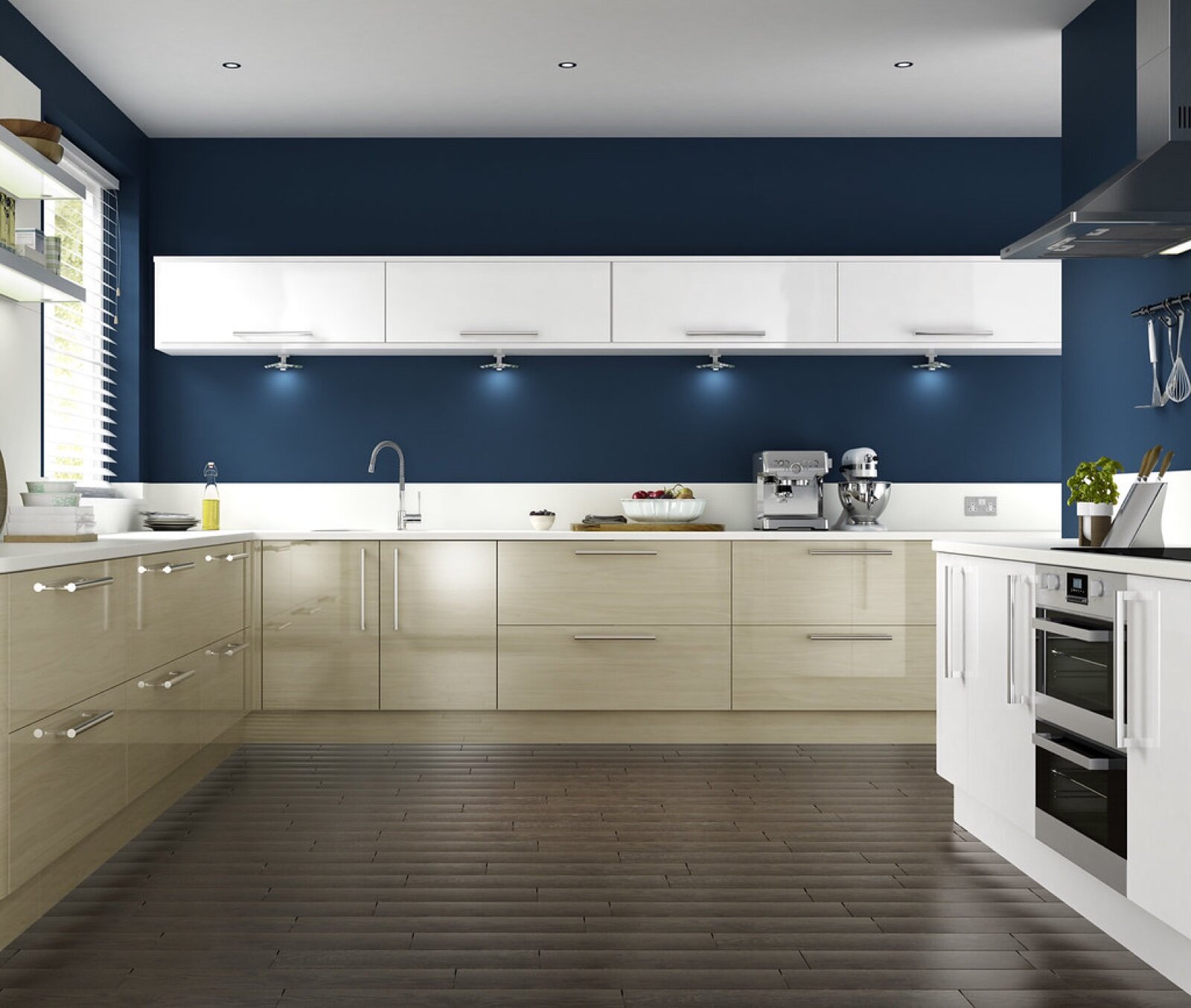
Navy on every cabinet works in large, bright rooms, and in kitchen extensions with a roof light or bifold doors. In a small room with one window, it can feel like a cupboard. If you go this way, keep the worktop, splashback or ceiling pale so some light bounces back.
Worktops that suit navy units
- White or off-white quartz: the sharpest contrast and the most common pairing. Check the white against your chosen navy’s paired white, because a stark white quartz next to a warm creamy white wall can look grubby.
- Oak: warms navy up and suits Shaker doors and cottage kitchens. Oak needs oiling and is softer than stone, so think about where you chop and where the kettle sits. More in our piece on oak worktops.
- White marble or marble-effect: the grey veining links well with Inchyra Blue and Stiffkey Blue.
- Black or dark grey: works with Railings or Hague Blue for a deliberately moody scheme, but you lose contrast, so plan good under-cabinet lighting.
For a side-by-side on wear, heat and stain resistance, see kitchen worktops compared.
Handles, taps and metal finishes
Brass and gold-tone handles are the classic match for navy: the warm metal stands out against the cool blue. Brushed nickel and stainless steel suit a more modern, handleless or slab-door kitchen. Matt black handles almost disappear on Railings or Hague Blue, which is fine if you want an unbroken run of colour and less good if you want the handles to be a feature. Whatever you choose, keep tap, handle and light-fitting finishes consistent, or at most two finishes in the room.
Making navy work in a dark Kent kitchen
Many terraced and semi-detached houses across Kent have a rear kitchen in the shade of a back addition or a neighbour’s extension. Navy can still work there, but:
- pick a green-leaning navy (Hague Blue) rather than a grey or purple-leaning one, which turn murky in poor light
- keep the navy below worktop height and the wall units pale
- add under-cabinet strip lights; dark units swallow light from ceiling spots
- choose a paler floor than the units so the room does not feel like it has no base
If the kitchen is dark because of its layout, it may be worth reading how to make a small kitchen look bigger before choosing a colour at all.
Painting existing units navy
You do not need a new kitchen to get a navy one. Solid timber and painted wood doors take paint well. Farrow & Ball’s own cabinet painting guidance for bare wood is: make sure the surface is sound, clean and dry; sand lightly; patch-prime knots; apply one full coat of its Wood Primer and Undercoat in the tone recommended for your colour (all five navies above list Dark Tones); then two coats of Flat Eggshell or Modern Eggshell, depending on how much sheen you want.
Dark colours show brush marks and patchy coverage more than pale ones, which is why the dark-toned undercoat matters. Melamine and vinyl-wrapped doors need a different approach: our guide to the best kitchen cupboard paint matches the paint to the door surface. If you would rather have the doors sprayed, see what a kitchen respray costs.
Navy or black?
If you are torn between the two, navy is the easier one to live with. It shows less dust and fewer fingerprints than a true black, it changes with the light through the day, and it pairs with both warm and cool materials. Black is starker and more architectural. We compare the black side in black kitchen ideas. For help planning a new kitchen or a kitchen extension in Kent, talk to Contemporary Structures.
Frequently asked questions
Is a navy kitchen a good idea in a small room?
It can be, if you keep the navy to the base units or an island and keep the wall units, worktop and ceiling pale. Full navy from floor to ceiling in a small, single-window kitchen usually makes it feel smaller.
What colour walls go with navy kitchen units?
A warm off-white is the safest. Farrow & Ball pairs each navy with its own white: Wevet with Hague Blue, Ammonite with Stiffkey Blue, Drop Cloth with Inchyra Blue, Shaded White with De Nimes.
What is the difference between Hague Blue and Stiffkey Blue?
Hague Blue has green undertones and stays rich in dark rooms. Stiffkey Blue is an inkier navy that looks noticeably bluer in a well lit room. Sample both in your own kitchen; the difference is clear side by side.
Which worktop goes best with a navy kitchen?
White quartz gives the strongest contrast, oak adds warmth, and marble or marble-effect suits greyer navies. Dark worktops work with near-black navies but need good task lighting.
Do navy kitchens show dirt?
Less than black or white units. Dust and greasy fingerprints are most visible on very dark matt finishes, so choose an eggshell rather than a dead-flat finish for doors, and wipe handles often.
Related guides
- Conservatory Roof Replacement vs Glass Film: Which Fixes a Too-Hot, Too-Cold Conservatory?
- Air Source Heat Pump Cost in 2026 After the £7,500 Grant: What You Actually Pay
- Do You Need Planning Permission for a Rear Extension in Kent? 2026 Permitted Development Rules
- How Much Does a Conservatory Base Cost in the UK? (2026 Price Guide)
- Do You Need a Party Wall Agreement for a Rear Extension? Cost and Rules Explained
- Underfloor Heating vs Radiators for a Home Extension: Cost, Running Bills and Which to Choose
- How Much Does a House Extension Cost in 2026? Full UK Price Breakdown
- Loft Conversion Cost and Types: Dormer, Hip-to-Gable and Velux Explained
- Kent Home Improvement News: June 2026
- House Extensions: The Complete UK Homeowner’s Guide
- Single Storey Extension Ideas, Costs and Planning Rules
- Double Storey Extensions: Costs, Designs and What You Can Build
- Side Return Extensions Explained: Cost, Light and Layout
- Kent Home Improvement News: Mid-June 2026
- Garage Conversion Guide: Cost, Building Regs and Best Uses
- Extension vs Moving House: Which Is Better Value in Kent?
- Wraparound vs Rear Extension: Cost and Space Compared
- House Extension Builders in Kent: Costs, Lead Times and How to Choose
- Conservatory Guide: Styles, Costs and How to Choose One
- Kent Home Improvement News: Late June 2026
- How Much Does a Conservatory Cost in 2026? UK Prices by Type
- Conservatory vs Orangery vs Extension: Which to Build?
- Conservatory Roof Options: Glass, Polycarbonate and Tiled Compared
- Kent Home Improvement News: Early July 2026
- How to Keep a Conservatory Warm in Winter and Cool in Summer
- Tiled Conservatory Roof Cost and Replacement Process Explained
- Conservatories in Kent: Choosing an Installer, Costs and What to Ask
- Kent Home Improvement News: Mid-July 2026
- Roofing Guide: Repairs, Replacement, Materials and Costs
- New Roof Cost UK 2026: Replacement Prices by Roof Type
- Roof Repair Cost UK 2026: Slipped Tiles and Flashing Prices
- 7 Signs Your Roof Needs Replacing (and What You Can Ignore)
- Flat Roof vs Pitched Roof: Cost, Lifespan and Best Uses
- EPDM vs Felt vs Fibreglass Flat Roofs Compared
- Kent Home Improvement News: Mid-July 2026
- Roof Tile Types Explained: Clay, Concrete and Slate Compared
- Fascias, Soffits and Guttering: When to Replace and What It Costs
- How to Find a Good Roofer: Vetting Checklist for UK Homeowners
- Roofers in Kent: Costs, How to Choose and What to Ask in 2026
- Kitchen Renovation Guide: Planning, Cost and Design in 2026
- How Much Does a New Kitchen Cost in 2026? UK Price Guide
- Kitchen Layout Ideas: Galley, L-Shape, Island and Open Plan
- Worktops Compared: Quartz vs Granite vs Laminate vs Solid Wood
- Fitted vs Bespoke vs Flat-Pack Kitchens: Cost and Quality
- Kitchen Island Ideas, Sizes and Costs: A 2026 UK Guide
- Kent Home Improvement News: Late July 2026
- Open Plan Kitchen Diner: Costs, Layouts and Knock-Through Rules
- How Long Does a Kitchen Fitting Take? Realistic UK Timeline
- Kitchen Fitters in Kent: Costs and How to Choose (2026)
- Bathroom Renovation Guide: Planning, Cost and Layout
- New Bathroom Cost 2026: What You’ll Pay in the UK
- Kent Home Improvement: Roofing Costs Rise (Aug 2026)
- Small Bathroom Ideas: Layouts That Feel Bigger
- Wet Room Cost 2026: £2,000 to £9,000 Fitted, by Size
- En Suite Cost and Minimum Size: £4,000 to £10,000 in 2026
- Kent Home News: £9,000 Heat Pump Grant Now Open
- Electric vs Mixer vs Power Shower: What Your Boiler Allows
- Bathroom Underfloor Heating Cost: 16p an Hour to Run
- Window Replacement Cost 2026: £350 to £600 Per uPVC Window
- uPVC vs Aluminium Windows: the 1.4 U-Value Rule
- How Long Does a Bathroom Take to Fit? 5 to 10 Working Days
- Home Improvement News: Solar Up 14%, Heat Pumps Down 17%
- Double vs Triple Glazing: Part L Still Stops at 1.4
- Bathroom Fitters in Kent: What to Ask Before You Pay
- Sash Window Repair or Replace? What Kent Councils Allow
- Bifold vs Sliding Doors: What Building Regs Actually Set
- Composite Door Cost 2026: £550 to £2,350 Fitted
- Window Energy Ratings: Band B Is the Rule, Not C
- Replacement Windows: the 1.4 U-Value and Vent Rules
- Double Glazing Kent: the 1.4 U-Value Every Quote Must Hit
- Heat Pumps in Kent: the £7,500 Grant and the 1.5m³ Rule
- Heat Pump vs Gas Boiler: Break-Even Is a SCOP of 3.0
- Permitted Development Rights: The 8m Rear Extension Rule
- Air Source vs Ground Source Heat Pump: £13k or £26k?
- Kent Home News: Council Merger Paused, Heat Pump Bids Up 81%
- Building Regulations Approval: Kent Fees, 10-Year Rule
- Boiler Upgrade Scheme: £9,000 Grants From 21 July 2026
- New Boiler Cost 2026: £1,800 to £4,500 Fitted
- Do Heat Pumps Work in Old Houses? Yes, With 3 Conditions
- Heat Pump Installers in Kent: 8 Checks Before You Sign
- House Rendering in Kent: When the Wall Must Be Insulated
- What Is TrustMark? The Kent Trade Badges That Count
- Home Improvement Grants in Kent: ECO4 Ends 31 December
- Kent Home News: Heating Oil to Be Regulated, £9,000 Grant
- Conservation Area Planning Rules: The 3m Rear Limit
- How to Apply for Planning Permission in Kent: £548, 8 Weeks
- Best Kitchen Cupboard Paint: Match It to the Door Surface
- Should You Pay Builders a Deposit? How Much, and How
- Porch Planning Permission: The 3m² Rule and When It Fails
- Black Kitchen Ideas: Matt or Gloss, and the Light It Needs