
If you are planning an extension in Kent in 2026, the first question is almost always the same: what will it actually cost? The honest answer is that no two extensions price the same, because the figure depends on the size, the number of storeys, what the ground beneath your house is doing, the specification you choose, and how much you spend on a kitchen or bathroom inside it. This guide sets out the ranges that genuinely apply across the South East, explains the costs that catch people out, and shows how to build a budget you can trust rather than one that falls apart at the first quote.
What drives the cost of an extension
Builders and quantity surveyors usually start with a cost per square metre for the shell and fit-out, then adjust for the things specific to your site. The main drivers are worth understanding before you look at any number.
- Size and shape. A bigger footprint costs more in total, though the cost per square metre often falls slightly as the build gets larger because fixed costs are spread over more floor area.
- Single versus double storey. A second storey adds floor space without doubling the cost, because the foundations and roof are shared. More on this below.
- Ground conditions. Clay soils, nearby trees, a high water table, or sloping ground can all push up foundation costs. Kent has plenty of clay and chalk, and trees near the works can mean deeper foundations to satisfy Building Regulations.
- Specification and finish. The gap between a standard finish and a high-end one is wide. Underfloor heating, premium flooring, bespoke joinery and high insulation values all add up.
- Glazing. Large sliding doors, bifolds, roof lanterns and structural glazing are some of the biggest swing factors. A wall of glass costs far more than a window and a single door.
- Kitchen and bathroom fit-out. If your extension houses a new kitchen or a bathroom, the units, appliances, tiling and sanitaryware sit on top of the build cost and can run from modest to very large depending on choices.
- Location. Labour rates in Kent and the wider South East sit above the national average, which is why South East figures run higher than headline UK numbers.
Typical build cost ranges in 2026
Treat the figures below as indicative ranges for the build itself, not fixed prices. They cover the shell, windows and doors, electrics, plumbing, plastering and decoration to a standard specification. They generally exclude VAT, professional fees and the kitchen or bathroom fit-out, which is why the all-in figure ends up higher.
Across the UK, a single-storey extension to a standard specification commonly falls somewhere around £1,500 to £2,500 per square metre. In Kent and the South East, where labour costs more, it is realistic to expect the upper part of that range and beyond, often £1,900 to £3,500 per square metre depending on access, ground conditions and finish. A wall of structural glazing or a complex roof can take a project above those figures.
Double-storey extensions tend to work out lower per square metre, often £1,200 to £2,000 per square metre nationally, because you are not paying twice for foundations and a roof. In the South East the same regional uplift applies, so expect those numbers to climb accordingly. The key point is that you gain a great deal more usable space for a smaller increase in cost.
Because every site differs, the only reliable price is a written quote from a builder who has seen your property. Get at least three, and make sure each one is pricing the same scope so you are comparing like for like.
The extra costs people forget
The build cost is only part of the picture. The following items are routinely left out of early budgets and then arrive as unwelcome surprises.
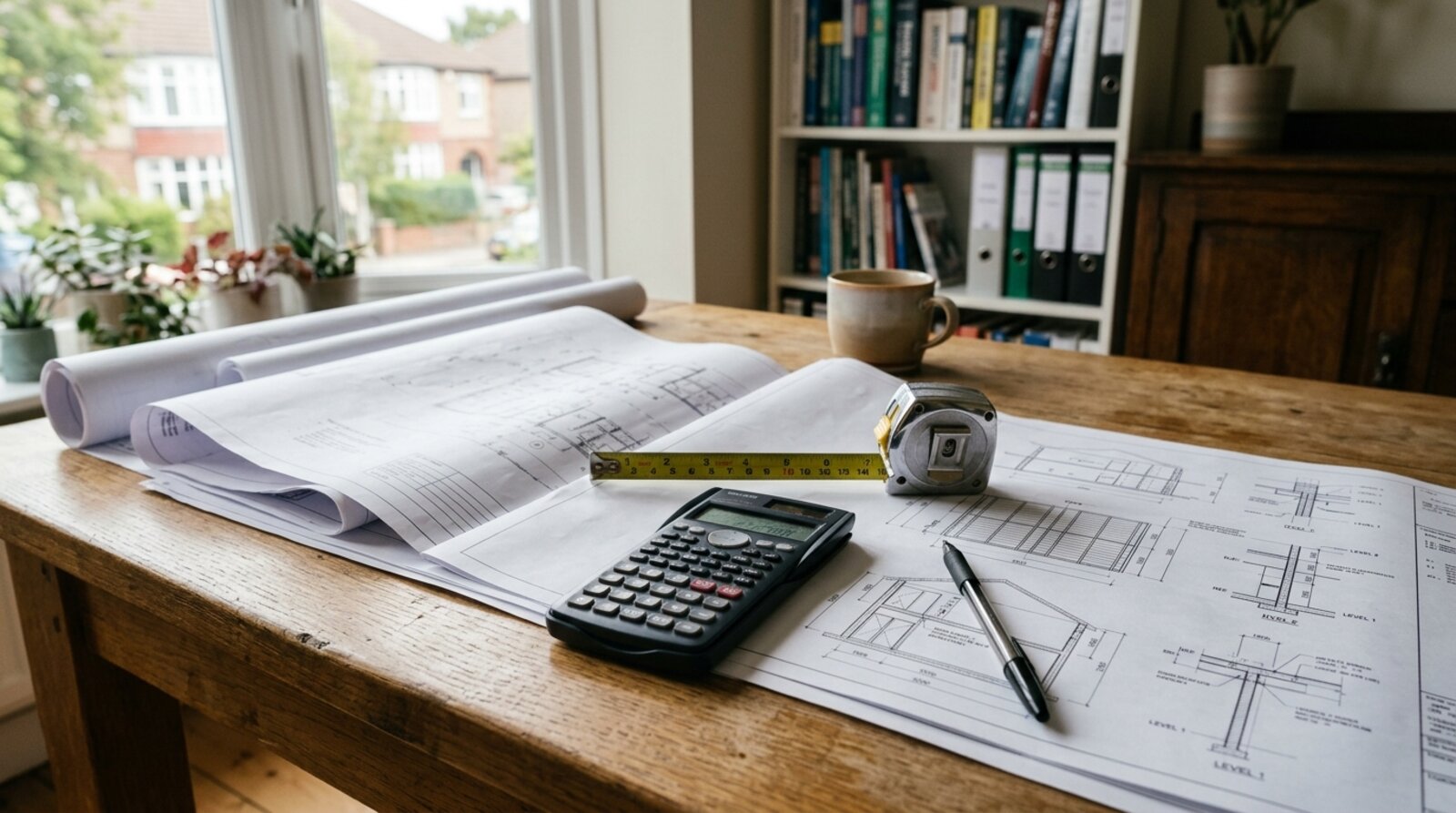
- Architect or designer. Drawings, design development and tender packages. Some homeowners use an architectural technologist rather than a chartered architect to manage this cost.
- Structural engineer. Calculations and drawings for beams, foundations and any load-bearing alterations. Almost every extension that opens up a wall needs one.
- Building control. A separate approval from planning, covering structure, fire safety, insulation, ventilation and energy efficiency. You pay either the local authority or an approved inspector for this.
- Party wall surveyor. If you build on or near a shared boundary with a neighbour, the Party Wall etc. Act 1996 may apply. Surveyors are not on a fixed scale; fees commonly run from several hundred to a few thousand pounds, and the person carrying out the work usually pays for both sides.
- Planning fees. If you need a householder planning application rather than relying on permitted development, there is an application fee to your local council, plus any drawings required to support it.
- VAT. Most extension work is charged at the standard rate of 20%, applied to labour, materials and professional fees. This is one of the biggest single additions, so never read a build figure as the final number.
As a rule of thumb used across the industry, professional fees together commonly add around 10 to 15% of the build cost. Cost figures quoted per square metre typically exclude VAT, professional fees and planning fees, so check carefully what any quoted rate does and does not include.
Single versus double storey: which gives better value
If your plot and your house can take it, a double-storey extension usually delivers more for your money than two separate single-storey projects. You build the foundations and the roof once and gain rooms on two floors. The per square metre cost is lower, and the disruption happens in one go rather than twice.
That does not make it the right choice for everyone. A single storey is simpler, often sits within permitted development more easily, and may be all you need for a kitchen-diner or a larger living space. A second storey adds bedrooms or a bathroom and can lift the value of the house more significantly, but it brings more involved structural work, planning considerations and, frequently, a party wall agreement. The decision should follow what you actually need from the space, with cost per square metre as a supporting factor rather than the only one.
Planning permission, permitted development and Building Regulations
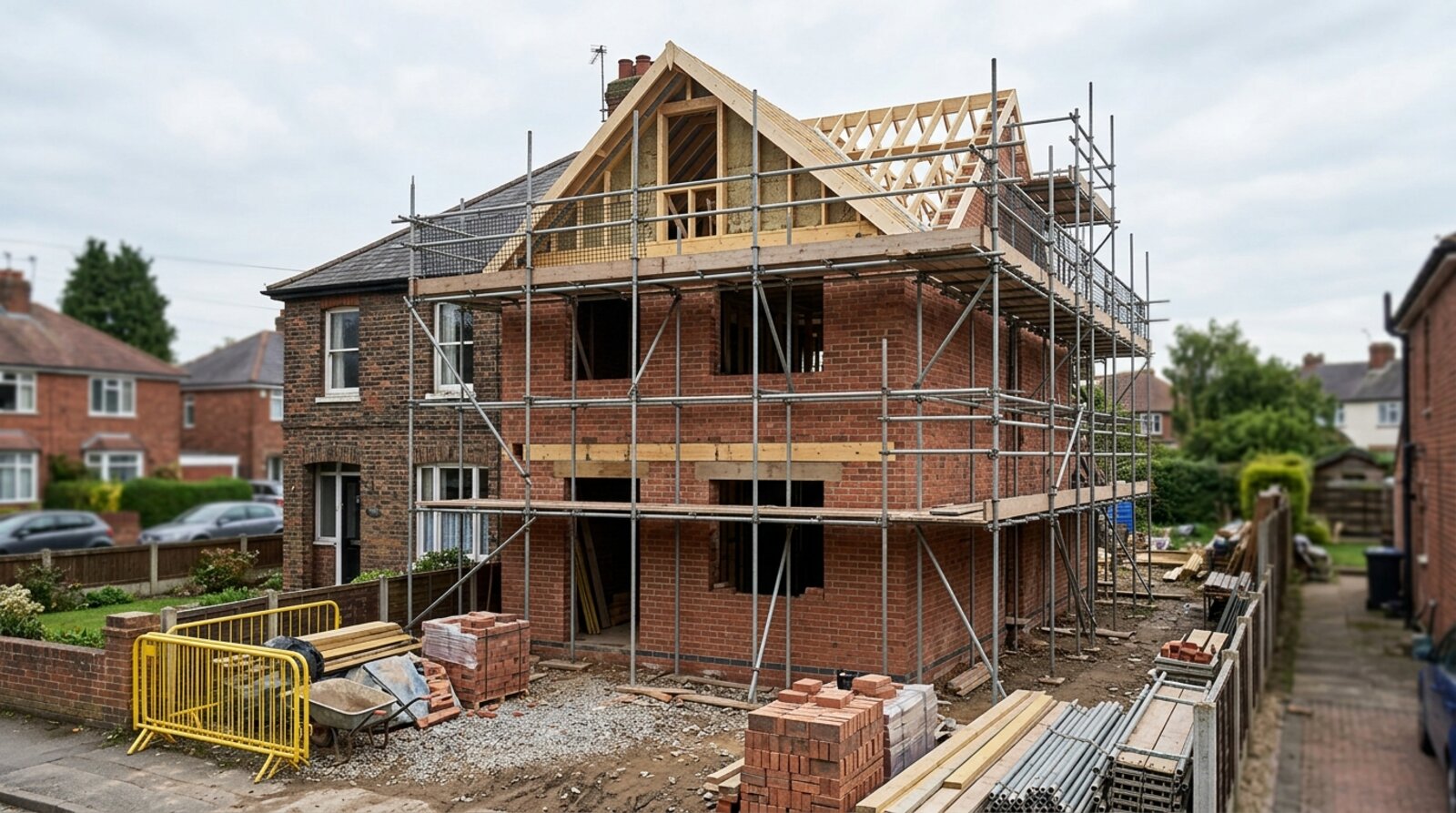
Many extensions can be built under permitted development, which means you do not need a full planning application provided you stay within set limits. For a single-storey rear extension in England, the standard depth limit is up to four metres beyond the original rear wall for a detached house and three metres for other houses, with a larger allowance available in some cases through a prior approval process. Extensions of more than one storey have their own limits, including not extending more than three metres beyond the original rear wall. Permitted development rights are also restricted or removed in conservation areas, areas of outstanding natural beauty and where an Article 4 Direction applies, all of which exist in parts of Kent, so check your specific address.
Building Regulations are a separate matter from planning. Almost every extension needs Building Regulations approval covering structure, insulation, fire safety, drainage and ventilation, even when no planning application is required. For the current rules and to check what applies to your project, the Planning Portal extensions guidance is the authoritative starting point, and your local council confirms anything specific to your site.
How to budget with a contingency
A sound budget has four parts: the build, the fit-out and finishes, the professional fees, and a contingency. A common split allocates the majority to construction, a meaningful chunk to interior finishes, around 10 to 15% to professional fees, and a contingency reserve on top.
The contingency is not optional. Set aside 10 to 15% of the build cost for the unexpected. Ten percent is reasonable for a straightforward, recently surveyed property; older houses, sites in conservation areas, and anything with unknowns underground justify the higher end. Drains in the wrong place, soft ground and out-of-date wiring are typical reasons it gets used.
Work in this order. Get a build figure from quotes, add 20% VAT, add your professional fees, then add the contingency. The number at the bottom is your real budget. If you only ever look at the headline build cost, you will be short by a wide margin once VAT, fees and surprises are included. For more guidance on planning a contemporary extension and getting the design right, see our homepage.
Frequently asked questions
How much does a single-storey extension cost in Kent?
As an indicative range, expect roughly £1,900 to £3,500 per square metre for the build to a standard specification in the South East, before VAT, professional fees and the kitchen or bathroom fit-out. The final figure depends on size, glazing, ground conditions and finish, so only a written quote based on your property will be accurate.
Is a double-storey extension cheaper per square metre?
Usually, yes. Because the foundations and roof are shared across two floors, double-storey extensions tend to cost less per square metre than single-storey ones, often around £1,200 to £2,000 nationally before the regional uplift that applies in the South East. You gain more space for a smaller increase in total cost.
Do I need planning permission for an extension?
Not always. Many extensions fall under permitted development if they stay within the size limits, but conservation areas, areas of outstanding natural beauty and Article 4 Directions can remove those rights. Check your address against the Planning Portal guidance and confirm with your local council before assuming.
Does an extension always need Building Regulations approval?
In almost all cases, yes. Building Regulations are separate from planning and cover structure, insulation, fire safety, drainage and ventilation. You need this approval even when no planning application is required.
Is VAT charged on extension work?
Most extension work is charged at the standard rate of 20%, applied to labour, materials and professional fees. A build figure quoted without VAT is not the final amount, so always add it when working out your budget.
What is a party wall surveyor and do I need one?
If you build on or near a shared boundary, the Party Wall etc. Act 1996 may require you to serve notice on your neighbour and, if they do not consent, to appoint a surveyor. Fees are not fixed and commonly range from several hundred to a few thousand pounds, normally paid by the person carrying out the work.
Related guides
- Conservatory Roof Replacement vs Glass Film: Which Fixes a Too-Hot, Too-Cold Conservatory?
- Air Source Heat Pump Cost in 2026 After the £7,500 Grant: What You Actually Pay
- Do You Need Planning Permission for a Rear Extension in Kent? 2026 Permitted Development Rules
- How Much Does a Conservatory Base Cost in the UK? (2026 Price Guide)
- Do You Need a Party Wall Agreement for a Rear Extension? Cost and Rules Explained
- Underfloor Heating vs Radiators for a Home Extension: Cost, Running Bills and Which to Choose
- Loft Conversion Cost and Types: Dormer, Hip-to-Gable and Velux Explained
- Kent Home Improvement News: June 2026
- House Extensions: The Complete UK Homeowner’s Guide
- Single Storey Extension Ideas, Costs and Planning Rules
- Double Storey Extensions: Costs, Designs and What You Can Build
- Side Return Extensions Explained: Cost, Light and Layout
- Kent Home Improvement News: Mid-June 2026
- Garage Conversion Guide: Cost, Building Regs and Best Uses
- Extension vs Moving House: Which Is Better Value in Kent?
- Wraparound vs Rear Extension: Cost and Space Compared
- House Extension Builders in Kent: Costs, Lead Times and How to Choose
- Conservatory Guide: Styles, Costs and How to Choose One
- Kent Home Improvement News: Late June 2026
- How Much Does a Conservatory Cost in 2026? UK Prices by Type
- Conservatory vs Orangery vs Extension: Which to Build?
- Conservatory Roof Options: Glass, Polycarbonate and Tiled Compared
- Kent Home Improvement News: Early July 2026
- How to Keep a Conservatory Warm in Winter and Cool in Summer
- Tiled Conservatory Roof Cost and Replacement Process Explained
- Conservatories in Kent: Choosing an Installer, Costs and What to Ask
- Kent Home Improvement News: Mid-July 2026
- Roofing Guide: Repairs, Replacement, Materials and Costs
- New Roof Cost UK 2026: Replacement Prices by Roof Type
- Roof Repair Cost UK 2026: Slipped Tiles and Flashing Prices
- 7 Signs Your Roof Needs Replacing (and What You Can Ignore)
- Flat Roof vs Pitched Roof: Cost, Lifespan and Best Uses
- EPDM vs Felt vs Fibreglass Flat Roofs Compared
- Kent Home Improvement News: Mid-July 2026
- Roof Tile Types Explained: Clay, Concrete and Slate Compared
- Fascias, Soffits and Guttering: When to Replace and What It Costs
- How to Find a Good Roofer: Vetting Checklist for UK Homeowners
- Roofers in Kent: Costs, How to Choose and What to Ask in 2026
- Kitchen Renovation Guide: Planning, Cost and Design in 2026
- How Much Does a New Kitchen Cost in 2026? UK Price Guide
- Kitchen Layout Ideas: Galley, L-Shape, Island and Open Plan
- Worktops Compared: Quartz vs Granite vs Laminate vs Solid Wood
- Fitted vs Bespoke vs Flat-Pack Kitchens: Cost and Quality
- Kitchen Island Ideas, Sizes and Costs: A 2026 UK Guide
- Kent Home Improvement News: Late July 2026
- Open Plan Kitchen Diner: Costs, Layouts and Knock-Through Rules
- How Long Does a Kitchen Fitting Take? Realistic UK Timeline
- Kitchen Fitters in Kent: Costs and How to Choose (2026)
- Bathroom Renovation Guide: Planning, Cost and Layout
- New Bathroom Cost 2026: What You’ll Pay in the UK
- Kent Home Improvement: Roofing Costs Rise (Aug 2026)
- Small Bathroom Ideas: Layouts That Feel Bigger
- Wet Room Cost 2026: £2,000 to £9,000 Fitted, by Size
- En Suite Cost and Minimum Size: £4,000 to £10,000 in 2026
- Kent Home News: £9,000 Heat Pump Grant Now Open
- Electric vs Mixer vs Power Shower: What Your Boiler Allows
- Bathroom Underfloor Heating Cost: 16p an Hour to Run
- Window Replacement Cost 2026: £350 to £600 Per uPVC Window
- uPVC vs Aluminium Windows: the 1.4 U-Value Rule
- How Long Does a Bathroom Take to Fit? 5 to 10 Working Days
- Home Improvement News: Solar Up 14%, Heat Pumps Down 17%
- Double vs Triple Glazing: Part L Still Stops at 1.4
- Bathroom Fitters in Kent: What to Ask Before You Pay
- Sash Window Repair or Replace? What Kent Councils Allow
- Bifold vs Sliding Doors: What Building Regs Actually Set
- Composite Door Cost 2026: £550 to £2,350 Fitted
- Window Energy Ratings: Band B Is the Rule, Not C
- Replacement Windows: the 1.4 U-Value and Vent Rules
- Double Glazing Kent: the 1.4 U-Value Every Quote Must Hit
- Heat Pumps in Kent: the £7,500 Grant and the 1.5m³ Rule
- Heat Pump vs Gas Boiler: Break-Even Is a SCOP of 3.0
- Permitted Development Rights: The 8m Rear Extension Rule