
If you live in a Victorian or Edwardian terrace, there is a good chance you have an awkward strip of outdoor space running alongside the back of the house. It is usually too narrow to use for anything sensible, often paved or gravelled, and it leaves your kitchen long, dark and tight. A side return extension claims that strip and folds it into the house, and for many period terraces and semis in Kent it is the single most effective way to turn a cramped galley kitchen into a proper open kitchen-diner.
This guide covers what a side return actually is, why it suits older terraces so well, what it tends to cost in 2026, the planning and party wall rules you need to get right, and how the design changes the light and layout of the ground floor.
What a side return extension actually is
The “side return” is the alley of land beside the rear addition (the back outrigger) of a terraced or semi-detached house. On a typical Victorian layout, the kitchen sits in that narrow back wing while the side return runs alongside it, often about a metre to a metre and a half wide. A side return extension fills in that gap, extending the kitchen out to the boundary line and squaring off the rear of the house.
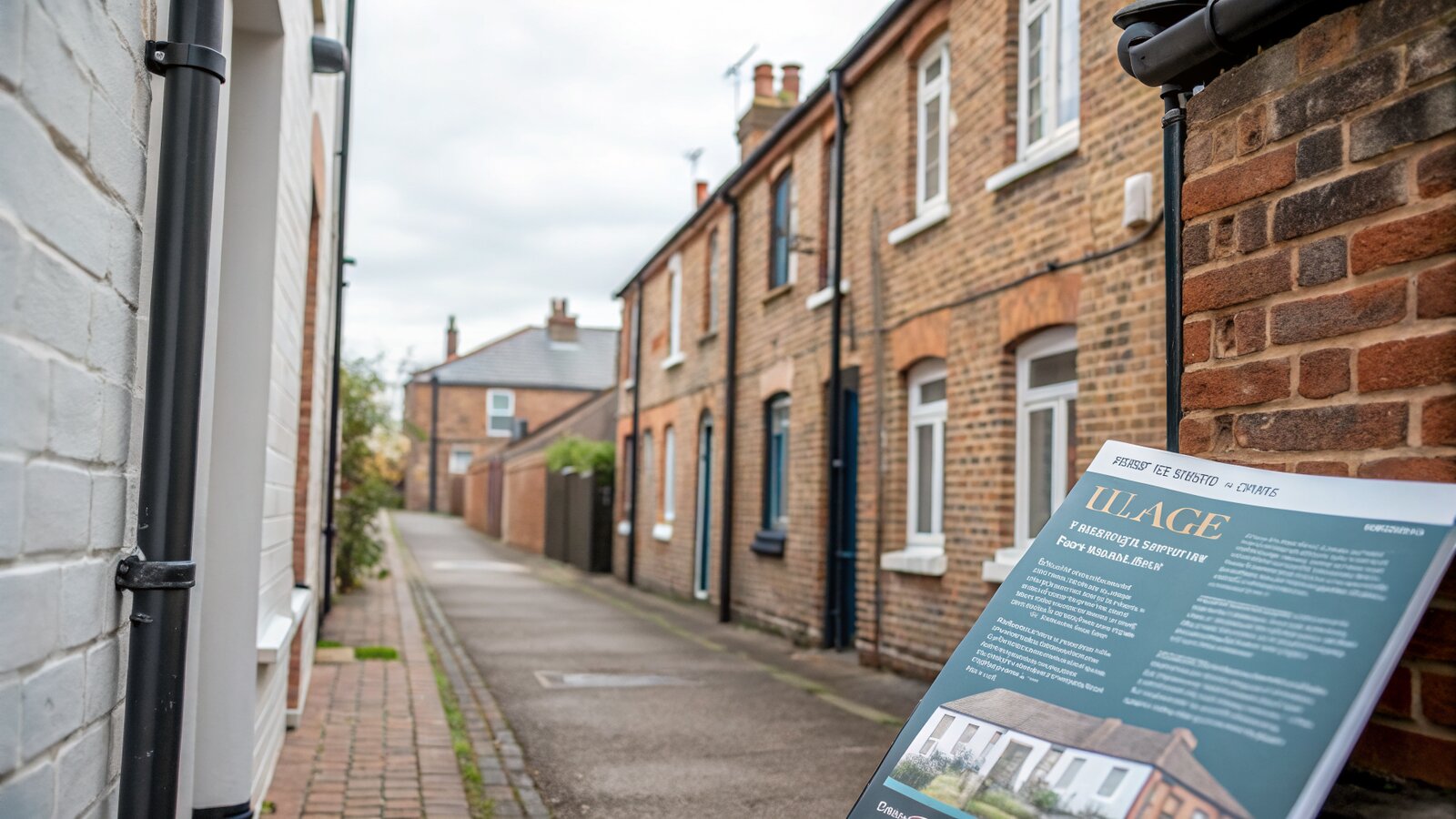
It is sometimes called an infill extension, because you are infilling an existing void rather than pushing far into the garden. That is the appeal: you gain useful internal width without losing much outdoor space. A modest infill of one to one and a half metres of extra width can be the difference between a single-file galley and a room you can fit a dining table and an island into.
Why side returns suit period terraces
The classic Kent terrace plan, narrow frontage, long footprint, rear outrigger, was designed for a different way of living. The kitchen was a service room at the back, not the centre of the home. Knocking the side return into the kitchen brings the floor plan up to date without changing the front of the house at all, which keeps the streetscape intact.
Because the extension is single storey and tucked down the side, it usually has little effect on neighbours’ light or outlook compared with a tall rear extension. It also pairs naturally with removing the wall between the old kitchen and the front reception, creating a through kitchen-living-dining space that runs the full depth of the ground floor.
What a side return extension costs in 2026
Costs vary widely with size, specification, ground conditions and where you are, so treat all figures as planning ranges rather than quotes. As a broad guide for 2026, a side return extension on a terrace commonly lands somewhere in the region of £45,000 to £90,000 for the build, with London and larger or higher-specification projects running well above that. Kent projects typically sit below central London rates but above the national average, partly because of demand and partly because period terraces throw up more structural work than a simple garden-end extension.
The main cost drivers are worth understanding before you set a budget:
- Structural work. Opening up the side wall of the outrigger means propping the floor above, removing masonry and inserting a steel beam or frame. If you also remove the internal wall between the old kitchen and the front room, that is a second structural opening with its own steelwork and engineer’s design.
- Glazing and rooflights. Because the infill sits between two walls, light has to come from above and from the rear. Large rooflights, structural glazing or full-height rear doors push the cost up but are the whole point of the project.
- Groundworks and foundations. Trees near the boundary, drains running through the side return, and old or shallow existing foundations can all add cost and time once the ground is opened up.
- Kitchen and finishes. The shell is only part of it. A new kitchen, flooring, plastering, electrics, heating and decoration are usually a separate and substantial slice of the total.
- Professional fees and VAT. Architect or designer, structural engineer, building control and party wall surveyor fees sit on top, as does VAT on most domestic extension work.
A sensible approach is to price the structural shell, the glazing and the fit-out as three separate buckets, then add a contingency of around ten to fifteen per cent, because period properties reliably reveal surprises once the floor comes up.
Planning permission and permitted development
Many side return extensions can be built under permitted development rather than a full planning application, but the rules are specific and easy to fall foul of. The official source is the government’s Planning Portal, and it is worth checking your exact situation before you commit.
For a single-storey side extension under permitted development, the key limits are that it must be single storey, no more than four metres in height, and no wider than half the width of the original house. The “original house” means the house as it was first built or as it stood in 1948, not as it is now if it has already been extended. The rear infill element is treated under the rear extension rules, where a single-storey rear extension on a terrace can extend up to a set depth, and going beyond three metres triggers the prior approval Neighbour Consultation Scheme, where the council notifies your adjoining neighbours before work starts.
Permitted development rights do not apply everywhere. They are removed or restricted on designated land, which includes conservation areas, Areas of Outstanding Natural Beauty and similar, and they do not apply to listed buildings, flats or maisonettes. Side extensions in particular are not permitted development on designated land. Kent has a large number of conservation areas and several AONBs, so a terrace that would sail through under permitted development in one street may need full planning permission in the next. Some properties have also had their permitted development rights removed by a planning condition or an Article 4 direction, so check the title and any past approvals.
Even where the work is permitted development, applying for a Lawful Development Certificate from your local council is sensible. It gives you written confirmation that the extension is lawful, which matters when you come to sell. You can read the current rules and apply through the Planning Portal.
Party wall, build-up and timescales
A side return extension almost always engages the Party Wall etc. Act 1996, because you are building up to or astride the boundary with the neighbour, and often working close to or against a shared wall. Under the Act you must serve formal notice on adjoining owners before work begins. For building on the line of junction, that notice period is at least one month; for work to an existing party wall it is at least two months. Your neighbour can consent, or dissent and appoint a surveyor, in which case a party wall award sets out how the work proceeds and protects both parties. This is separate from planning permission and building regulations, and it is not optional. The government’s explanatory booklet on the Party Wall etc. Act 1996 sets out the procedure in plain terms.
Building regulations approval is also required, covering structure, drainage, insulation, ventilation, fire safety and the glazing. Building control will want the structural engineer’s calculations for the steel beams and will inspect at key stages.
On timescales, the design and approvals stage usually takes longer than people expect. Allow time for measured surveys, design, structural calculations, planning or a lawful development certificate, and the party wall notice period, which alone can add a month or two before a spade goes in the ground. The build itself for a typical single-storey side return commonly runs around three to five months, longer if there is extensive groundwork, complex glazing or a full kitchen fit-out.
How a side return transforms light and layout
The reason side returns are so popular is what they do to daylight. A galley kitchen in a Victorian terrace usually has one window at the far end and a solid side wall, so it is dim for most of the day. By taking the roof over the new infill and glazing it, you bring light down into the deepest part of the plan. The most effective layouts use a run of rooflights or a single large structural rooflight along the line of the old side wall, so daylight floods the spot that used to be darkest.
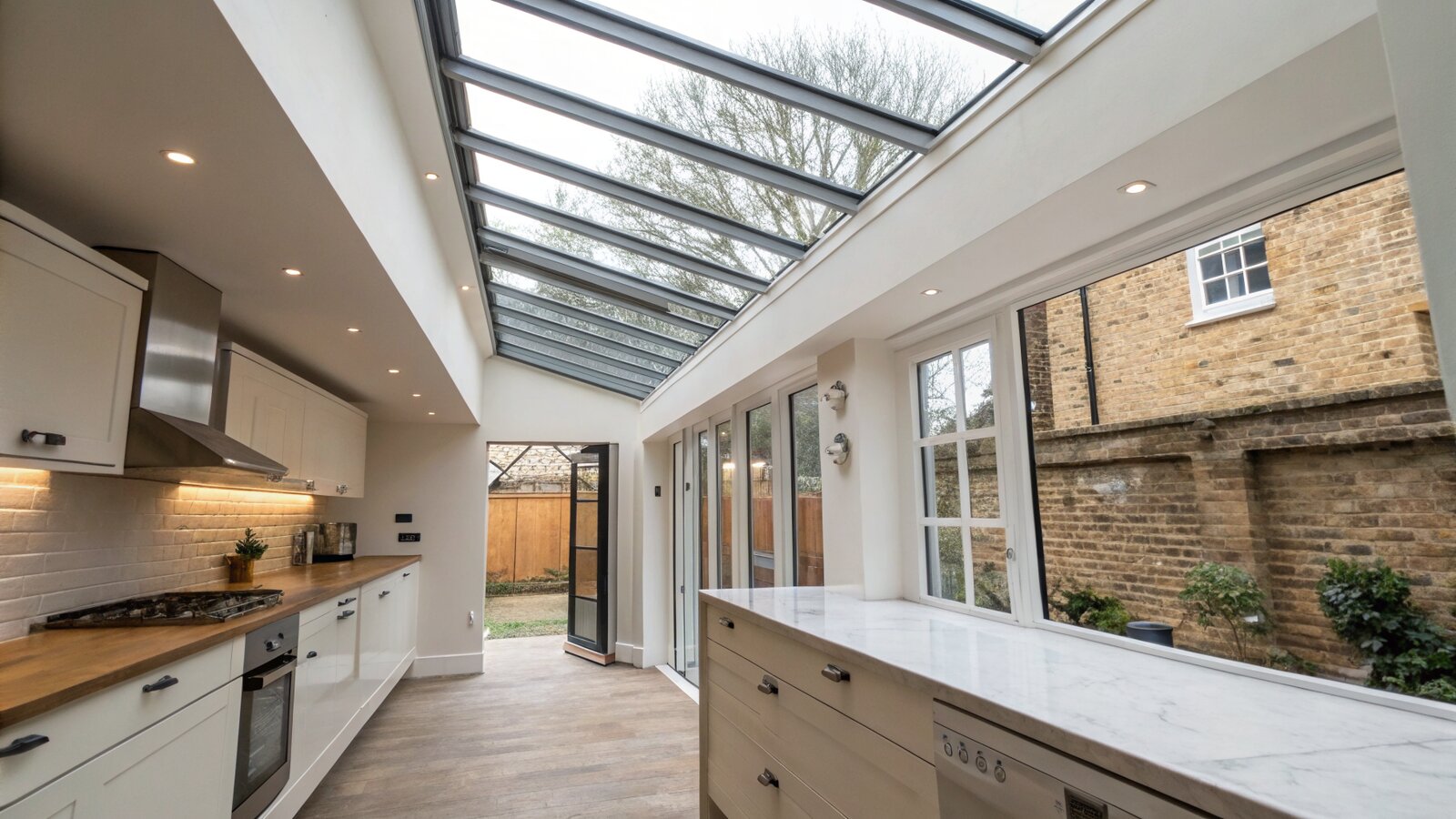
Combine the overhead glazing with large rear doors, sliding or bi-fold, and the back of the house opens to the garden as well as the sky. The result is a room lit from two directions, which feels far larger than the modest extra floor area suggests.
On layout, the extra width is what makes a kitchen-diner possible. With the side return claimed, you can run units along one side and fit an island or a dining table where the galley used to choke the space. Many owners also remove the wall back to the front reception at the same time, creating a single open run from the front bay to the garden doors. Where a steel beam carries that opening, leaving it exposed and painted can become a feature rather than something to hide.
For more guides on extending and improving period homes in Kent, see the rest of Contemporary Structures.
Frequently asked questions
Do I need planning permission for a side return extension?
Often not, if the work stays within permitted development limits: single storey, under four metres high, no wider than half the original house, and within the rear depth rules. But permitted development does not apply to listed buildings, flats, or designated land such as conservation areas and AONBs, which are common in Kent. Check your situation on the Planning Portal and consider a Lawful Development Certificate for proof.
How much does a side return extension cost in 2026?
As a broad planning range, the build often falls between roughly £45,000 and £90,000 for a terrace, with higher figures for larger, more heavily glazed or London projects, plus separate costs for the kitchen, finishes, fees and VAT. Structural work, glazing and groundworks are the biggest variables, so always get itemised quotes.
What is the difference between a side return and a rear extension?
A rear extension pushes the back of the house further into the garden. A side return fills in the narrow alley alongside the rear outrigger, widening the existing space without losing much garden. Many projects combine both, infilling the side return and extending slightly to the rear, to create a wide kitchen-diner.
Do I need a party wall agreement?
Almost always, yes. Because you build up to or along the boundary, the Party Wall etc. Act 1996 applies. You must serve notice on adjoining owners before starting, at least one month ahead for work on the line of junction and at least two months for work to an existing party wall. Neighbours can consent or appoint a surveyor to agree a party wall award.
Will a side return extension be dark inside?
It should be the opposite. The design relies on overhead glazing, usually rooflights or structural glass along the line of the old side wall, plus large rear doors. Lit from above and from the garden, the new space is typically far brighter than the original galley kitchen it replaces.
How long does the work take?
Design and approvals, including surveys, structural calculations and the party wall notice period, can take a few months before building starts. The build itself for a single-storey side return commonly runs around three to five months, depending on groundwork, glazing and whether a new kitchen is fitted as part of the job.
Related guides
- Conservatory Roof Replacement vs Glass Film: Which Fixes a Too-Hot, Too-Cold Conservatory?
- Air Source Heat Pump Cost in 2026 After the £7,500 Grant: What You Actually Pay
- Do You Need Planning Permission for a Rear Extension in Kent? 2026 Permitted Development Rules
- How Much Does a Conservatory Base Cost in the UK? (2026 Price Guide)
- Do You Need a Party Wall Agreement for a Rear Extension? Cost and Rules Explained
- Underfloor Heating vs Radiators for a Home Extension: Cost, Running Bills and Which to Choose
- How Much Does a House Extension Cost in 2026? Full UK Price Breakdown
- Loft Conversion Cost and Types: Dormer, Hip-to-Gable and Velux Explained
- Kent Home Improvement News: June 2026
- House Extensions: The Complete UK Homeowner’s Guide
- Single Storey Extension Ideas, Costs and Planning Rules
- Double Storey Extensions: Costs, Designs and What You Can Build
- Kent Home Improvement News: Mid-June 2026
- Garage Conversion Guide: Cost, Building Regs and Best Uses
- Extension vs Moving House: Which Is Better Value in Kent?
- Wraparound vs Rear Extension: Cost and Space Compared
- House Extension Builders in Kent: Costs, Lead Times and How to Choose
- Conservatory Guide: Styles, Costs and How to Choose One
- Kent Home Improvement News: Late June 2026
- How Much Does a Conservatory Cost in 2026? UK Prices by Type
- Conservatory vs Orangery vs Extension: Which to Build?
- Conservatory Roof Options: Glass, Polycarbonate and Tiled Compared
- Kent Home Improvement News: Early July 2026
- How to Keep a Conservatory Warm in Winter and Cool in Summer
- Tiled Conservatory Roof Cost and Replacement Process Explained
- Conservatories in Kent: Choosing an Installer, Costs and What to Ask
- Kent Home Improvement News: Mid-July 2026
- Roofing Guide: Repairs, Replacement, Materials and Costs
- New Roof Cost UK 2026: Replacement Prices by Roof Type
- Roof Repair Cost UK 2026: Slipped Tiles and Flashing Prices
- 7 Signs Your Roof Needs Replacing (and What You Can Ignore)
- Flat Roof vs Pitched Roof: Cost, Lifespan and Best Uses
- EPDM vs Felt vs Fibreglass Flat Roofs Compared
- Kent Home Improvement News: Mid-July 2026
- Roof Tile Types Explained: Clay, Concrete and Slate Compared
- Fascias, Soffits and Guttering: When to Replace and What It Costs
- How to Find a Good Roofer: Vetting Checklist for UK Homeowners
- Roofers in Kent: Costs, How to Choose and What to Ask in 2026
- Kitchen Renovation Guide: Planning, Cost and Design in 2026
- How Much Does a New Kitchen Cost in 2026? UK Price Guide
- Kitchen Layout Ideas: Galley, L-Shape, Island and Open Plan
- Worktops Compared: Quartz vs Granite vs Laminate vs Solid Wood
- Fitted vs Bespoke vs Flat-Pack Kitchens: Cost and Quality
- Kitchen Island Ideas, Sizes and Costs: A 2026 UK Guide
- Kent Home Improvement News: Late July 2026
- Open Plan Kitchen Diner: Costs, Layouts and Knock-Through Rules
- How Long Does a Kitchen Fitting Take? Realistic UK Timeline
- Kitchen Fitters in Kent: Costs and How to Choose (2026)
- Bathroom Renovation Guide: Planning, Cost and Layout
- New Bathroom Cost 2026: What You’ll Pay in the UK
- Kent Home Improvement: Roofing Costs Rise (Aug 2026)
- Small Bathroom Ideas: Layouts That Feel Bigger
- Wet Room Cost 2026: £2,000 to £9,000 Fitted, by Size
- En Suite Cost and Minimum Size: £4,000 to £10,000 in 2026
- Kent Home News: £9,000 Heat Pump Grant Now Open
- Electric vs Mixer vs Power Shower: What Your Boiler Allows
- Bathroom Underfloor Heating Cost: 16p an Hour to Run
- Window Replacement Cost 2026: £350 to £600 Per uPVC Window
- uPVC vs Aluminium Windows: the 1.4 U-Value Rule
- How Long Does a Bathroom Take to Fit? 5 to 10 Working Days
- Home Improvement News: Solar Up 14%, Heat Pumps Down 17%
- Double vs Triple Glazing: Part L Still Stops at 1.4
- Bathroom Fitters in Kent: What to Ask Before You Pay
- Sash Window Repair or Replace? What Kent Councils Allow
- Bifold vs Sliding Doors: What Building Regs Actually Set
- Composite Door Cost 2026: £550 to £2,350 Fitted
- Window Energy Ratings: Band B Is the Rule, Not C
- Replacement Windows: the 1.4 U-Value and Vent Rules
- Double Glazing Kent: the 1.4 U-Value Every Quote Must Hit
- Heat Pumps in Kent: the £7,500 Grant and the 1.5m³ Rule
- Heat Pump vs Gas Boiler: Break-Even Is a SCOP of 3.0
- Permitted Development Rights: The 8m Rear Extension Rule