
A loft conversion is usually the cheapest way to add a proper bedroom or office to a Kent home without losing garden space or moving house. The catch is that not every loft suits every type of conversion, and the price gap between the simplest and the most involved options is wide. This guide explains the four main types you will be quoted for, what actually drives the cost, the head height your roof needs, and the planning and Building Regulations rules that apply before any work starts.
The four main loft conversion types
The type you can have depends on your roof shape, your available head height, and your budget. They are listed here roughly from least to most expensive.
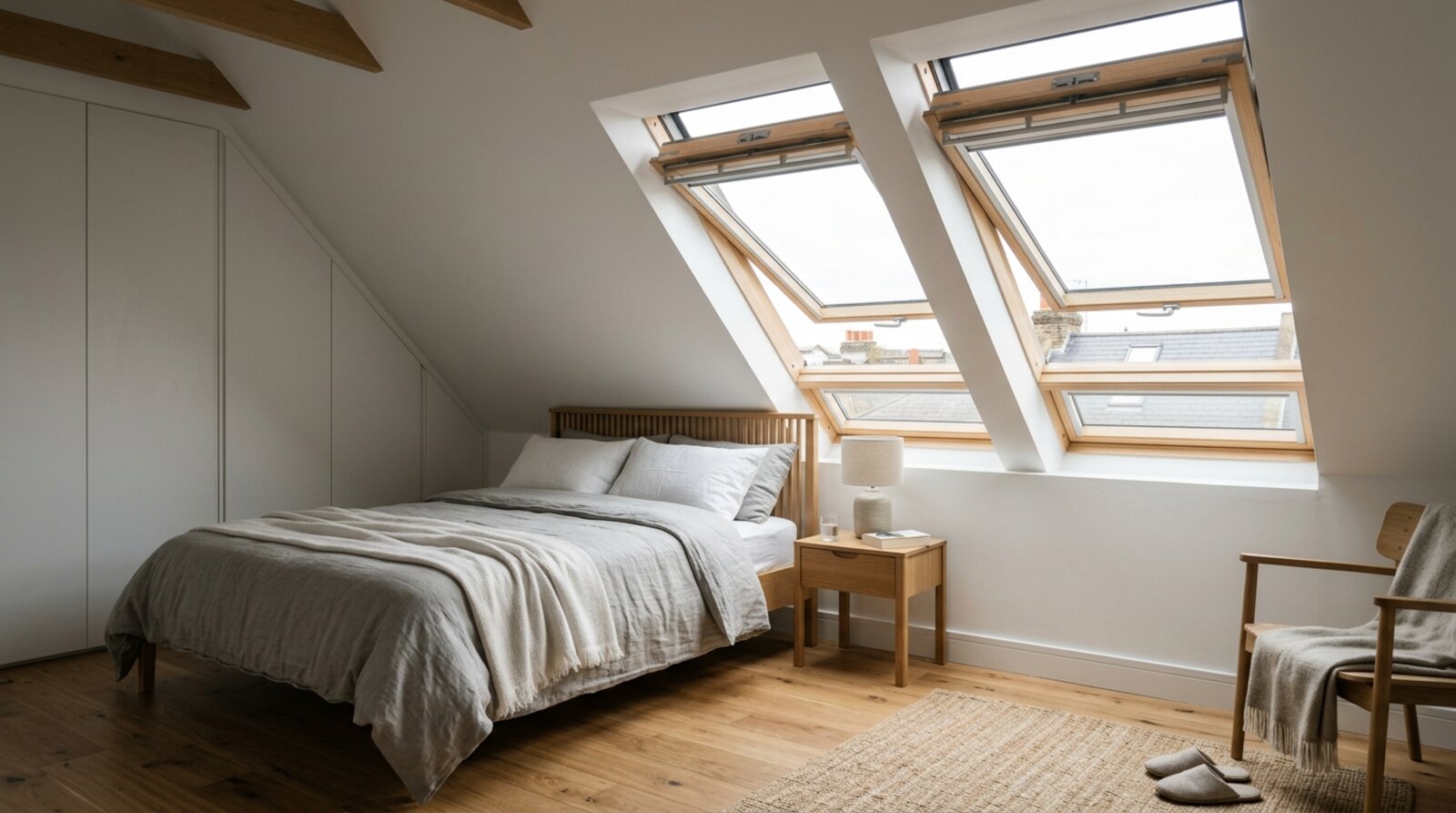
Rooflight (Velux) conversion
This is the simplest and cheapest option. The existing roof slope is left untouched and windows are fitted flush into the line of the roof. Velux is a brand name that has become shorthand for this kind of conversion; other roof window makers such as Fakro and Keylite produce the same thing. Because the roof structure is barely altered, this type rarely needs planning permission and the work is quicker. The trade-off is that you only get usable standing room where the roof is already tall enough, so it suits lofts that already have generous height.
Dormer conversion
A dormer is a box-shaped structure built out from the slope of the roof to create extra headroom and floor space, usually with vertical windows. A rear dormer on a Kent terrace or semi is the most common conversion in the county. It costs more than a rooflight job because it involves new structure and roofing, but it turns an awkward sloped space into a room with full standing height across more of the floor.
Hip-to-gable conversion
Many 1930s semis and detached houses across Kent have a hipped roof, meaning the roof slopes inwards on the side as well as the front and rear. A hip-to-gable conversion rebuilds that sloping side into a vertical gable wall, squaring off the roof and creating far more internal volume. It is often combined with a rear dormer for the largest gain in space. It costs more than a standard dormer because of the extra structural work to the side of the roof.
Mansard conversion
A mansard reshapes most of the roof, creating an almost vertical rear wall with a shallow top slope. It produces the most usable space and works well on terraced and period properties, but it is the most expensive and the most disruptive. A mansard almost always needs planning permission because it changes the shape and appearance of the roof significantly, and in a conservation area the bar is higher still.
What drives the cost
Quotes vary widely because lofts vary widely. Ask any builder to break the figure down rather than give a single number. The main cost drivers are:
- The type of conversion. A rooflight job is at the bottom of the range; a mansard sits at the top. A hip-to-gable plus rear dormer is a large step up from a single rear dormer.
- Structural work. New steel beams to carry the floor and roof loads are common, and the more the roof shape changes, the more steel and reinforcement is needed.
- Staircase position. Fitting a compliant staircase often means reworking the floor below, which adds cost and can eat into a bedroom.
- Bathroom or en suite. Adding plumbing, drainage and a soil connection raises the price noticeably.
- Finish and fit-out. Built-in storage, glazing quality, heating and decoration all move the final figure.
- Access and the property itself. A tight terraced site with no rear access, or an older roof that needs upgrading, costs more than a clear detached plot.
Treat any single headline price you see online as a starting point only, and get at least two or three itemised quotes from local Kent firms.
Head height: will your loft actually work
Before anything else, measure the height inside your loft from the top of the ceiling joists to the underside of the ridge. As a practical rule, you want somewhere around 2.2m to 2.4m of existing height for a straightforward conversion. Once a new floor, insulation, plasterboard and a ceiling go in, the finished room height is always less than the raw measurement, so a tight loft can end up feeling cramped.
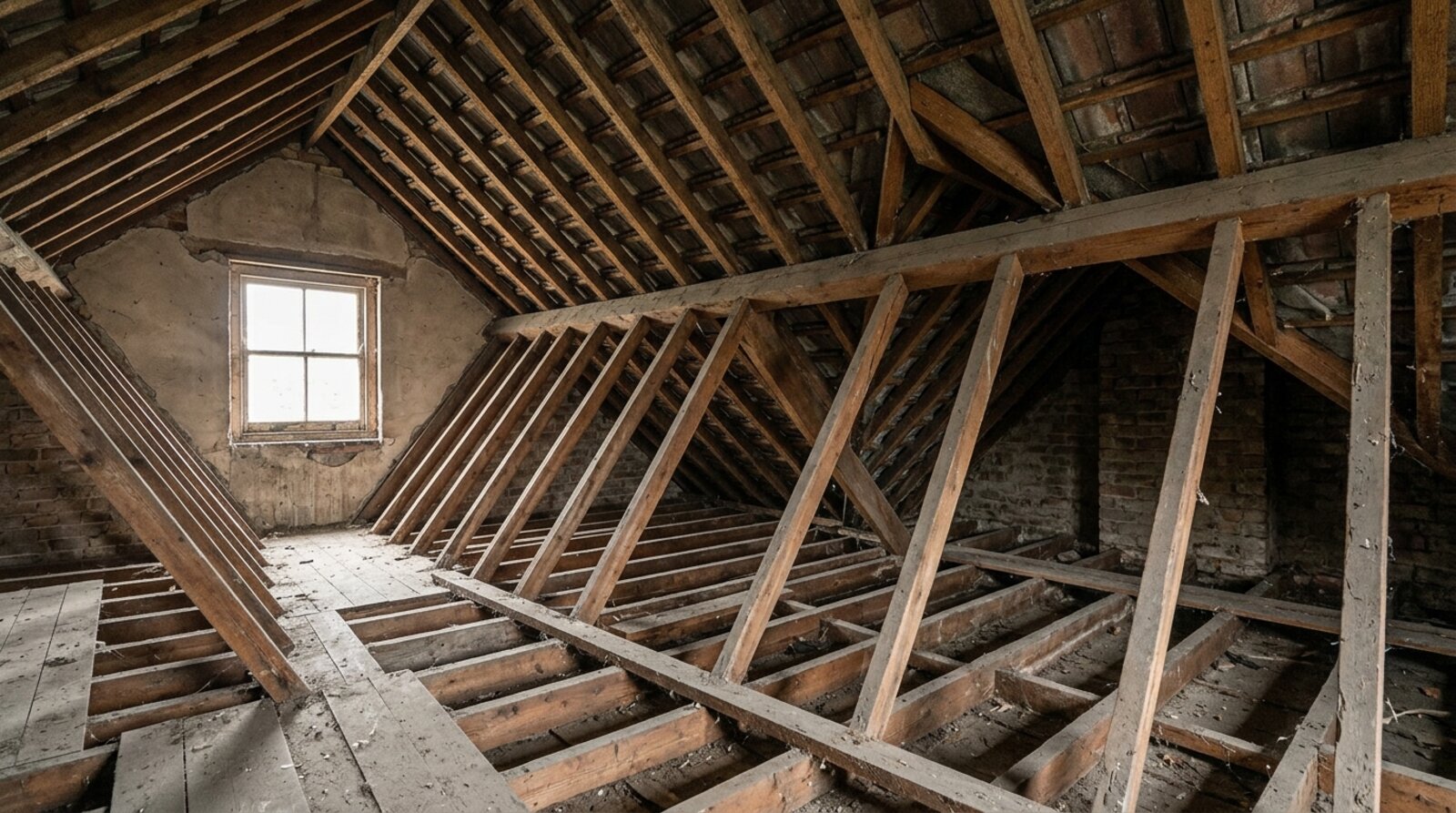
There is no single legal “minimum loft height” in the Building Regulations, but the staircase rule is the one that catches people out. Building control looks for around 1.9m of headroom measured to the centre of the staircase, with a reduced allowance of roughly 1.8m acceptable towards the lower edge where the roof slopes. If you cannot achieve that over the stairs, the design has to change, which is one reason dormers and hip-to-gable work are so common: they create the height the stairs and the room both need.
Permitted development versus planning permission
Many loft conversions can go ahead under permitted development, which means no full planning application. The Planning Portal sets out volume allowances for the additional roof space: up to 40 cubic metres for terraced houses and up to 50 cubic metres for detached and semi-detached houses, including any earlier roof enlargements. Other conditions apply too: the work must not go above the height of the existing roof, must not extend beyond the existing roof slope on the front elevation facing a road, and any side-facing windows must be obscure-glazed and, if they open, fixed shut below 1.7m from the floor. Always confirm the current rules and your own situation on the Planning Portal before committing.
You will need full planning permission if the work exceeds those volume limits, if you want a mansard or a front-facing dormer, if you live in a conservation area, or if permitted development rights have been removed from your property (common with some new-build estates). Flats and maisonettes do not get permitted development rights for loft conversions at all, so they always need a planning application. If you want certainty, you can apply to your local council for a Lawful Development Certificate confirming the work is permitted; many Kent buyers and conveyancers expect to see one.
Party wall and Building Regulations
If you live in a terrace or semi, the Party Wall etc. Act 1996 almost certainly applies. Cutting beams into a shared wall or building close to a boundary means you must serve formal notice on your neighbours before work begins. This is separate from planning and is easy to overlook, so factor in time for notices and any party wall surveyor agreement.
Every loft conversion needs Building Regulations approval regardless of whether it needs planning permission. Building control will check several things:
- Structure. The existing joists were designed to hold up a ceiling, not a floor full of furniture and people, so new floor joists or steel beams are nearly always required.
- Fire safety and escape. Adding a habitable floor changes the escape route for the whole house. Expect a protected stairway with fire doors to the rooms off it, mains-powered interconnected smoke alarms, and in some cases an escape window. This is one of the most important parts of the sign-off.
- Insulation and energy efficiency. The new roof and walls must meet current thermal standards, which is part of why finished head height shrinks compared with the bare loft.
- Stairs. A fixed, compliant staircase is required; a loft ladder does not satisfy the rules for a habitable room.
How much value it adds
A well-built loft conversion is one of the better returns in home improvement, mainly because it usually adds a bedroom rather than just floor space. Research from Nationwide has indicated that adding a loft conversion with a large double bedroom and a bathroom could lift the value of a typical three-bedroom, one-bathroom house by as much as around 25%, with the largest gains where the extra bedroom takes a smaller house up into a higher band. The real figure for your home depends on local demand, the quality of the finish, and how many bedrooms you start with, so treat that as an upper estimate rather than a promise. For most Kent homeowners the value lift, plus the cost and upheaval of moving avoided, is what makes the project worthwhile. If you want to talk through which type suits your roof, start at the Contemporary Structures homepage.
Frequently asked questions
Do I need planning permission for a loft conversion in Kent?
Often no. Many conversions fall under permitted development if they stay within the volume limits and conditions. You will need planning permission for a mansard, a front-facing dormer, anything over the volume allowance, or any work in a conservation area or where permitted development rights have been removed. Check your specific case on the Planning Portal.
What is the minimum head height for a loft conversion?
There is no single legal minimum, but as a practical guide you want roughly 2.2m to 2.4m of existing height from joists to ridge. The firmer rule is the staircase: building control looks for around 1.9m of headroom to the centre of the stairs. If your loft falls short, a dormer or hip-to-gable can create the height you need.
Is a Velux conversion cheaper than a dormer?
Yes. A rooflight or Velux conversion leaves the roof shape unchanged and only fits windows into the slope, so it is the cheapest and quickest option. A dormer adds new structure to gain headroom and floor space, which costs more. The right choice depends on how much usable height your loft already has.
Do I have to tell my neighbours?
If you share a wall, yes. The Party Wall etc. Act 1996 requires you to serve formal notice on adjoining owners before cutting into a shared wall or building near the boundary. This is separate from planning and Building Regulations, so allow time for it before work starts.
Will the floor of my loft hold the weight?
Not as it stands. The existing joists were sized to support a ceiling below, not a floor people walk on. New floor joists, and usually steel beams, are part of nearly every conversion and form a key part of the Building Regulations structural check.
How long does a loft conversion take?
A straightforward rooflight or dormer conversion typically runs over several weeks, while a hip-to-gable or mansard takes longer because of the extra structural work. The build itself is usually shorter than the design, approvals and party wall stage that comes before it, so plan for the whole process rather than just the construction time.
Related guides
- Conservatory Roof Replacement vs Glass Film: Which Fixes a Too-Hot, Too-Cold Conservatory?
- Air Source Heat Pump Cost in 2026 After the £7,500 Grant: What You Actually Pay
- Do You Need Planning Permission for a Rear Extension in Kent? 2026 Permitted Development Rules
- How Much Does a Conservatory Base Cost in the UK? (2026 Price Guide)
- Do You Need a Party Wall Agreement for a Rear Extension? Cost and Rules Explained
- Underfloor Heating vs Radiators for a Home Extension: Cost, Running Bills and Which to Choose
- How Much Does a House Extension Cost in 2026? Full UK Price Breakdown
- Kent Home Improvement News: June 2026
- House Extensions: The Complete UK Homeowner’s Guide
- Single Storey Extension Ideas, Costs and Planning Rules
- Double Storey Extensions: Costs, Designs and What You Can Build
- Side Return Extensions Explained: Cost, Light and Layout
- Kent Home Improvement News: Mid-June 2026
- Garage Conversion Guide: Cost, Building Regs and Best Uses
- Extension vs Moving House: Which Is Better Value in Kent?
- Wraparound vs Rear Extension: Cost and Space Compared
- House Extension Builders in Kent: Costs, Lead Times and How to Choose
- Conservatory Guide: Styles, Costs and How to Choose One
- Kent Home Improvement News: Late June 2026
- How Much Does a Conservatory Cost in 2026? UK Prices by Type
- Conservatory vs Orangery vs Extension: Which to Build?
- Conservatory Roof Options: Glass, Polycarbonate and Tiled Compared
- Kent Home Improvement News: Early July 2026
- How to Keep a Conservatory Warm in Winter and Cool in Summer
- Tiled Conservatory Roof Cost and Replacement Process Explained
- Conservatories in Kent: Choosing an Installer, Costs and What to Ask
- Kent Home Improvement News: Mid-July 2026
- Roofing Guide: Repairs, Replacement, Materials and Costs
- New Roof Cost UK 2026: Replacement Prices by Roof Type
- Roof Repair Cost UK 2026: Slipped Tiles and Flashing Prices
- 7 Signs Your Roof Needs Replacing (and What You Can Ignore)
- Flat Roof vs Pitched Roof: Cost, Lifespan and Best Uses
- EPDM vs Felt vs Fibreglass Flat Roofs Compared
- Kent Home Improvement News: Mid-July 2026
- Roof Tile Types Explained: Clay, Concrete and Slate Compared
- Fascias, Soffits and Guttering: When to Replace and What It Costs
- How to Find a Good Roofer: Vetting Checklist for UK Homeowners
- Roofers in Kent: Costs, How to Choose and What to Ask in 2026
- Kitchen Renovation Guide: Planning, Cost and Design in 2026
- How Much Does a New Kitchen Cost in 2026? UK Price Guide
- Kitchen Layout Ideas: Galley, L-Shape, Island and Open Plan
- Worktops Compared: Quartz vs Granite vs Laminate vs Solid Wood
- Fitted vs Bespoke vs Flat-Pack Kitchens: Cost and Quality
- Kitchen Island Ideas, Sizes and Costs: A 2026 UK Guide
- Kent Home Improvement News: Late July 2026
- Open Plan Kitchen Diner: Costs, Layouts and Knock-Through Rules
- How Long Does a Kitchen Fitting Take? Realistic UK Timeline
- Kitchen Fitters in Kent: Costs and How to Choose (2026)
- Bathroom Renovation Guide: Planning, Cost and Layout
- New Bathroom Cost 2026: What You’ll Pay in the UK
- Kent Home Improvement: Roofing Costs Rise (Aug 2026)
- Small Bathroom Ideas: Layouts That Feel Bigger
- Wet Room Cost 2026: £2,000 to £9,000 Fitted, by Size
- En Suite Cost and Minimum Size: £4,000 to £10,000 in 2026
- Kent Home News: £9,000 Heat Pump Grant Now Open
- Electric vs Mixer vs Power Shower: What Your Boiler Allows
- Bathroom Underfloor Heating Cost: 16p an Hour to Run
- Window Replacement Cost 2026: £350 to £600 Per uPVC Window
- uPVC vs Aluminium Windows: the 1.4 U-Value Rule
- How Long Does a Bathroom Take to Fit? 5 to 10 Working Days
- Home Improvement News: Solar Up 14%, Heat Pumps Down 17%
- Double vs Triple Glazing: Part L Still Stops at 1.4
- Bathroom Fitters in Kent: What to Ask Before You Pay
- Sash Window Repair or Replace? What Kent Councils Allow
- Bifold vs Sliding Doors: What Building Regs Actually Set
- Composite Door Cost 2026: £550 to £2,350 Fitted
- Window Energy Ratings: Band B Is the Rule, Not C
- Replacement Windows: the 1.4 U-Value and Vent Rules
- Double Glazing Kent: the 1.4 U-Value Every Quote Must Hit
- Heat Pumps in Kent: the £7,500 Grant and the 1.5m³ Rule
- Heat Pump vs Gas Boiler: Break-Even Is a SCOP of 3.0
- Permitted Development Rights: The 8m Rear Extension Rule