
A single storey extension is the most common way Kent homeowners add usable space to a house without moving. Done well, it turns a cramped galley kitchen into an open kitchen-diner that opens onto the garden, or adds a utility, a snug or a home office. Done without checking the rules, it can stall halfway when a neighbour objects or building control flags a problem. This guide covers the main extension types, what they cost in 2026, and exactly which permissions you need before a digger arrives.
Types of single storey extension
Most single storey projects fall into three shapes, and the right one depends on your house and your plot.
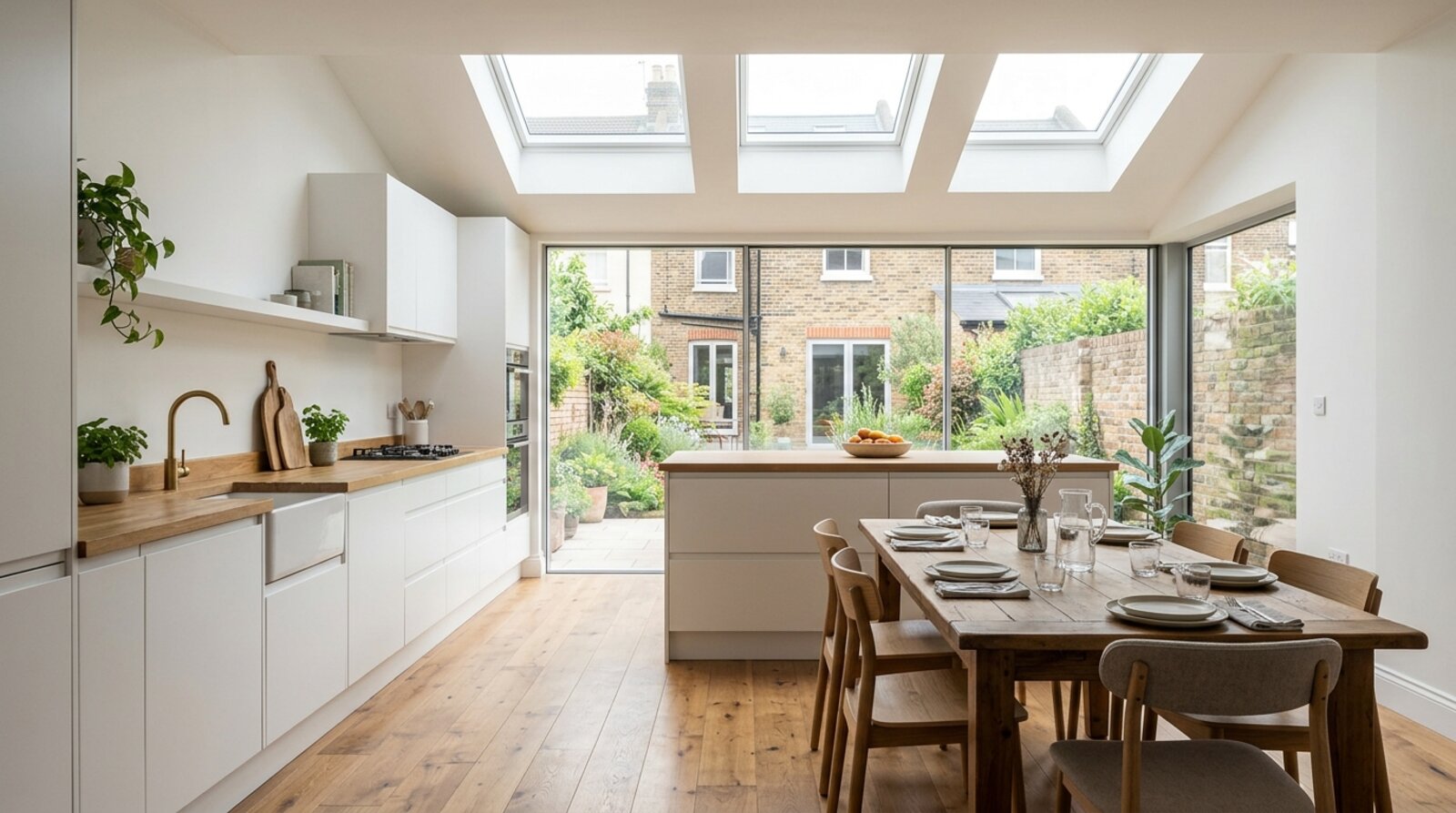
Rear extension. The workhorse. You build out from the back wall into the garden, usually to enlarge the kitchen or create a kitchen-diner. It suits detached, semi-detached and terraced houses across Kent, from Victorian terraces in Tunbridge Wells to post-war semis around Maidstone and Dartford.
Side return. Many Victorian and Edwardian terraces and semis have a narrow alley down one side, the “side return”, that sits dead next to the kitchen. Filling it in widens a long, thin kitchen by a metre or two and floods it with light if you add rooflights. It is one of the highest value moves on a period terrace because the footprint gain is modest but the layout improvement is large.
Wraparound. Combine a rear extension with a side return and you get an L-shaped wraparound that wraps around the back corner of the house. This delivers the most floor area and the most flexible open-plan layout, but it is the most likely of the three to need full planning permission rather than permitted development, because it usually breaches the side limits.
Popular features that lift the result: a flat or pitched roof with two or three rooflights for overhead daylight, a run of bifold or sliding doors onto the garden, a flush threshold between inside and patio, and a rear wall with a structural steel so you can open the original kitchen fully into the new space.
What a single storey extension costs in 2026
Builders quote per square metre of new floor area, then add the kitchen, glazing and any tricky groundworks on top. As a realistic 2026 guide for the South East, expect the build cost (shell, windows, doors, electrics, plumbing, plastering and decoration) to land in these bands before VAT:
- Basic spec: roughly £1,800 to £2,200 per square metre. Simple rectangular footprint, standard windows and door, modest finishes.
- Mid spec: roughly £2,200 to £2,800 per square metre. Better glazing, rooflights, a proper kitchen-diner layout and decent finishes.
- High spec: £3,000 per square metre and upwards, often £4,000 plus for large structural glazing, premium kitchens and underfloor heating.
Kent and the wider South East sit above the UK average, and London prices run higher again, so a builder’s quote here will usually be towards the top of any national figure you read. Two things matter when reading a quote. First, most builder prices are stated without VAT, so add 20 per cent to the headline number. Second, the per-square-metre rate normally excludes architect and structural engineer fees, planning and building control fees, and often the kitchen units and appliances, so confirm exactly what is in and out.
The biggest cost drivers are predictable. Groundworks rise sharply if you have poor ground, a high water table, or trees nearby that force deeper foundations. Large spans of bifold or sliding glazing and structural steel add up quickly. A high-end kitchen fit-out can rival the cost of the shell. Drainage that has to be diverted, and a build-over agreement if a public sewer runs under the extension, can both add time and money.
Does a single storey extension need planning permission?
Many single storey extensions are “permitted development”, meaning they do not need a full planning application, provided they stay inside set limits. The rules are national but the way your council applies them, and whether your rights have been restricted, varies, so always confirm with your local authority before you commit.
Under permitted development, the headline limits for a single storey rear extension are that it must not extend beyond the original rear wall by more than 3 metres for a terraced or semi-detached house, or 4 metres for a detached house. The extension cannot be higher than the highest part of the existing roof, the eaves cannot be higher than the existing eaves, and where the extension comes within 2 metres of a boundary the eaves height cannot exceed 3 metres. Materials must be similar in appearance to the existing house, and extensions and outbuildings together cannot cover more than half the land around the “original house”. The Planning Portal sets these out in full in its extensions mini guide.
There is a larger allowance under the neighbour consultation scheme, sometimes called the larger home extension or prior approval route. This lets a single storey rear extension reach up to 6 metres on a terraced or semi-detached house, or 8 metres on a detached house, with a maximum height of 4 metres. It is not automatic. You must notify the council with details and drawings, neighbours are consulted, and if any of them object the council decides whether the impact is acceptable. The larger limits do not apply on designated land, which includes conservation areas, and parts of Kent fall within conservation areas and Areas of Outstanding Natural Beauty, so this matters locally.
Permitted development rights can also be removed entirely by an Article 4 Direction, and they are tighter on listed buildings, flats and maisonettes. A wraparound that combines rear and side build-out usually exceeds the side limits and so tends to need full planning permission. The safe move is a quick call or pre-application chat with your district or borough planning team before you spend on detailed drawings.
Building regulations, party walls and other approvals
Planning permission is only one half of the picture. Building regulations apply to a single storey extension regardless of whether you needed planning permission. They govern structure, foundations, fire safety, drainage, insulation and energy efficiency, ventilation and the glazing ratio. You apply for building control through your council or an approved inspector, and the work is inspected at key stages with a completion certificate issued at the end. Skipping this causes real problems when you come to sell.
The Party Wall etc. Act 1996 often applies too. If you build on or astride the boundary, cut into a shared wall, or excavate foundations within 3 metres of a neighbour’s building and deeper than their foundations, you must serve written notice on the affected neighbour, typically at least one month before work starts for excavation notices. If they consent, you proceed. If they do not respond within 14 days or they dissent, a dispute is deemed to exist and surveyors are appointed to agree an award. The government’s Party Wall etc. Act 1996 explanatory booklet sets out the process. Reaching a party wall agreement does not remove the need for planning permission or building regulations approval; they are separate.
Two further checks catch people out. If a public sewer runs under or near the footprint you may need a build-over agreement from the water authority. And on a private estate or leasehold property, restrictive covenants can limit what you build even where planning rules allow it.
Rooflights, glazing and a realistic timeline
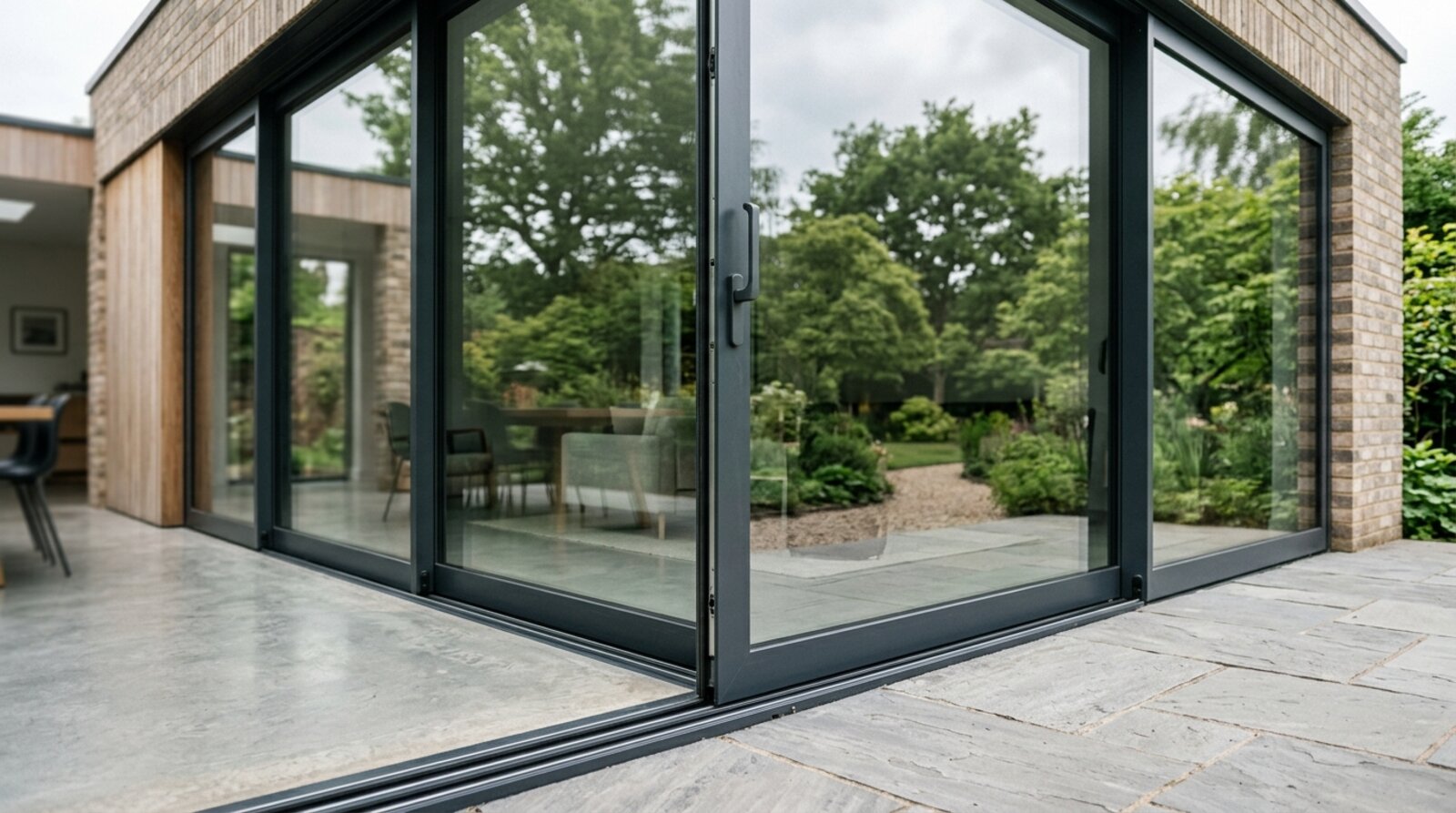
Light makes or breaks a single storey extension, because the original room behind it can otherwise end up gloomy. Rooflights in a flat or lean-to roof are the most effective fix and bring daylight deep into the plan, which is why side return projects almost always include them. At the garden end, bifold doors fold back to open the whole wall, while sliding doors keep slimmer sightlines and larger glass panes when shut. Both should be specified to meet building regulations for thermal performance, and a flush threshold needs careful detailing to stay watertight.
On timescale, plan for the paperwork to take as long as the build. A pre-application enquiry and a planning or prior approval decision typically run around eight weeks each once submitted, with design and drawings before that. The build itself, for a straightforward single storey rear extension, commonly takes around three to four months on site, longer for a wraparound, a complex glazed elevation, or if groundworks throw up surprises. Allow contingency in both your budget and your diary.
Frequently asked questions
How big can I build without planning permission?
Under permitted development a single storey rear extension can go up to 3 metres beyond the original rear wall on a terraced or semi-detached house, or 4 metres on a detached house, within the height and coverage limits. The prior approval neighbour consultation scheme can stretch this to 6 metres or 8 metres respectively, subject to council sign-off and not on designated land. Always confirm with your local council first.
Do I still need building regulations approval if it is permitted development?
Yes. Building regulations apply to a single storey extension whether or not it needed planning permission. They are a separate approval covering structure, fire safety, drainage, insulation and energy efficiency, and the work is inspected with a completion certificate at the end.
How much does a single storey extension cost in Kent?
Expect roughly £1,800 to £2,200 per square metre for a basic spec, £2,200 to £2,800 for mid spec, and £3,000 and upwards for high spec, before VAT and professional fees. Kent and the South East sit above the national average, and large glazing, structural steel, deep groundworks and a premium kitchen push the figure higher.
What is the Party Wall Act and does it apply to me?
The Party Wall etc. Act 1996 applies if you build on the boundary, cut into a shared wall, or excavate foundations within 3 metres of a neighbour’s building below their foundation level. You must serve written notice in advance, usually at least a month before excavation, and if the neighbour dissents, surveyors are appointed to agree an award.
How long does a single storey extension take to build?
A straightforward single storey rear extension usually takes around three to four months on site. Add design time and planning or prior approval decisions before that, each commonly running about eight weeks, so the whole project from first sketch to finished room often spans six to nine months.
What is the difference between bifold and sliding doors?
Bifold doors fold back in panels to open almost the entire wall to the garden, which suits indoor-outdoor living. Sliding doors keep larger panes of glass and slimmer frames when closed, giving cleaner views, but only part of the opening clears when slid. Both must meet building regulations for thermal performance.
If you are weighing up a rear, side return or wraparound and want it designed and detailed to clear planning and building control first time, see more guidance from Contemporary Structures.
Related guides
- Conservatory Roof Replacement vs Glass Film: Which Fixes a Too-Hot, Too-Cold Conservatory?
- Air Source Heat Pump Cost in 2026 After the £7,500 Grant: What You Actually Pay
- Do You Need Planning Permission for a Rear Extension in Kent? 2026 Permitted Development Rules
- How Much Does a Conservatory Base Cost in the UK? (2026 Price Guide)
- Do You Need a Party Wall Agreement for a Rear Extension? Cost and Rules Explained
- Underfloor Heating vs Radiators for a Home Extension: Cost, Running Bills and Which to Choose
- How Much Does a House Extension Cost in 2026? Full UK Price Breakdown
- Loft Conversion Cost and Types: Dormer, Hip-to-Gable and Velux Explained
- Kent Home Improvement News: June 2026
- House Extensions: The Complete UK Homeowner’s Guide
- Double Storey Extensions: Costs, Designs and What You Can Build
- Side Return Extensions Explained: Cost, Light and Layout
- Kent Home Improvement News: Mid-June 2026
- Garage Conversion Guide: Cost, Building Regs and Best Uses
- Extension vs Moving House: Which Is Better Value in Kent?
- Wraparound vs Rear Extension: Cost and Space Compared
- House Extension Builders in Kent: Costs, Lead Times and How to Choose
- Conservatory Guide: Styles, Costs and How to Choose One
- Kent Home Improvement News: Late June 2026
- How Much Does a Conservatory Cost in 2026? UK Prices by Type
- Conservatory vs Orangery vs Extension: Which to Build?
- Conservatory Roof Options: Glass, Polycarbonate and Tiled Compared
- Kent Home Improvement News: Early July 2026
- How to Keep a Conservatory Warm in Winter and Cool in Summer
- Tiled Conservatory Roof Cost and Replacement Process Explained
- Conservatories in Kent: Choosing an Installer, Costs and What to Ask
- Kent Home Improvement News: Mid-July 2026
- Roofing Guide: Repairs, Replacement, Materials and Costs
- New Roof Cost UK 2026: Replacement Prices by Roof Type
- Roof Repair Cost UK 2026: Slipped Tiles and Flashing Prices
- 7 Signs Your Roof Needs Replacing (and What You Can Ignore)
- Flat Roof vs Pitched Roof: Cost, Lifespan and Best Uses
- EPDM vs Felt vs Fibreglass Flat Roofs Compared
- Kent Home Improvement News: Mid-July 2026
- Roof Tile Types Explained: Clay, Concrete and Slate Compared
- Fascias, Soffits and Guttering: When to Replace and What It Costs
- How to Find a Good Roofer: Vetting Checklist for UK Homeowners
- Roofers in Kent: Costs, How to Choose and What to Ask in 2026
- Kitchen Renovation Guide: Planning, Cost and Design in 2026
- How Much Does a New Kitchen Cost in 2026? UK Price Guide
- Kitchen Layout Ideas: Galley, L-Shape, Island and Open Plan
- Worktops Compared: Quartz vs Granite vs Laminate vs Solid Wood
- Fitted vs Bespoke vs Flat-Pack Kitchens: Cost and Quality
- Kitchen Island Ideas, Sizes and Costs: A 2026 UK Guide
- Kent Home Improvement News: Late July 2026
- Open Plan Kitchen Diner: Costs, Layouts and Knock-Through Rules
- How Long Does a Kitchen Fitting Take? Realistic UK Timeline
- Kitchen Fitters in Kent: Costs and How to Choose (2026)
- Bathroom Renovation Guide: Planning, Cost and Layout
- New Bathroom Cost 2026: What You’ll Pay in the UK
- Kent Home Improvement: Roofing Costs Rise (Aug 2026)
- Small Bathroom Ideas: Layouts That Feel Bigger
- Wet Room Cost 2026: £2,000 to £9,000 Fitted, by Size
- En Suite Cost and Minimum Size: £4,000 to £10,000 in 2026
- Kent Home News: £9,000 Heat Pump Grant Now Open
- Electric vs Mixer vs Power Shower: What Your Boiler Allows
- Bathroom Underfloor Heating Cost: 16p an Hour to Run
- Window Replacement Cost 2026: £350 to £600 Per uPVC Window
- uPVC vs Aluminium Windows: the 1.4 U-Value Rule
- How Long Does a Bathroom Take to Fit? 5 to 10 Working Days
- Home Improvement News: Solar Up 14%, Heat Pumps Down 17%
- Double vs Triple Glazing: Part L Still Stops at 1.4
- Bathroom Fitters in Kent: What to Ask Before You Pay
- Sash Window Repair or Replace? What Kent Councils Allow
- Bifold vs Sliding Doors: What Building Regs Actually Set
- Composite Door Cost 2026: £550 to £2,350 Fitted
- Window Energy Ratings: Band B Is the Rule, Not C
- Replacement Windows: the 1.4 U-Value and Vent Rules
- Double Glazing Kent: the 1.4 U-Value Every Quote Must Hit
- Heat Pumps in Kent: the £7,500 Grant and the 1.5m³ Rule
- Heat Pump vs Gas Boiler: Break-Even Is a SCOP of 3.0
- Permitted Development Rights: The 8m Rear Extension Rule