
A black kitchen can look sharp and calm, or it can look like a cave with a fridge in it. The difference is rarely the colour itself. It comes down to four choices: which black you pick, the sheen on the doors, what you put against the black, and how much light the room gets once the units go in. These black kitchen ideas take each of those in turn, with the trade-offs a kitchen fitter or designer in Kent will raise before you order.
Start with the room, not the door sample
Black absorbs most of the light that lands on it, so a black kitchen asks more of the room than a white one. Before you fall for a showroom display, look at three things in your own kitchen.
- Daylight. A south or west facing kitchen with a large window or bifold doors can carry full height black units. A north facing galley with one small window usually cannot, unless the black is kept to the base units.
- Size. In a small room, black on every wall pulls the walls in. In a large open plan kitchen diner, black units can anchor the cooking zone and stop it looking like a showroom.
- Floor. A pale floor bounces light back up into dark base units. A dark floor and dark base units together make the bottom half of the room disappear in the evening.
Showroom kitchens are lit by banks of spotlights, so the black usually looks better there than it will at home. Ask for a large door sample, take it home, and look at it in the evening under your existing lights.
Matt black kitchen units: what to expect
Matt black is the version most people picture: flat, velvety doors with no reflections. It hides the uneven light of a real room well and looks modern without trying. The catch is marks. Grease, flour dust and fingerprints show more on a dark matt door than on almost any other finish, especially around the handles and the bin drawer.
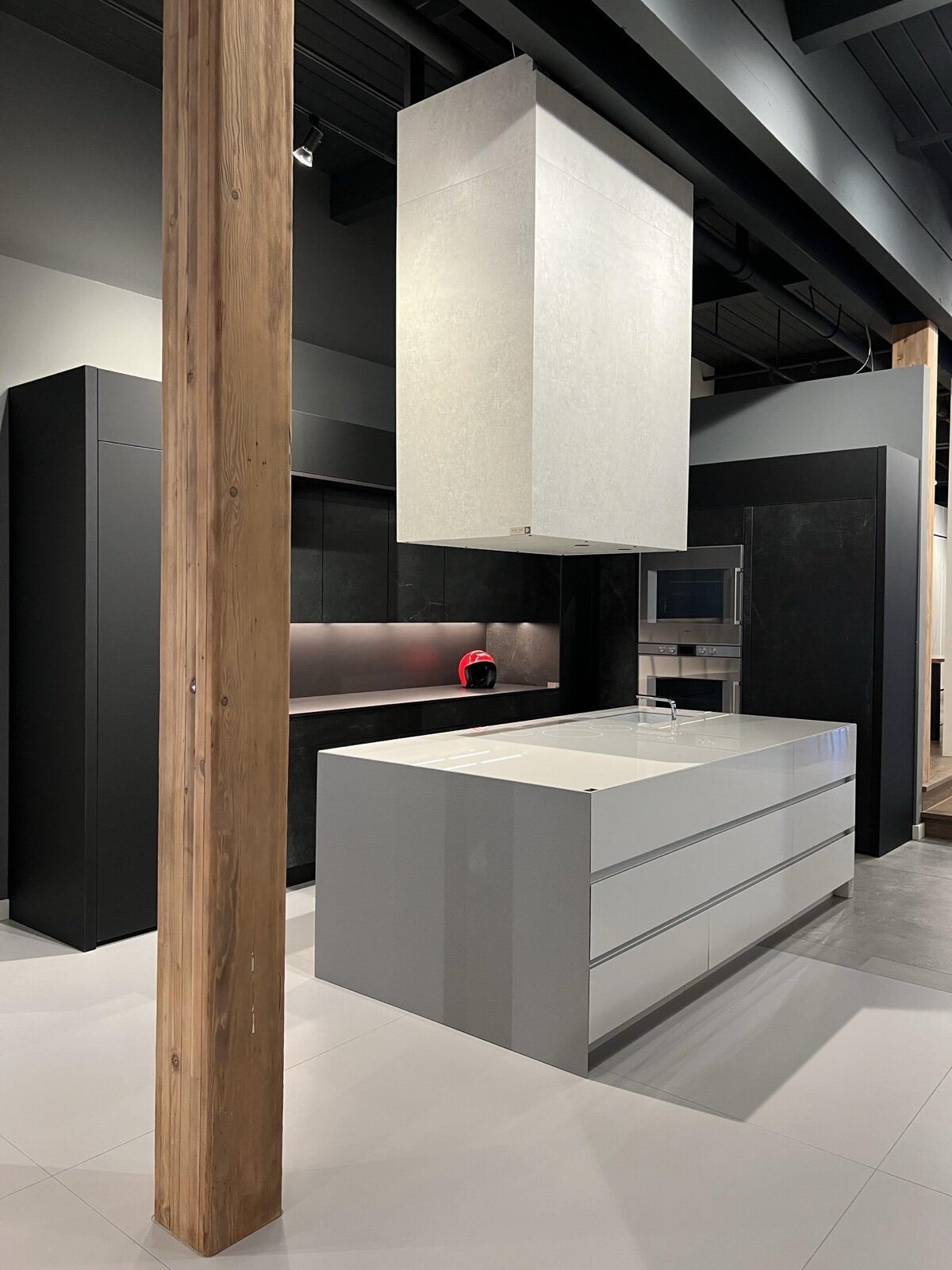
There are three practical answers:
- Handleless doors with a recessed rail keep fingers off the face of the door, which is where marks build up.
- Anti-fingerprint surfaces. Some laminates are made for exactly this problem. FENIX NTM, made by Arpa Industriale in Italy, is sold for kitchen fronts and worktops and is described by its maker as extremely matt, anti-fingerprint and soft to the touch, with thermal healing of superficial micro scratches. Expect to pay more than for a standard matt laminate, and ask the supplier how the healing is done before you rely on it.
- Painted timber or MDF in a durable eggshell can be touched up if it chips, which a foil or laminate door cannot.
Whichever you choose, ask for the cleaning instructions in writing. Many matt finishes do not like abrasive cloths or strong degreasers, and a polished patch on a matt black door is permanent.
Gloss black kitchens and reflections
High gloss black reflects light around the room, which helps a smaller or darker space, and it wipes clean easily. It also shows every smear and reflects everything opposite it, including the window, the ceiling lights and you. Gloss works best on flat slab doors in a contemporary kitchen, ideally on the base units only, with a lighter finish above so the room does not become a hall of mirrors.
If you like the look of gloss but not the upkeep, a satin or soft sheen finish sits between the two: it hides fingerprints better than gloss and reflects a little more light than matt.
Not all blacks are the same black
Paint makers sell several blacks, and the undertone changes how the kitchen feels. Farrow & Ball is a useful example because it describes its own colours plainly:
- Pitch Black No. 256 is described as a true black, “as pure a black as you can get”. It suits a crisp, modern kitchen with white or concrete grey surfaces.
- Railings No. 31 is “more blue than black”, a softer alternative to pure black. It looks dark navy in strong daylight and suits brass handles and warm timber.
- Off-Black No. 57 is a soft black that the maker says is more flattering to adjacent colours than the stronger blacks, with less of the cool blue of Railings. It is the safer choice next to cream walls or an older house’s painted woodwork.
You can read the descriptions on Farrow & Ball’s Off-Black page and its neighbours. The same logic applies to factory finished doors: ask whether the black leans blue, brown or green, and look at it next to your worktop sample before you sign. For painting existing doors yourself, our guide to the best kitchen cupboard paint covers primers and surfaces.
Worktops, splashbacks and what to pair with black
The worktop decides whether a black kitchen reads as warm or cold. The common pairings, and how they behave:
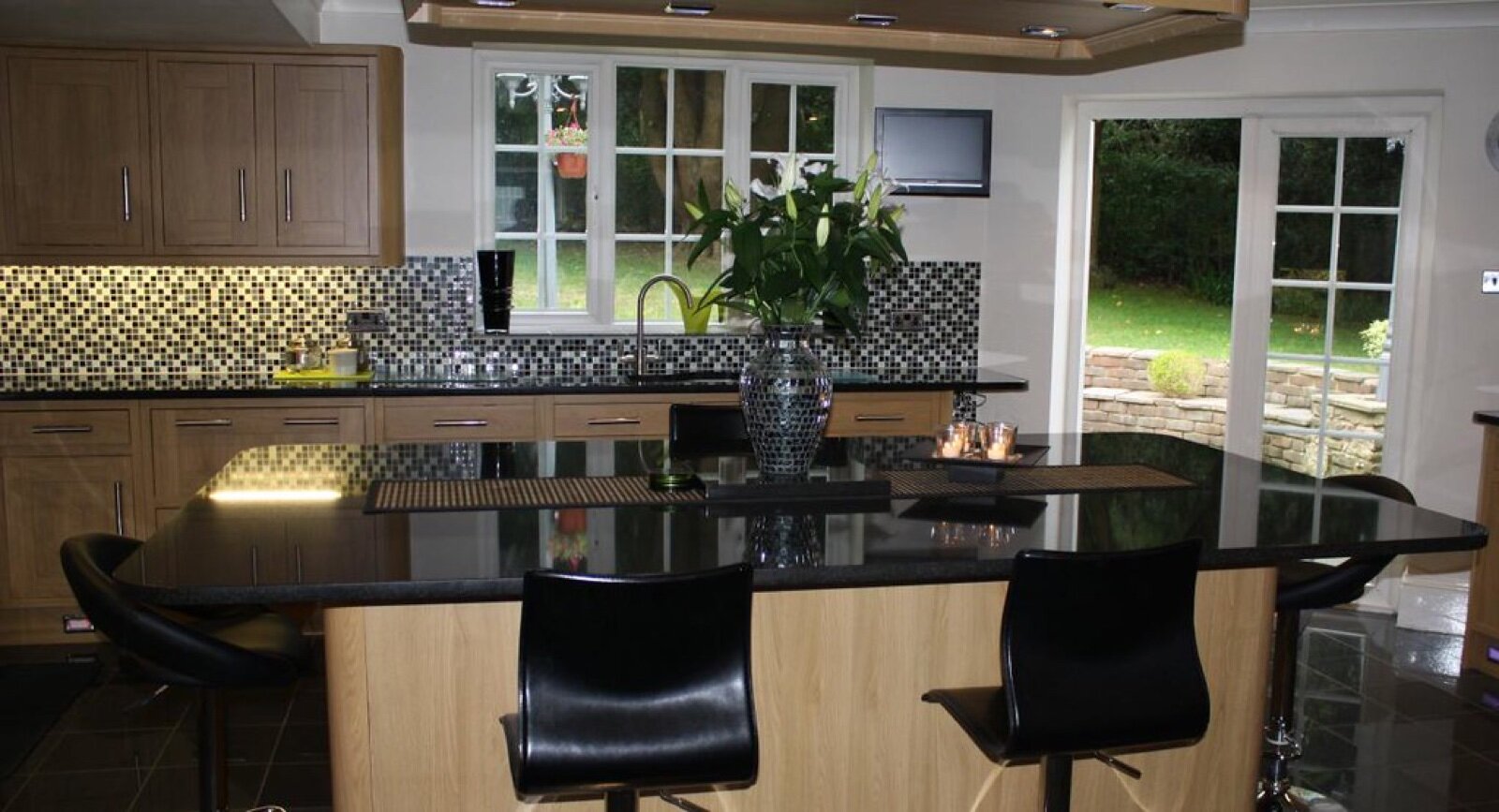
- Black units with a white or pale grey worktop. The most forgiving combination. The pale surface reflects light onto the work area, and crumbs and water marks are less obvious than on a black top.
- Black units with oak or walnut. Timber worktops, open shelves or an oak island stop black from feeling severe. Oak needs oiling and does not like standing water near the sink, so many kitchens use timber on the island and a stone or composite top by the sink.
- All black, units and worktop. Dramatic, but a black worktop shows limescale, water marks and dust more than almost any other colour, and a dark polished stone top shows every smear in a low evening light. Choose a honed or textured finish if you go this way.
- Black island only. The lowest risk way in. Keep the wall runs pale and make the island the dark object in the room.
Splashbacks follow the same rule. A pale glass, tile or stone splashback behind a black run lifts the whole wall; a black splashback behind black units needs strong task lighting or the cooking zone becomes hard to see.
Sinks and taps can carry the colour without the risk. Black composite sinks are widely available: Blanco, for example, sells black in its Silgranit range, a granite composite it describes as resistant to scratches, heat and acids. Black taps are common too; ask whether the finish is PVD or a powder coat, since finish quality varies and hard Kent water marks dark taps quickly.
Lighting a black kitchen properly
This is where most black kitchens succeed or fail. Plan the lighting before the units are fixed, because the cables need to go in at first fix.
- Under cabinet task lighting on every wall run. Without it, you will be chopping in the shadow of your own head.
- More ceiling light than you think. A black kitchen typically needs more downlights, or brighter ones, than the same room in white. A lighting plan from your designer should show the layout.
- Warm white, not cool white. Warm light flatters matt black and timber; very cool light can make black look grey and flat.
- Plinth and shelf lighting lifts the bottom of a dark run off the floor and makes the room easier to move around at night.
Any new circuits or work in the kitchen that falls under Part P of the Building Regulations needs a registered electrician or a building control notification, so build that into your fitter’s quote.
Black kitchen ideas for smaller rooms
A small kitchen can still be black. Keep the black low and the light high:
- Black base units, pale wall units or open shelves above.
- A pale worktop and splashback.
- Glass fronted or open upper units to stop the walls closing in.
- One strong material against the black, such as oak shelves or a brass rail, rather than three.
If you are planning a new kitchen or a kitchen extension in Kent and want the layout, finishes and lighting planned together, Contemporary Structures can help.
Frequently asked questions
Are black kitchens hard to keep clean?
They show marks more than mid tones. Dust, flour, grease and fingerprints are more visible on dark doors and dark worktops, especially in matt finishes. Handleless doors, an anti-fingerprint laminate and a pale worktop all reduce the problem.
Is matt or gloss better for a black kitchen?
Matt looks calmer and hides reflections but shows fingerprints and grease. Gloss wipes clean easily and reflects light, which helps a dark room, but shows smears and mirrors the room back at you. Satin sits between the two.
Will a black kitchen make my room look smaller?
It can, if the room is small and gets little daylight. Keeping the black to the base units or an island, with pale walls, worktops and upper units, avoids that.
What colour worktop goes with black kitchen units?
White or pale grey is the most practical and the brightest. Oak or walnut warms the look. A black worktop is the most dramatic but shows water marks and limescale the most.
What is the softest black paint for a kitchen?
Look for a black with a warm or soft undertone rather than a true black. Farrow & Ball, for example, describes Off-Black No. 57 as a soft black that is kinder to neighbouring colours than its stronger blacks.
Do black kitchens go out of fashion?
Dark kitchens have been popular for years, but any strong colour dates faster than a neutral. If you are worried, put the black on an island or the base units, which are cheaper to repaint or reface later than a whole kitchen.
Related guides
- Conservatory Roof Replacement vs Glass Film: Which Fixes a Too-Hot, Too-Cold Conservatory?
- Air Source Heat Pump Cost in 2026 After the £7,500 Grant: What You Actually Pay
- Do You Need Planning Permission for a Rear Extension in Kent? 2026 Permitted Development Rules
- How Much Does a Conservatory Base Cost in the UK? (2026 Price Guide)
- Do You Need a Party Wall Agreement for a Rear Extension? Cost and Rules Explained
- Underfloor Heating vs Radiators for a Home Extension: Cost, Running Bills and Which to Choose
- How Much Does a House Extension Cost in 2026? Full UK Price Breakdown
- Loft Conversion Cost and Types: Dormer, Hip-to-Gable and Velux Explained
- Kent Home Improvement News: June 2026
- House Extensions: The Complete UK Homeowner’s Guide
- Single Storey Extension Ideas, Costs and Planning Rules
- Double Storey Extensions: Costs, Designs and What You Can Build
- Side Return Extensions Explained: Cost, Light and Layout
- Kent Home Improvement News: Mid-June 2026
- Garage Conversion Guide: Cost, Building Regs and Best Uses
- Extension vs Moving House: Which Is Better Value in Kent?
- Wraparound vs Rear Extension: Cost and Space Compared
- House Extension Builders in Kent: Costs, Lead Times and How to Choose
- Conservatory Guide: Styles, Costs and How to Choose One
- Kent Home Improvement News: Late June 2026
- How Much Does a Conservatory Cost in 2026? UK Prices by Type
- Conservatory vs Orangery vs Extension: Which to Build?
- Conservatory Roof Options: Glass, Polycarbonate and Tiled Compared
- Kent Home Improvement News: Early July 2026
- How to Keep a Conservatory Warm in Winter and Cool in Summer
- Tiled Conservatory Roof Cost and Replacement Process Explained
- Conservatories in Kent: Choosing an Installer, Costs and What to Ask
- Kent Home Improvement News: Mid-July 2026
- Roofing Guide: Repairs, Replacement, Materials and Costs
- New Roof Cost UK 2026: Replacement Prices by Roof Type
- Roof Repair Cost UK 2026: Slipped Tiles and Flashing Prices
- 7 Signs Your Roof Needs Replacing (and What You Can Ignore)
- Flat Roof vs Pitched Roof: Cost, Lifespan and Best Uses
- EPDM vs Felt vs Fibreglass Flat Roofs Compared
- Kent Home Improvement News: Mid-July 2026
- Roof Tile Types Explained: Clay, Concrete and Slate Compared
- Fascias, Soffits and Guttering: When to Replace and What It Costs
- How to Find a Good Roofer: Vetting Checklist for UK Homeowners
- Roofers in Kent: Costs, How to Choose and What to Ask in 2026
- Kitchen Renovation Guide: Planning, Cost and Design in 2026
- How Much Does a New Kitchen Cost in 2026? UK Price Guide
- Kitchen Layout Ideas: Galley, L-Shape, Island and Open Plan
- Worktops Compared: Quartz vs Granite vs Laminate vs Solid Wood
- Fitted vs Bespoke vs Flat-Pack Kitchens: Cost and Quality
- Kitchen Island Ideas, Sizes and Costs: A 2026 UK Guide
- Kent Home Improvement News: Late July 2026
- Open Plan Kitchen Diner: Costs, Layouts and Knock-Through Rules
- How Long Does a Kitchen Fitting Take? Realistic UK Timeline
- Kitchen Fitters in Kent: Costs and How to Choose (2026)
- Bathroom Renovation Guide: Planning, Cost and Layout
- New Bathroom Cost 2026: What You’ll Pay in the UK
- Kent Home Improvement: Roofing Costs Rise (Aug 2026)
- Small Bathroom Ideas: Layouts That Feel Bigger
- Wet Room Cost 2026: £2,000 to £9,000 Fitted, by Size
- En Suite Cost and Minimum Size: £4,000 to £10,000 in 2026
- Kent Home News: £9,000 Heat Pump Grant Now Open
- Electric vs Mixer vs Power Shower: What Your Boiler Allows
- Bathroom Underfloor Heating Cost: 16p an Hour to Run
- Window Replacement Cost 2026: £350 to £600 Per uPVC Window
- uPVC vs Aluminium Windows: the 1.4 U-Value Rule
- How Long Does a Bathroom Take to Fit? 5 to 10 Working Days
- Home Improvement News: Solar Up 14%, Heat Pumps Down 17%
- Double vs Triple Glazing: Part L Still Stops at 1.4
- Bathroom Fitters in Kent: What to Ask Before You Pay
- Sash Window Repair or Replace? What Kent Councils Allow
- Bifold vs Sliding Doors: What Building Regs Actually Set
- Composite Door Cost 2026: £550 to £2,350 Fitted
- Window Energy Ratings: Band B Is the Rule, Not C
- Replacement Windows: the 1.4 U-Value and Vent Rules
- Double Glazing Kent: the 1.4 U-Value Every Quote Must Hit
- Heat Pumps in Kent: the £7,500 Grant and the 1.5m³ Rule
- Heat Pump vs Gas Boiler: Break-Even Is a SCOP of 3.0
- Permitted Development Rights: The 8m Rear Extension Rule
- Air Source vs Ground Source Heat Pump: £13k or £26k?
- Kent Home News: Council Merger Paused, Heat Pump Bids Up 81%
- Building Regulations Approval: Kent Fees, 10-Year Rule
- Boiler Upgrade Scheme: £9,000 Grants From 21 July 2026
- New Boiler Cost 2026: £1,800 to £4,500 Fitted
- Do Heat Pumps Work in Old Houses? Yes, With 3 Conditions
- Heat Pump Installers in Kent: 8 Checks Before You Sign
- House Rendering in Kent: When the Wall Must Be Insulated
- What Is TrustMark? The Kent Trade Badges That Count
- Home Improvement Grants in Kent: ECO4 Ends 31 December
- Kent Home News: Heating Oil to Be Regulated, £9,000 Grant
- Conservation Area Planning Rules: The 3m Rear Limit
- How to Apply for Planning Permission in Kent: £548, 8 Weeks
- Best Kitchen Cupboard Paint: Match It to the Door Surface
- Should You Pay Builders a Deposit? How Much, and How
- Porch Planning Permission: The 3m² Rule and When It Fails