
Do heat pumps work in old houses? Yes, and the evidence for it is now stronger than the pub wisdom against it. The UK government’s Electrification of Heat trial put 742 heat pumps into homes built from before 1919 through to after 2001 and concluded they could be installed successfully in every type of property it tested. A German field study by Fraunhofer ISE, monitoring homes built between 1826 and 2001, found no correlation between a building’s age and the efficiency of its heat pump.
What decides whether a heat pump works in an old house is not the date over the door. It is three things: how much heat the house loses, whether the radiators are big enough to heat it at a lower water temperature, and whether the outdoor unit can go somewhere that planning and the neighbours will accept. This page takes each in turn, with the specific points that catch out owners of Victorian and Edwardian homes across Kent.
What the trials actually found about older homes
The Electrification of Heat Demonstration Project was funded by the Department for Energy Security and Net Zero and run by Energy Systems Catapult. Its interim results, published in March 2023, measured a median seasonal performance factor (SPF) of 2.80 for air source heat pumps across the trial. In plain terms, every unit of electricity produced 2.8 units of heat over a year. On the coldest days monitored, with daily mean temperatures as low as minus 6°C, the median system efficiency was still 2.44.
Two findings matter most for an older house:
- High temperature heat pumps did about as well as standard ones. These are units that can reach flow temperatures similar to a gas boiler, which reduces how much has to change inside a draughty or solid-walled house. Catapult reported their efficiency as similar to low temperature units, partly because weather compensation only asked for the high temperatures on cold days.
- Results varied a lot between installs. Catapult was blunt that performance variation remained high, which points at design and installation quality rather than house type. A heat pump that has been sized by guesswork will disappoint in any house, old or new.
Fraunhofer ISE’s study, completed in November 2025, monitored 77 systems and recorded air source SPFs from 2.6 to 4.9, averaging 3.4. Its two conclusions that answer the old-house question directly: no correlation between year of construction and efficiency, and adequately sized radiators can run at similarly low temperatures to underfloor heating.
Historic England, the body most cautious about altering old buildings, now says the same in its own advice: contrary to some misconceptions, heat pumps can work for many older buildings, provided the design is carefully considered.
Condition one: know the heat loss, room by room
A gas boiler is usually oversized, so it hides a leaky house. A heat pump is sized to the house, so the number has to be right. Any installer working under the Boiler Upgrade Scheme must be MCS certified, and MCS installers design from a room-by-room heat loss calculation. Ask to see it. It should list every room, its walls, windows and floor, and the heat it needs on a design cold day. If a quote arrives with a kilowatt figure and no calculation behind it, get another quote.
Old houses in Kent have predictable weak points that the survey should pick up:
- Solid walls. Most homes built before the 1920s have solid brick walls with no cavity. They lose more heat than cavity walls, which raises the heat demand, but they do not rule a heat pump out. They just make the radiator sizing more important.
- Draughts. Sash windows, open fireplaces and gappy suspended timber floors lose a lot of heat for little cost to fix. Draught-proofing sashes, fitting a chimney balloon or damper in unused flues and sealing gaps at skirting level are usually the best value work in the whole project.
- Thin loft insulation. Topping it up is cheap, quick and reversible.
Be careful with heavier measures. Historic England’s guidance argues for a whole building approach because older homes built from breathable materials such as lime mortar and solid brick can suffer damp if they are wrapped in the wrong insulation. Internal or external wall insulation on a solid-walled house is a decision to take with proper advice, not something to add because a heat pump quote suggested it.
You do not have to insulate first to get the grant. GOV.UK’s eligibility page says you are still eligible if you have already had insulation funding, and since 8 May 2024 the scheme has not required outstanding loft or cavity wall insulation recommendations to be done before you apply.
Condition two: radiators sized for lower water temperatures
This is where most old-house installs are won or lost. A gas boiler typically sends water round the radiators hot enough that a modest radiator heats a room quickly. A heat pump is most efficient at lower flow temperatures, so each radiator needs more surface area to put the same heat into the room.
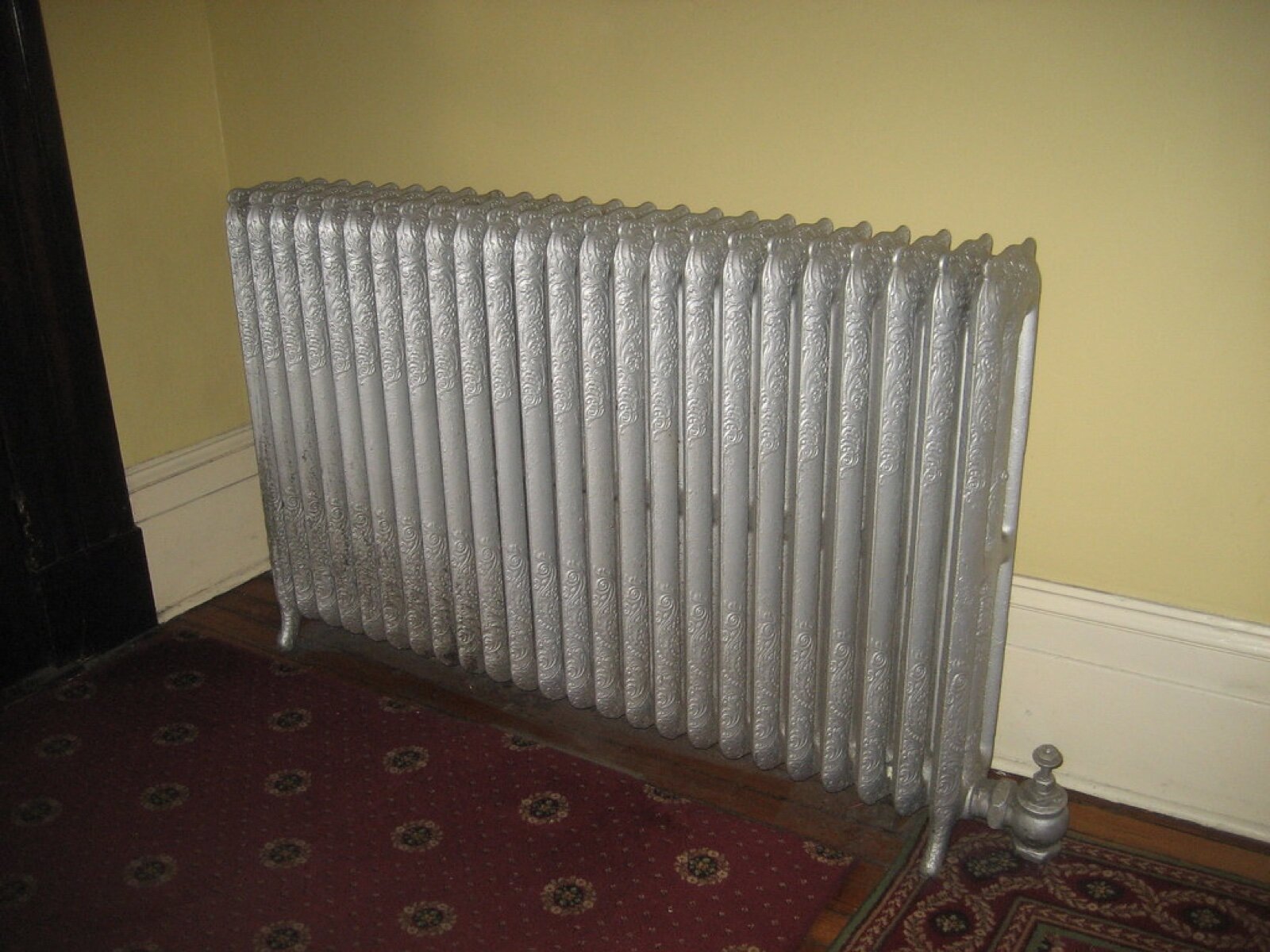
In practice that means:
- Some radiators get bigger, not all. The heat loss calculation shows which rooms are short. Often the bay-fronted living room and a cold back bedroom need upgrading while hallways and smaller rooms are fine as they are.
- Double panel convectors replace single panels in the same wall space where room layout is tight. In period rooms where looks matter, column radiators are an option, sized from the same calculation.
- Underfloor heating suits rooms already being rebuilt, such as a new kitchen extension, because it runs at low temperatures across a large area. It is rarely worth lifting original floors just for it.
- Old pipework should be checked. Very narrow microbore pipes, common in 1970s and 1980s upgrades of older houses, can limit how much water reaches the radiators. The installer should say whether yours need replacing.
Where the house cannot be made to work at low temperatures without changes you are not prepared to make, a high temperature heat pump is the route the trial evidence supports. It typically costs more to run per unit of heat than a well-designed low temperature system, but it avoids the disruption.
Plan for a hot water cylinder too. Heat pumps do not make hot water on demand like a combi, so a house converting from a combi needs space for a cylinder, often in an airing cupboard or loft.
Condition three: a place for the outdoor unit
Since 29 May 2025, air source heat pumps on houses in England fall under updated permitted development rules. Under Class G of the General Permitted Development Order, a house can have an outdoor unit of up to 1.5 cubic metres without a planning application (two units for a detached house, one for other houses), the old one-metre-from-the-boundary rule has gone, and the unit must comply with the MCS planning standard, which covers noise. The exclusions are the ones that hit older homes:
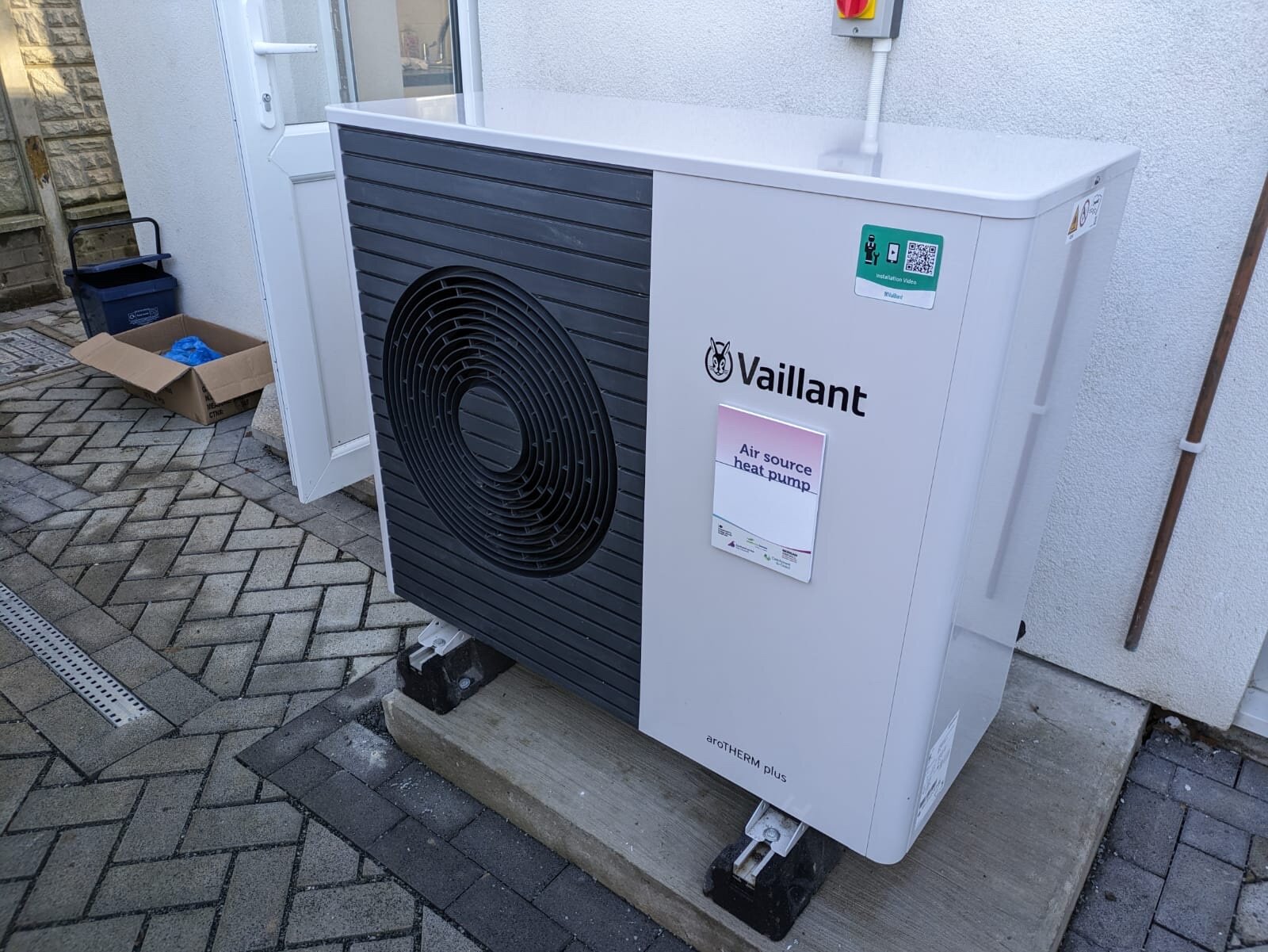
- Listed buildings. Permitted development does not apply on a listed building or within its curtilage, so you need planning permission and, for anything fixed to the building, listed building consent.
- Conservation areas. The unit cannot go on a wall or roof that fronts a highway, or closer to a bounding highway than the house itself. A rear wall or back garden position is normally fine.
- Roofs. Not on a pitched roof, and not within one metre of the edge of a flat roof.
- Front walls outside conservation areas. Not above ground floor level on a wall fronting a highway.
Kent has many conservation areas covering Victorian and Georgian streets, so check your council’s map before you settle on a position. Narrow terraces with only a small rear yard are the trickiest, mostly because of noise near the neighbour’s windows, which the installer’s MCS noise assessment has to address.
What it costs and what the grant covers
Under the Boiler Upgrade Scheme, homeowners in England and Wales can get £7,500 towards an air source or ground source heat pump. Until March 2027 there is an extra £1,500 if the property is heated by oil or LPG and has no mains gas connection, which takes the grant to £9,000. Listed and older homes are not excluded. The installer applies and takes the grant off your invoice, and they must commission the system within 120 days of applying.
The extra costs specific to an old house are the radiator upgrades, any pipework changes and the cylinder. Get them itemised in the quote, so you can compare like for like. Our pages on heat pump vs gas boiler running costs and air source heat pump cost after the grant cover the numbers in more detail.
Frequently asked questions
Do heat pumps work in Victorian houses?
Yes, when the system is designed for the house. The Electrification of Heat trial included homes built before 1919, and Fraunhofer ISE found no link between a building’s age and its heat pump’s efficiency. The usual changes are bigger radiators in some rooms and draught-proofing.
Do I need to insulate my old house before getting a heat pump?
Not to qualify for the Boiler Upgrade Scheme. Cheap measures such as loft insulation and draught-proofing reduce the size of heat pump you need. Solid wall insulation needs specialist advice on older, breathable buildings, because the wrong material can cause damp.
Can I put a heat pump on a listed building?
Yes, but not under permitted development. You need planning permission and, for anything fixed to the building, listed building consent. Historic England publishes guidance on installing heat pumps in historic buildings.
Will I have to replace all my radiators?
Usually not. A room-by-room heat loss calculation shows which radiators are too small at the heat pump’s flow temperature. Often only a few rooms need larger radiators.
Is a high temperature heat pump better for an old house?
It can be, if you want to keep existing radiators. The Electrification of Heat trial found high temperature units performed with similar efficiency to standard ones, although a well-designed low temperature system is generally cheaper to run.
Planning a heating upgrade on an older Kent home? Contemporary Structures has more on improving older homes in Kent, from extensions to heating.
Related guides
- Conservatory Roof Replacement vs Glass Film: Which Fixes a Too-Hot, Too-Cold Conservatory?
- Air Source Heat Pump Cost in 2026 After the £7,500 Grant: What You Actually Pay
- Do You Need Planning Permission for a Rear Extension in Kent? 2026 Permitted Development Rules
- How Much Does a Conservatory Base Cost in the UK? (2026 Price Guide)
- Do You Need a Party Wall Agreement for a Rear Extension? Cost and Rules Explained
- Underfloor Heating vs Radiators for a Home Extension: Cost, Running Bills and Which to Choose
- How Much Does a House Extension Cost in 2026? Full UK Price Breakdown
- Loft Conversion Cost and Types: Dormer, Hip-to-Gable and Velux Explained
- House Extensions: The Complete UK Homeowner’s Guide
- Single Storey Extension Ideas, Costs and Planning Rules
- Double Storey Extensions: Costs, Designs and What You Can Build
- Side Return Extensions Explained: Cost, Light and Layout
- Garage Conversion Guide: Cost, Building Regs and Best Uses
- Extension vs Moving House: Which Is Better Value in Kent?
- Wraparound vs Rear Extension: Cost and Space Compared
- House Extension Builders in Kent: Costs, Lead Times and How to Choose
- Conservatory Guide: Styles, Costs and How to Choose One
- How Much Does a Conservatory Cost in 2026? UK Prices by Type
- Conservatory vs Orangery vs Extension: Which to Build?
- Conservatory Roof Options: Glass, Polycarbonate and Tiled Compared
- How to Keep a Conservatory Warm in Winter and Cool in Summer
- Tiled Conservatory Roof Cost and Replacement Process Explained
- Conservatories in Kent: Choosing an Installer, Costs and What to Ask
- Roofing Guide: Repairs, Replacement, Materials and Costs
- New Roof Cost UK 2026: Replacement Prices by Roof Type
- Roof Repair Cost UK 2026: Slipped Tiles and Flashing Prices
- 7 Signs Your Roof Needs Replacing (and What You Can Ignore)
- Flat Roof vs Pitched Roof: Cost, Lifespan and Best Uses
- EPDM vs Felt vs Fibreglass Flat Roofs Compared
- Roof Tile Types Explained: Clay, Concrete and Slate Compared
- Fascias, Soffits and Guttering: When to Replace and What It Costs
- How to Find a Good Roofer: Vetting Checklist for UK Homeowners
- Roofers in Kent: Costs, How to Choose and What to Ask in 2026
- Kitchen Renovation Guide: Planning, Cost and Design in 2026
- How Much Does a New Kitchen Cost in 2026? UK Price Guide
- Kitchen Layout Ideas: Galley, L-Shape, Island and Open Plan
- Worktops Compared: Quartz vs Granite vs Laminate vs Solid Wood
- Fitted vs Bespoke vs Flat-Pack Kitchens: Cost and Quality
- Kitchen Island Ideas, Sizes and Costs: A 2026 UK Guide
- Open Plan Kitchen Diner: Costs, Layouts and Knock-Through Rules
- How Long Does a Kitchen Fitting Take? Realistic UK Timeline
- Kitchen Fitters in Kent: Costs and How to Choose (2026)
- Bathroom Renovation Guide: Planning, Cost and Layout
- New Bathroom Cost 2026: What You’ll Pay in the UK
- Small Bathroom Ideas: Layouts That Feel Bigger
- Wet Room Cost 2026: £2,000 to £9,000 Fitted, by Size
- En Suite Cost and Minimum Size: £4,000 to £10,000 in 2026
- Electric vs Mixer vs Power Shower: What Your Boiler Allows
- Bathroom Underfloor Heating Cost: 16p an Hour to Run
- Window Replacement Cost 2026: £350 to £600 Per uPVC Window
- uPVC vs Aluminium Windows: the 1.4 U-Value Rule
- How Long Does a Bathroom Take to Fit? 5 to 10 Working Days
- Double vs Triple Glazing: Part L Still Stops at 1.4
- Bathroom Fitters in Kent: What to Ask Before You Pay
- Sash Window Repair or Replace? What Kent Councils Allow
- Bifold vs Sliding Doors: What Building Regs Actually Set
- Composite Door Cost 2026: £550 to £2,350 Fitted
- Window Energy Ratings: Band B Is the Rule, Not C
- Replacement Windows: the 1.4 U-Value and Vent Rules
- Double Glazing Kent: the 1.4 U-Value Every Quote Must Hit
- Heat Pumps in Kent: the £7,500 Grant and the 1.5m³ Rule
- Heat Pump vs Gas Boiler: Break-Even Is a SCOP of 3.0
- Permitted Development Rights: The 8m Rear Extension Rule
- Air Source vs Ground Source Heat Pump: £13k or £26k?
- Building Regulations Approval: Kent Fees, 10-Year Rule
- Boiler Upgrade Scheme: £9,000 Grants From 21 July 2026
- New Boiler Cost 2026: £1,800 to £4,500 Fitted