
Finding the right house extension builders in Kent is the single biggest factor in whether your project runs smoothly and lands on budget. A good builder turns a stressful build into a managed one; the wrong choice costs months and thousands. This guide sets out what extension builders in Kent charge in 2026, how long the work realistically takes, and the practical steps to find, vet and protect yourself when hiring, so you can compare quotes properly and sign with confidence.
What extension builders in Kent charge in 2026
Kent and the wider South East sit roughly 15 to 25 per cent above UK average build costs, driven mainly by labour and access. As a working guide for 2026, a single-storey extension in Kent typically costs in the region of 2,000 to 3,000 pounds per square metre all-in, and tighter access, difficult ground or a high-end finish can push that toward 3,500 pounds per square metre. A double-storey extension is usually more cost-efficient per square metre, often around 1,900 to 2,800 pounds, because you gain two floors of space under one roof and one set of foundations. As a rough example, a 20 to 30 square metre single-storey rear extension commonly lands between 50,000 and 90,000 pounds, while a 40 square metre two-storey extension often runs from 85,000 to 115,000 pounds. These figures exclude VAT, professional fees, and kitchen or bathroom fittings, which sit on top.
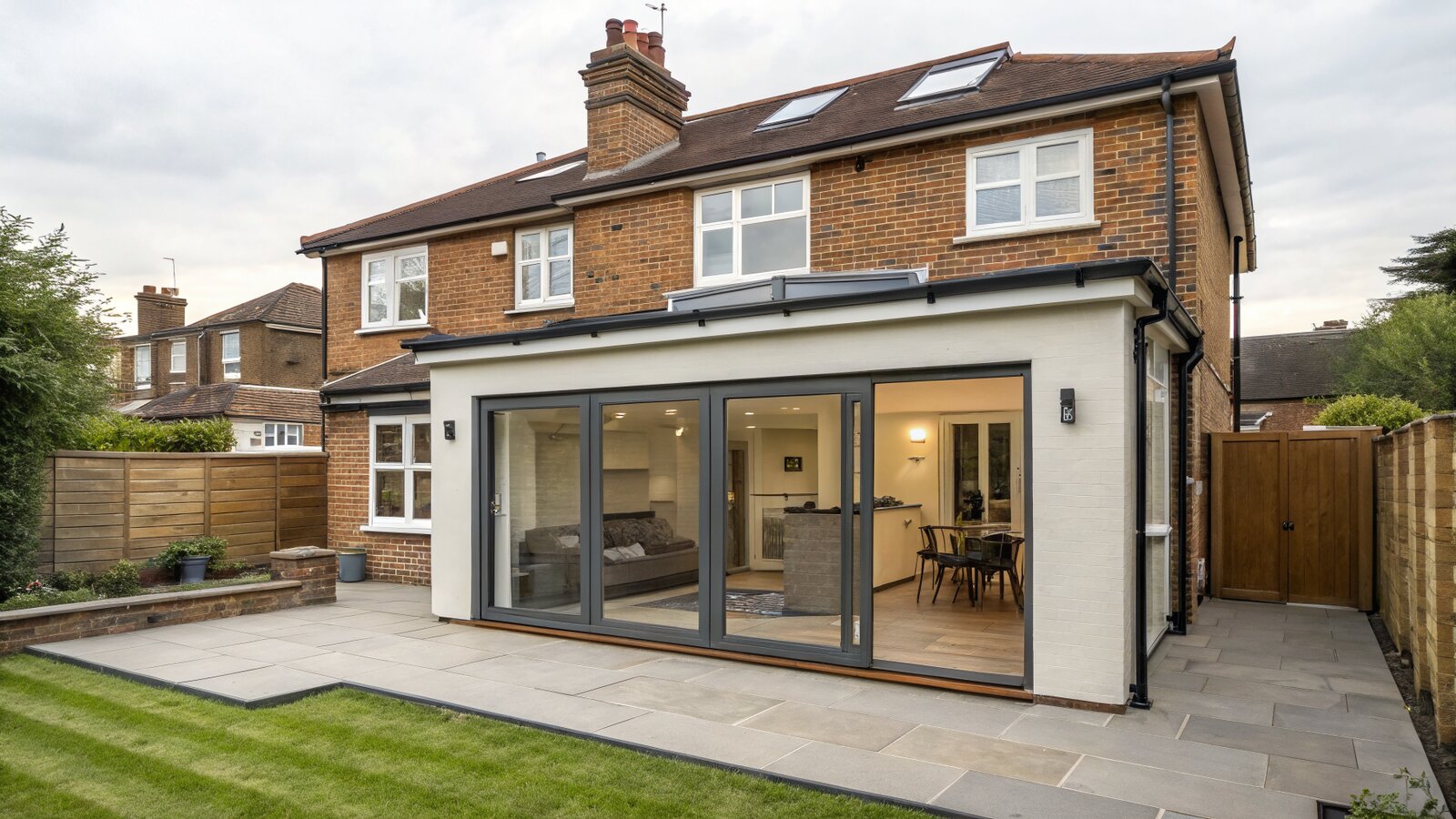
When you compare quotes, check what each one actually includes. A cheap-looking price often leaves out foundations, structural steels, electrics, plastering, decorating or VAT, so a like-for-like comparison matters more than the headline number.
How long an extension takes in Kent
Two timelines matter: how long before a builder can start, and how long the build itself takes. Good builders in Kent are often booked weeks or months ahead, especially for spring and summer starts, so expect a lead time and treat a builder who can start tomorrow with mild caution. Once on site, a straightforward single-storey rear extension typically takes around 12 to 16 weeks, and a double-storey extension often 16 to 24 weeks, depending on size, specification and weather. Add time at the front for design, planning and building control sign-off, which can run for several months before a brick is laid. Building in slippage for bad weather and material lead times keeps expectations realistic.
How to find and vet a good builder
Start with builders who can show you completed extensions like yours, ideally locally. Personal recommendations are valuable, but verify them. Look for membership of a recognised body such as the Federation of Master Builders, which vets and inspects members, or a government-endorsed quality scheme such as TrustMark. Vetting platforms and review sites can help you build a shortlist, but read the detail of reviews rather than the star average. Always confirm the basics: a registered company, public liability insurance, and references you actually call. Ask to visit a current site or a recently finished one, because seeing the quality of brickwork and finish in person tells you more than any brochure.
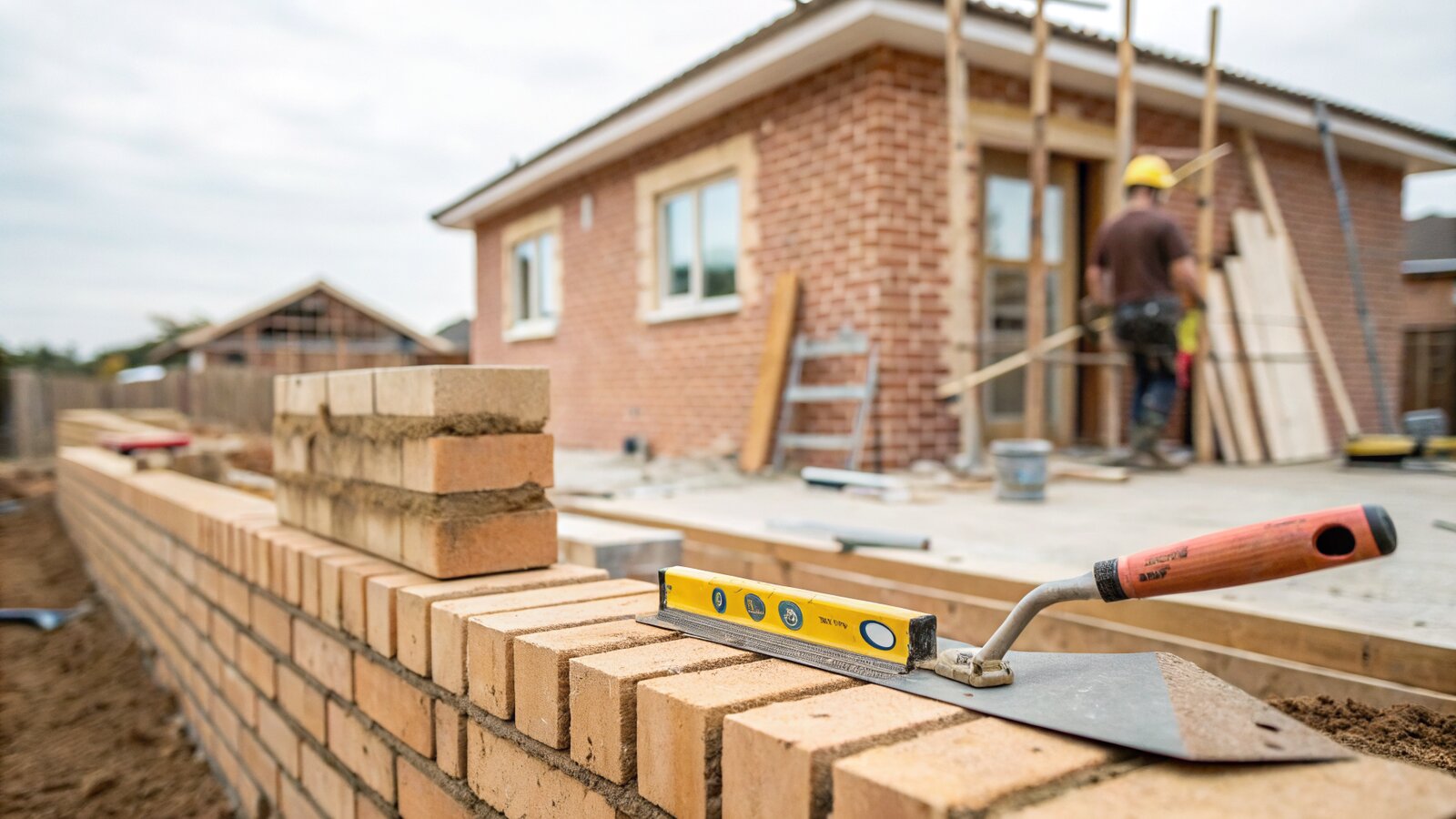
Get at least three written, itemised quotes for the same specification. Be wary of any builder who will not put the scope in writing, asks for a large cash deposit up front, or pressures you to decide quickly. A professional builder expects you to take your time.
Questions to ask before you sign
Before committing, ask each builder a consistent set of questions so you can compare answers. Who will actually be on site and managing the job day to day? Is the price fixed or an estimate, and what triggers extra cost? What is the payment schedule? What insurance and warranties are in place? Can they handle building control and structural engineering, or is that your responsibility? How do they deal with variations and unexpected problems such as poor ground? The quality and clarity of the answers tells you as much as the answers themselves.
Contracts, payments and protecting your money
For a project of this size, use a written contract that sets out the scope, price, programme and payment terms. A standard building contract, such as one of the JCT homeowner contracts, protects both sides. Never pay the full amount up front. Stage payments tied to completed milestones keep you in control, and holding a small retention until any snags are fixed gives the builder an incentive to finish properly. Keep a written record of any changes you agree, with the cost confirmed before the work is done, so there are no surprises in the final invoice.
Planning and building control in Kent
Many extensions can be built under permitted development without a full planning application, but the limits on size, height and position are strict, and they are tighter for terraced houses, conservation areas and listed buildings. Even where planning is not needed, building regulations almost always apply, covering structure, insulation, drainage and fire safety. Your builder or a designer can advise, and you can check the rules for your project on the Planning Portal. Getting permissions and building control approval in place before work starts avoids the worst outcome of all, which is being told to alter or undo finished work. For more guidance on planning a build in Kent, see the Contemporary Structures homepage.
Frequently asked questions
How much does a house extension cost in Kent in 2026?
As a guide, single-storey extensions in Kent run around 2,000 to 3,000 pounds per square metre all-in, and double-storey extensions around 1,900 to 2,800 pounds. Kent costs sit roughly 15 to 25 per cent above UK averages, and figures exclude VAT, fees and fittings.
How do I find a trustworthy extension builder in Kent?
Shortlist builders who can show completed local extensions, check membership of a body like the Federation of Master Builders or a scheme such as TrustMark, confirm insurance, and call references. Get three itemised written quotes for the same specification before deciding.
How long does a house extension take to build?
A straightforward single-storey rear extension typically takes 12 to 16 weeks on site, and a double-storey extension 16 to 24 weeks. Add several months at the front for design, planning and building control, plus a lead time before your builder can start.
Should I pay a builder a deposit?
A modest deposit for materials can be reasonable, but never pay a large sum or the full amount up front. Use stage payments tied to completed milestones, and hold a small retention until snags are fixed, all set out in a written contract.
Do I need planning permission for an extension in Kent?
Many extensions fall under permitted development, but the size, height and position limits are strict and tighter in conservation areas and for listed or terraced homes. Building regulations almost always apply regardless. Check your project on the Planning Portal or with a designer first.
Related guides
- Conservatory Roof Replacement vs Glass Film: Which Fixes a Too-Hot, Too-Cold Conservatory?
- Air Source Heat Pump Cost in 2026 After the £7,500 Grant: What You Actually Pay
- Do You Need Planning Permission for a Rear Extension in Kent? 2026 Permitted Development Rules
- How Much Does a Conservatory Base Cost in the UK? (2026 Price Guide)
- Do You Need a Party Wall Agreement for a Rear Extension? Cost and Rules Explained
- Underfloor Heating vs Radiators for a Home Extension: Cost, Running Bills and Which to Choose
- How Much Does a House Extension Cost in 2026? Full UK Price Breakdown
- Loft Conversion Cost and Types: Dormer, Hip-to-Gable and Velux Explained
- Kent Home Improvement News: June 2026
- House Extensions: The Complete UK Homeowner’s Guide
- Single Storey Extension Ideas, Costs and Planning Rules
- Double Storey Extensions: Costs, Designs and What You Can Build
- Side Return Extensions Explained: Cost, Light and Layout
- Kent Home Improvement News: Mid-June 2026
- Garage Conversion Guide: Cost, Building Regs and Best Uses
- Extension vs Moving House: Which Is Better Value in Kent?
- Wraparound vs Rear Extension: Cost and Space Compared
- Conservatory Guide: Styles, Costs and How to Choose One
- Kent Home Improvement News: Late June 2026
- How Much Does a Conservatory Cost in 2026? UK Prices by Type
- Conservatory vs Orangery vs Extension: Which to Build?
- Conservatory Roof Options: Glass, Polycarbonate and Tiled Compared
- Kent Home Improvement News: Early July 2026
- How to Keep a Conservatory Warm in Winter and Cool in Summer
- Tiled Conservatory Roof Cost and Replacement Process Explained
- Conservatories in Kent: Choosing an Installer, Costs and What to Ask
- Kent Home Improvement News: Mid-July 2026
- Roofing Guide: Repairs, Replacement, Materials and Costs
- New Roof Cost UK 2026: Replacement Prices by Roof Type
- Roof Repair Cost UK 2026: Slipped Tiles and Flashing Prices
- 7 Signs Your Roof Needs Replacing (and What You Can Ignore)
- Flat Roof vs Pitched Roof: Cost, Lifespan and Best Uses
- EPDM vs Felt vs Fibreglass Flat Roofs Compared
- Kent Home Improvement News: Mid-July 2026
- Roof Tile Types Explained: Clay, Concrete and Slate Compared
- Fascias, Soffits and Guttering: When to Replace and What It Costs
- How to Find a Good Roofer: Vetting Checklist for UK Homeowners
- Roofers in Kent: Costs, How to Choose and What to Ask in 2026
- Kitchen Renovation Guide: Planning, Cost and Design in 2026
- How Much Does a New Kitchen Cost in 2026? UK Price Guide
- Kitchen Layout Ideas: Galley, L-Shape, Island and Open Plan
- Worktops Compared: Quartz vs Granite vs Laminate vs Solid Wood
- Fitted vs Bespoke vs Flat-Pack Kitchens: Cost and Quality
- Kitchen Island Ideas, Sizes and Costs: A 2026 UK Guide
- Kent Home Improvement News: Late July 2026
- Open Plan Kitchen Diner: Costs, Layouts and Knock-Through Rules
- How Long Does a Kitchen Fitting Take? Realistic UK Timeline
- Kitchen Fitters in Kent: Costs and How to Choose (2026)
- Bathroom Renovation Guide: Planning, Cost and Layout
- New Bathroom Cost 2026: What You’ll Pay in the UK
- Kent Home Improvement: Roofing Costs Rise (Aug 2026)
- Small Bathroom Ideas: Layouts That Feel Bigger
- Wet Room Cost 2026: £2,000 to £9,000 Fitted, by Size
- En Suite Cost and Minimum Size: £4,000 to £10,000 in 2026
- Kent Home News: £9,000 Heat Pump Grant Now Open
- Electric vs Mixer vs Power Shower: What Your Boiler Allows
- Bathroom Underfloor Heating Cost: 16p an Hour to Run
- Window Replacement Cost 2026: £350 to £600 Per uPVC Window
- uPVC vs Aluminium Windows: the 1.4 U-Value Rule
- How Long Does a Bathroom Take to Fit? 5 to 10 Working Days
- Home Improvement News: Solar Up 14%, Heat Pumps Down 17%
- Double vs Triple Glazing: Part L Still Stops at 1.4
- Bathroom Fitters in Kent: What to Ask Before You Pay
- Sash Window Repair or Replace? What Kent Councils Allow
- Bifold vs Sliding Doors: What Building Regs Actually Set
- Composite Door Cost 2026: £550 to £2,350 Fitted
- Window Energy Ratings: Band B Is the Rule, Not C
- Replacement Windows: the 1.4 U-Value and Vent Rules
- Double Glazing Kent: the 1.4 U-Value Every Quote Must Hit
- Heat Pumps in Kent: the £7,500 Grant and the 1.5m³ Rule
- Heat Pump vs Gas Boiler: Break-Even Is a SCOP of 3.0
- Permitted Development Rights: The 8m Rear Extension Rule