
A wraparound extension wraps an L-shape around the back and side of a house, combining a rear extension with a side-return infill in one structure. A straight rear extension only pushes out behind the existing back wall. For Kent homeowners weighing up a kitchen-diner or an open-plan ground floor, the choice between the two decides how much usable space you gain, how much daylight reaches the middle of the plan, what you spend, and whether you can build under permitted development or need to apply for planning permission. This guide compares the two on layout, light, cost ranges, build time, planning and party wall obligations, so you can match the right one to your property and budget.
What each extension actually adds
A rear extension projects straight back from the original rear wall. On a terraced or semi-detached Kent house, that typically buys you a deeper kitchen or a kitchen-diner running the full width of the property. It is the simpler build: one new external wall line, a straightforward roof, and foundations along the back.
A wraparound combines that rear projection with the side return, the narrow alley of dead space that runs down the flank of many Victorian and Edwardian terraces. By filling the side return and pushing back at the same time, the wraparound creates a single large L-shaped room rather than two separate spaces. The extra floor area comes from reclaiming ground that was previously a passage or a sliver of garden, which is why a wraparound usually delivers a noticeably larger and more flexible ground floor than a rear extension of the same projection.
If your main problem is the width of the house feeling cramped, the side-return element of a wraparound solves something a rear extension cannot. If you simply want more depth and the side of the house is already at the boundary or has no usable return, a rear extension is the honest answer.
Light and layout
Daylight is where these two diverge most. A deep rear extension can leave the middle of the plan dark, because the new space sits between the original rooms and the garden, and light has to travel a long way in. Roof lights and large rear glazing help, but a very deep single-storey rear addition risks a gloomy core.
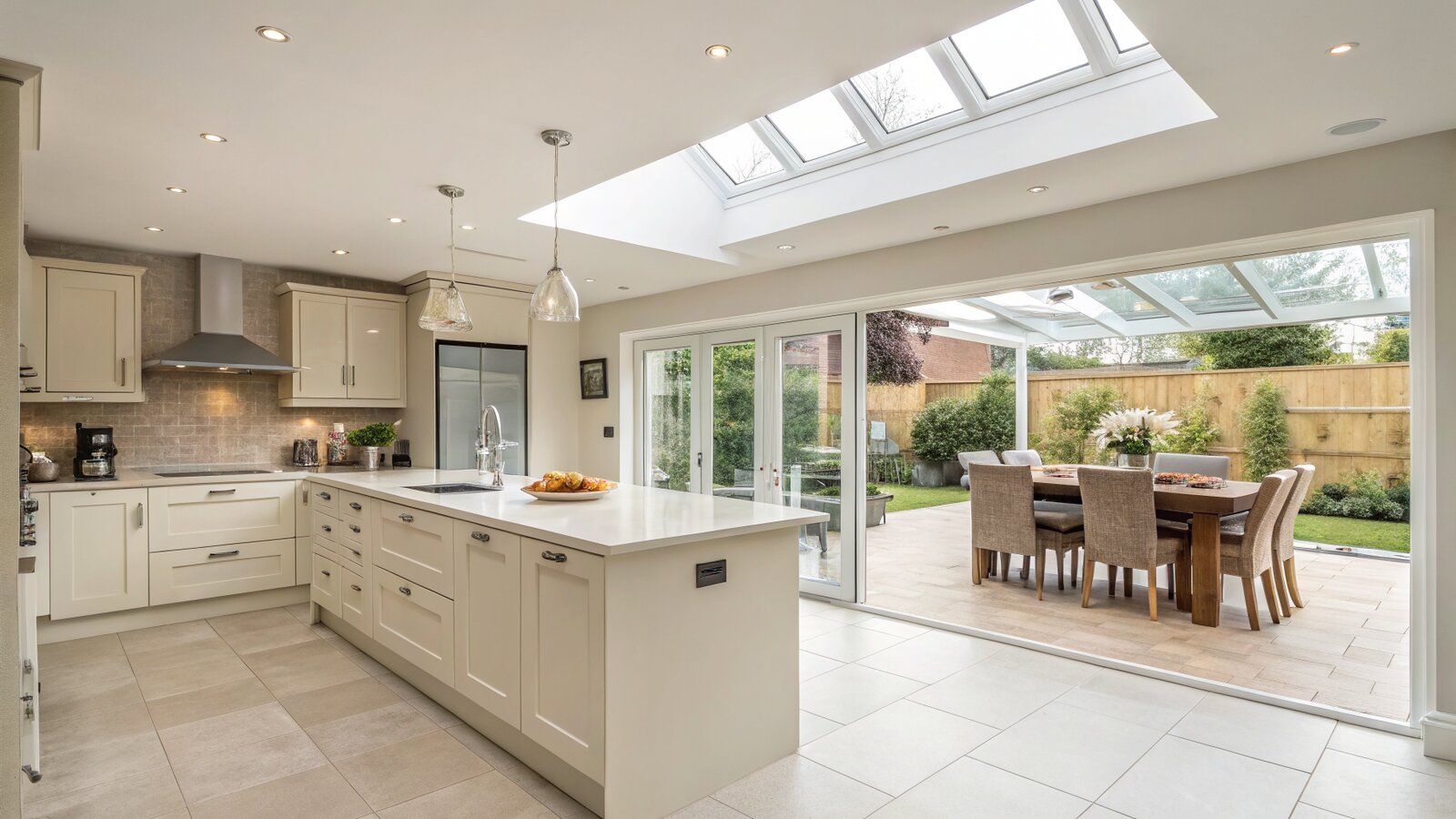
A wraparound has more roof area and more wall to work with, so it usually carries more rooflights and glazing. Filling the side return also opens up a wall that was previously blocked by the neighbour’s flank, which can pull light into what used to be the darkest part of the house. The trade-off is the corner: the internal junction where the rear and side meet needs careful structural design so you are not left with an awkward column in the middle of the new room.
For layout, a wraparound’s L-shape lends itself to zoning, for example a cooking zone in the side return and a dining or sitting zone in the rear projection, while a rear extension tends to read as one rectangular room. Neither is better in the abstract; it depends on how you live.
Cost ranges compared
Costs vary by spec, ground conditions and access, so treat all figures as ranges rather than quotes. Across the UK, a single-storey rear extension generally runs in the region of £2,200 to £3,200 per square metre for the build, with the South East, including much of Kent, sitting at the higher end and pushing further for premium finishes. A wraparound usually costs more per square metre, commonly a 15 to 25 per cent premium over a comparable rear extension, because of the extra steelwork at the corner and the more complex roof.
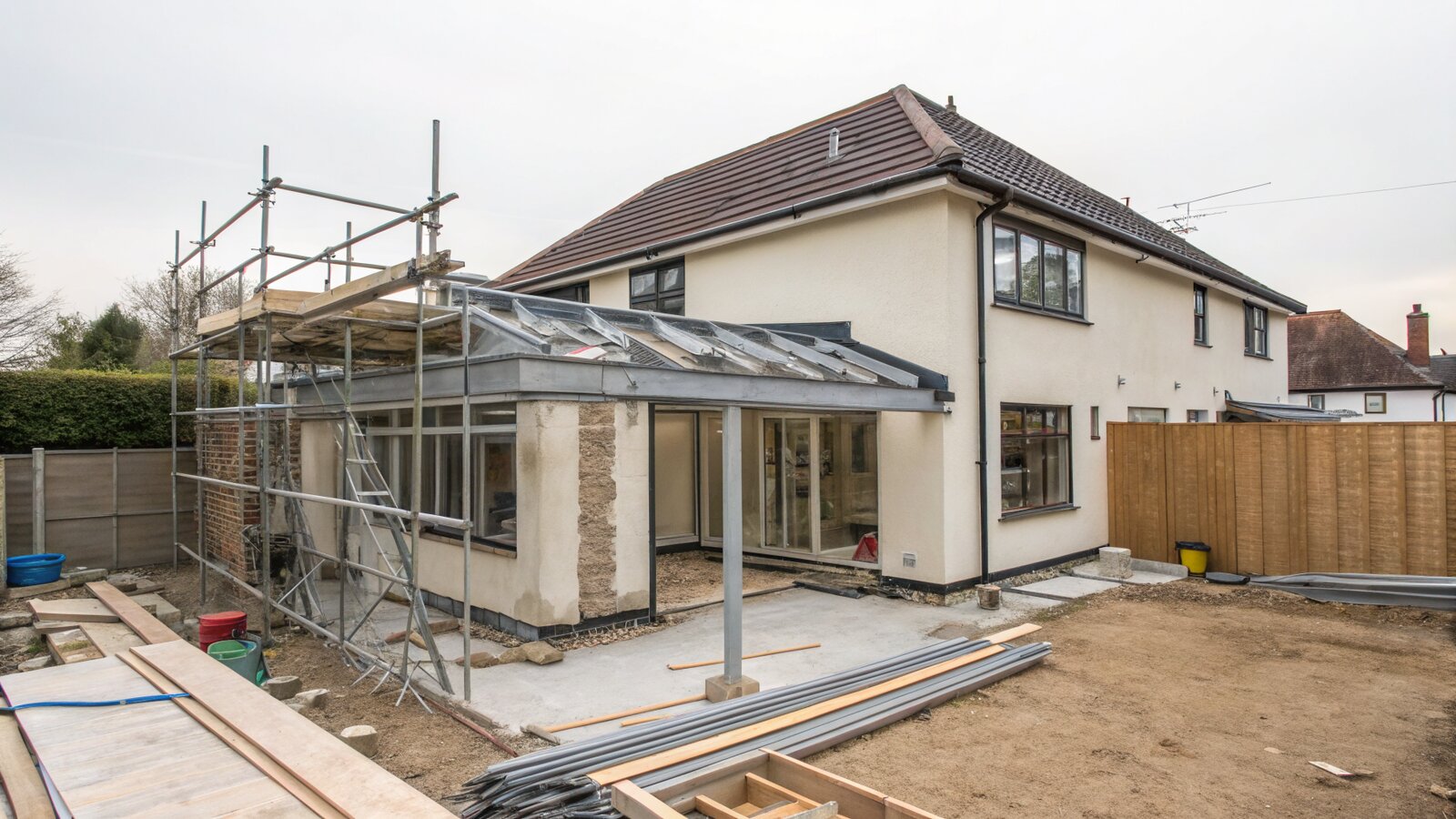
The headline total, though, depends on floor area, and a wraparound adds more of it. A modest rear extension of roughly 20 to 30 square metres often lands as a whole project, including professional fees and VAT at 20 per cent, somewhere in the broad band of £80,000 to £150,000. A wraparound of similar projection but greater overall area typically sits above that, frequently in the £90,000 to £170,000 range for the whole job. These are indicative national-to-South-East bands; a builder’s fixed quote against drawings is the only figure to rely on.
One point in the wraparound’s favour: it delivers the side return and the rear projection in a single construction programme, rather than two separate projects that each carry their own setup, scaffold and disruption.
Planning permission and permitted development
This is the practical dividing line, and it usually decides the timeline. A straight single-storey rear extension can often be built under permitted development rights, within set limits. According to the Planning Portal, a single-storey rear extension must not extend beyond the original rear wall by more than three metres for a terraced or semi-detached house, or four metres for a detached house, and must not exceed four metres in height. The Larger Home Extension route, which needs a prior approval application to the council, can raise those projection limits to six metres and eight metres respectively. Separately, only half the land around the original house may be covered by extensions, and where the build comes within two metres of a boundary the eaves height is capped at three metres.
A side extension under permitted development must be single storey, no more than four metres high, and no wider than half the width of the original house.
A wraparound is the problem case. Because it combines a rear projection and a side return into one L-shape, it almost always breaks the width restriction for a side extension and the combined footprint rules, so it falls outside permitted development. In practice a wraparound nearly always needs full planning permission via a householder application. That means an 8-week determination period in most councils, sometimes longer where there is a backlog, plus the design and drawing time beforehand. You can extend separately at the side and at the rear under permitted development, but the moment the two join into an L-shape you are into a planning application.
Kent adds local nuance. Conservation areas, Article 4 directions, National Landscapes such as the Kent Downs, and listed buildings all remove or restrict permitted development rights, so even a modest rear extension may need consent in those locations. Always check your property’s designation with your district council, whether that is Sevenoaks, Tonbridge and Malling, Maidstone, Canterbury or another authority, before assuming permitted development applies. For background on the company behind this guide, see the Contemporary Structures homepage.
Building Regulations and party wall duties
Planning permission is separate from Building Regulations, and both extension types need the latter. Building Regulations approval is required for extensions regardless of whether planning permission is needed, covering structure, fire safety, insulation, drainage and ventilation. Part A governs structural safety, so the steel beams, foundations and the wraparound’s corner junction will need calculations from a structural engineer and sign-off by building control, either your council’s team or a registered building control approver.
Party wall obligations bite harder on a wraparound because of the side return. Under the Party Wall etc. Act 1996, if you excavate within three metres of a neighbour’s building and go below their foundation level, you must serve notice at least one month before starting. If the neighbour does not consent in writing within 14 days, a dispute is deemed to arise and surveyors are appointed. A side-return wraparound on a terrace typically runs right up to the boundary with one or both neighbours, so notices and a party wall award are often unavoidable. A rear extension sitting away from the boundaries may avoid party wall procedures altogether, which can save time and surveyor fees.
Which suits which property and budget
Choose a rear extension if your house has no usable side return, the side is already on the boundary, your budget is tighter, or you want the best chance of building under permitted development without a planning application. It is the lower-risk, faster route to more depth.
Choose a wraparound if you have a Victorian or Edwardian terrace with a wasted side return, you want the largest possible open-plan ground floor, daylight to the centre of the plan matters, and your budget can absorb the planning process, the corner steelwork and likely party wall awards. It costs more and takes longer to consent, but it usually transforms the ground floor more completely than a rear extension can.
Frequently asked questions
Does a wraparound extension always need planning permission?
In almost all cases, yes. Because a wraparound combines a rear projection with a side return, it exceeds the width and footprint limits set for permitted development, so it needs full planning permission through a householder application. Individual side and rear extensions can sometimes be built under permitted development, but joining them into an L-shape triggers a planning application.
How much more does a wraparound cost than a rear extension?
Per square metre, a wraparound typically carries a premium of around 15 to 25 per cent over a comparable rear extension, driven by the corner steelwork and a more complex roof. Because it also adds more floor area, the total project cost usually lands above a rear extension of similar projection. All figures are ranges; only a builder’s quote against drawings is reliable.
Can I build a rear extension in Kent without planning permission?
Often yes, if it stays within permitted development limits: up to three metres projection for a terraced or semi-detached house, four metres for a detached house, and no more than four metres high. But conservation areas, Article 4 directions, the Kent Downs National Landscape and listed status remove those rights, so check your property’s designation with your district council first.
Will I need a party wall agreement?
Possibly. If you excavate within three metres of a neighbour’s building and below their foundations, the Party Wall etc. Act 1996 requires you to serve notice at least one month before starting. Side-return wraparounds usually run up to the boundary, so party wall awards are common. A rear extension away from the boundaries may avoid the process.
How long does a wraparound extension take to build?
Allow time for design and planning before any building starts. A householder planning application takes roughly eight weeks to determine, sometimes longer. On site, a wraparound generally takes longer than a rear extension because of the larger footprint and corner structure, though it replaces what would otherwise be two separate building projects.
Which extension lets in more daylight?
A wraparound usually wins on light. It has more roof area for rooflights and opens up the previously blocked side-return wall, pulling daylight into the centre of the house. A deep rear extension can leave the middle of the plan dark unless it is designed with generous glazing and rooflights.
Related guides
- Conservatory Roof Replacement vs Glass Film: Which Fixes a Too-Hot, Too-Cold Conservatory?
- Air Source Heat Pump Cost in 2026 After the £7,500 Grant: What You Actually Pay
- Do You Need Planning Permission for a Rear Extension in Kent? 2026 Permitted Development Rules
- How Much Does a Conservatory Base Cost in the UK? (2026 Price Guide)
- Do You Need a Party Wall Agreement for a Rear Extension? Cost and Rules Explained
- Underfloor Heating vs Radiators for a Home Extension: Cost, Running Bills and Which to Choose
- How Much Does a House Extension Cost in 2026? Full UK Price Breakdown
- Loft Conversion Cost and Types: Dormer, Hip-to-Gable and Velux Explained
- Kent Home Improvement News: June 2026
- House Extensions: The Complete UK Homeowner’s Guide
- Single Storey Extension Ideas, Costs and Planning Rules
- Double Storey Extensions: Costs, Designs and What You Can Build
- Side Return Extensions Explained: Cost, Light and Layout
- Kent Home Improvement News: Mid-June 2026
- Garage Conversion Guide: Cost, Building Regs and Best Uses
- Extension vs Moving House: Which Is Better Value in Kent?
- House Extension Builders in Kent: Costs, Lead Times and How to Choose
- Conservatory Guide: Styles, Costs and How to Choose One
- Kent Home Improvement News: Late June 2026
- How Much Does a Conservatory Cost in 2026? UK Prices by Type
- Conservatory vs Orangery vs Extension: Which to Build?
- Conservatory Roof Options: Glass, Polycarbonate and Tiled Compared
- Kent Home Improvement News: Early July 2026
- How to Keep a Conservatory Warm in Winter and Cool in Summer
- Tiled Conservatory Roof Cost and Replacement Process Explained
- Conservatories in Kent: Choosing an Installer, Costs and What to Ask
- Kent Home Improvement News: Mid-July 2026
- Roofing Guide: Repairs, Replacement, Materials and Costs
- New Roof Cost UK 2026: Replacement Prices by Roof Type
- Roof Repair Cost UK 2026: Slipped Tiles and Flashing Prices
- 7 Signs Your Roof Needs Replacing (and What You Can Ignore)
- Flat Roof vs Pitched Roof: Cost, Lifespan and Best Uses
- EPDM vs Felt vs Fibreglass Flat Roofs Compared
- Kent Home Improvement News: Mid-July 2026
- Roof Tile Types Explained: Clay, Concrete and Slate Compared
- Fascias, Soffits and Guttering: When to Replace and What It Costs
- How to Find a Good Roofer: Vetting Checklist for UK Homeowners
- Roofers in Kent: Costs, How to Choose and What to Ask in 2026
- Kitchen Renovation Guide: Planning, Cost and Design in 2026
- How Much Does a New Kitchen Cost in 2026? UK Price Guide
- Kitchen Layout Ideas: Galley, L-Shape, Island and Open Plan
- Worktops Compared: Quartz vs Granite vs Laminate vs Solid Wood
- Fitted vs Bespoke vs Flat-Pack Kitchens: Cost and Quality
- Kitchen Island Ideas, Sizes and Costs: A 2026 UK Guide
- Kent Home Improvement News: Late July 2026
- Open Plan Kitchen Diner: Costs, Layouts and Knock-Through Rules
- How Long Does a Kitchen Fitting Take? Realistic UK Timeline
- Kitchen Fitters in Kent: Costs and How to Choose (2026)
- Bathroom Renovation Guide: Planning, Cost and Layout
- New Bathroom Cost 2026: What You’ll Pay in the UK
- Kent Home Improvement: Roofing Costs Rise (Aug 2026)
- Small Bathroom Ideas: Layouts That Feel Bigger
- Wet Room Cost 2026: £2,000 to £9,000 Fitted, by Size
- En Suite Cost and Minimum Size: £4,000 to £10,000 in 2026
- Kent Home News: £9,000 Heat Pump Grant Now Open
- Electric vs Mixer vs Power Shower: What Your Boiler Allows
- Bathroom Underfloor Heating Cost: 16p an Hour to Run
- Window Replacement Cost 2026: £350 to £600 Per uPVC Window
- uPVC vs Aluminium Windows: the 1.4 U-Value Rule
- How Long Does a Bathroom Take to Fit? 5 to 10 Working Days
- Home Improvement News: Solar Up 14%, Heat Pumps Down 17%
- Double vs Triple Glazing: Part L Still Stops at 1.4
- Bathroom Fitters in Kent: What to Ask Before You Pay
- Sash Window Repair or Replace? What Kent Councils Allow
- Bifold vs Sliding Doors: What Building Regs Actually Set
- Composite Door Cost 2026: £550 to £2,350 Fitted
- Window Energy Ratings: Band B Is the Rule, Not C
- Replacement Windows: the 1.4 U-Value and Vent Rules
- Double Glazing Kent: the 1.4 U-Value Every Quote Must Hit
- Heat Pumps in Kent: the £7,500 Grant and the 1.5m³ Rule
- Heat Pump vs Gas Boiler: Break-Even Is a SCOP of 3.0
- Permitted Development Rights: The 8m Rear Extension Rule