
You are putting up an extension or knocking through to a kitchen-diner, and the heating decision has come up: underfloor heating or radiators? Most comparison articles answer this as if you are heating a whole house. An extension is a different problem: one room, fed off an existing system, with a finished floor level you have to match and a ceiling height you cannot lose. That changes the maths.
The two systems, briefly
Radiators heat a room by warming the air. They run on hot water, usually pushed round at around 65 to 70 degrees from a combi or system boiler. Quick to fit, cheap to buy, and they sit on the wall so the floor stays as it is.
Wet underfloor heating (UFH) runs warm water through pipes laid across the whole floor, then covered with screed or a low-profile board. It works at a much lower flow temperature, typically 35 to 45 degrees, because the heated surface is the entire floor rather than a panel on the wall. There is also electric UFH, which uses a mat or cable instead of water, but for a space heated every evening the cost of electricity makes wet UFH the sensible choice. Electric mats suit small rooms like an en-suite, not a 20 square metre extension.
Upfront cost in an extension
Radiators win on install cost, and it is not close. Adding a couple of radiators means running pipework off your existing system, hanging the units and balancing the circuit: a day or two of a plumber’s time, and the units are inexpensive.
Wet underfloor heating is a bigger job: laying insulation, clipping out pipe across the full floor, fitting a manifold, then pouring a screed or installing a low-profile system before the final floor goes down. As a rough guide, wet UFH fitted by a professional tends to land somewhere around 100 to 190 pounds per square metre, while a radiator solution sits well below that. Prices vary by region, floor construction and your existing system, so treat those as ballpark, not quotes. The case for UFH is made on comfort and running bills, not on day-one cost.
The floor build-up height nobody warns you about
This is the single biggest thing the whole-house comparisons skip, and in an extension it can decide the question. A traditional screeded wet UFH floor is built up in layers: rigid floor insulation, the heating pipe, then a screed on top to bury the pipe and spread the heat. Together that can be well over 100mm before your tiles or boards go down. In a new-build slab planned from the start, no problem. In an extension that has to meet the floor level of the existing house, especially across a knock-through where the new floor must line up with the old kitchen floor, that height has to come from somewhere.
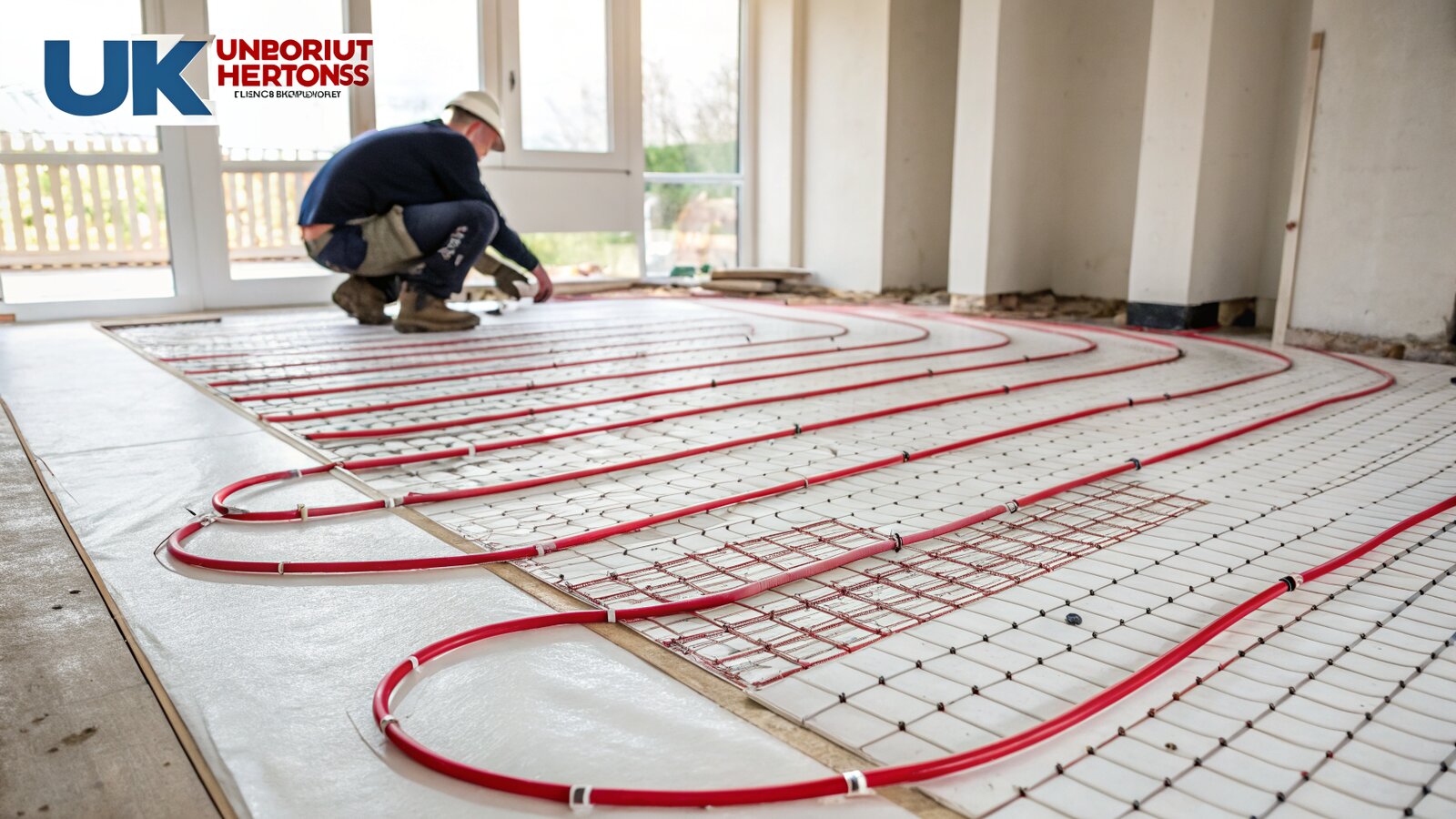
There are two ways round it. First, dig the slab lower so the finished UFH floor lands flush; that works in a fresh build but means coordinating groundworks early. Second, use a low-profile retrofit system. Manufacturers such as Nu-Heat make boards designed for exactly this: their LoPro10 and LoProLite systems add around 15mm before the floor finish, and LoProMax around 22mm, far less than a full screed. You pay more per square metre for the board, but you keep your ceiling height and door thresholds and avoid re-hanging internal doors.
The insulation underneath matters too: you want the heat going up into the room, not down into the ground. Extension floors also have to meet the U-value in Approved Document L, the building regulations covering conservation of fuel and power. Hitting that with standard rigid foam can mean 100mm or more of insulation, which is part of why the screed build-up gets tall. Your installer or building control officer will confirm what your floor needs.
Running costs: where UFH only wins on a condition
Here is the part the marketing copy oversells. Underfloor heating is sold as cheaper to run because it works at a lower flow temperature and heats the whole floor evenly, so you can run the room a degree or two cooler for the same comfort. True, but that saving is real only if the heat source can take advantage of the low flow temperature. An old non-condensing boiler, or a condensing boiler turned up to 70 degrees, throws away most of the benefit. UFH genuinely saves money when paired with one of two things:
- A condensing boiler run at a low flow temperature. Condensing boilers are most efficient when the return water is cool enough to condense. UFH returning water at low temperature keeps the boiler in its efficient band, so you get more heat per unit of gas.
- A heat pump. Heat pumps are at their most efficient at low flow temperatures, roughly 35 to 50 degrees, and lose efficiency badly above 55. UFH is built to run in exactly that window. The Energy Saving Trust notes that pairing wet underfloor heating with a heat pump can be far more efficient than an old boiler with old radiators, because the large heated surface lets you run the system cooler.
If your extension feeds off the same old boiler at the same high flow temperature as the rest of the house, UFH will be more comfortable but will not transform your bills. The flip side: if a heat pump is on your horizon, putting UFH in now lays the groundwork for it.
UFH is also slower to warm up and cool down than radiators. In a kitchen-diner used all evening, that thermal lag suits a steady low-temperature run; in a room used in short bursts it works against you.
Comfort, floor coverings and the everyday feel
UFH delivers a comfort the wall radiator cannot: an evenly warm floor with no cold corners, no panel eating wall space, and warmth at foot level. In an open-plan kitchen-diner with a lot of glazing, that even spread is nicer to live with, and it frees the walls for cabinets, a sofa or bifold doors.
Floor finish changes the picture. Tile and stone are the best partners for UFH because they conduct heat well and warm quickly, which is why UFH and a tiled kitchen-diner go together. Engineered wood and laminate are fine if rated for UFH. Carpet is allowed but watch the insulation value: the combined tog of carpet and underlay should stay at or below 2.5, or the floor cannot push heat through. With a thick carpet, radiators may be the more sensible call.
The hybrid answer: UFH in the kitchen-diner, radiators elsewhere
For a lot of extensions, the cheapest honest answer is not all of one or the other. It is UFH in the main living space and radiators in the rest. The kitchen-diner is where you spend the evening and want a warm tiled floor, clear walls and even heat, so that is where UFH pays back. A utility, a downstairs WC or a small hallway does not justify the cost and floor build-up of UFH; a compact radiator there is cheaper, simpler, and warms the small space quickly.
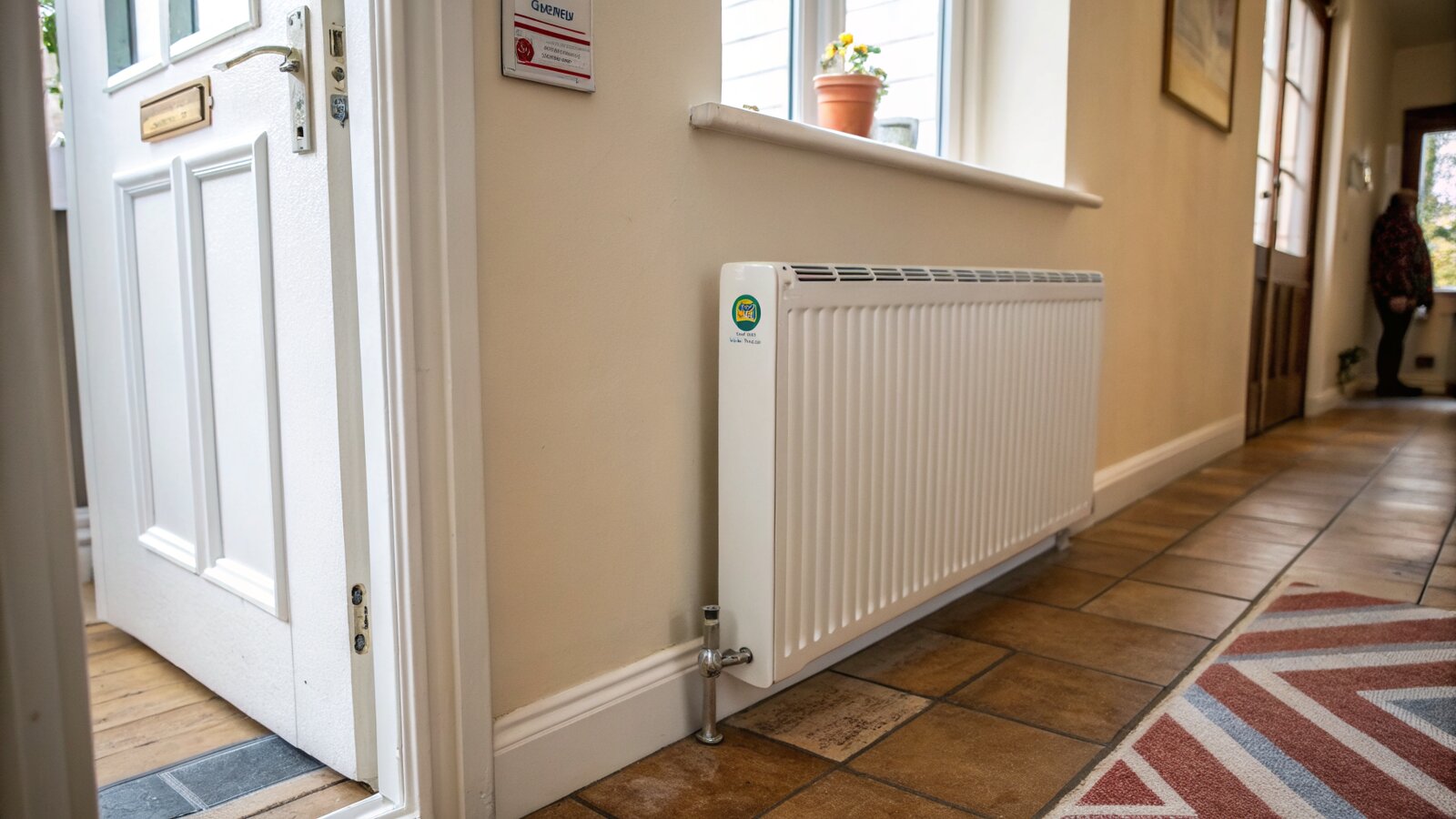
The Energy Saving Trust makes the same point: running UFH in the main area and radiators elsewhere is often cheaper to install and less disruptive than going UFH throughout. You do need to size things so both share a flow temperature, particularly if a heat pump is in the plan, because radiators on a heat pump usually need to be larger to give out enough heat at the lower temperature. If you want to talk through what suits your layout and existing heating, our team at Contemporary Structures works on extensions and knock-throughs across Kent and can advise on the heating spec alongside the build.
So which should you choose?
Choose radiators if you are not changing your boiler, the budget is tight, the floor or ceiling height leaves no room for build-up, or the room is getting carpet. Choose wet UFH if you want even, walls-clear comfort in a tiled kitchen-diner and a heat source that runs cool: a heat pump, or a condensing boiler you will genuinely run at low flow temperature. Choose the hybrid if you want UFH where it counts but not everywhere. For most real extensions, that balances comfort and cost honestly.
Frequently asked questions
Is underfloor heating worth it for a single-room extension?
It can be, but only if you are tiling the floor and you have a heat source that runs at a low flow temperature, ideally a heat pump or a condensing boiler you keep cool. On an old boiler at high flow temperature you get the comfort but little of the bill saving, so weigh whether the extra cost is worth it for one room.
How much height does wet underfloor heating add to the floor?
A traditional screeded system can add well over 100mm once you include insulation, pipe and screed. Low-profile retrofit boards, such as Nu-Heat’s LoPro range, add far less, roughly 15 to 22mm before the floor finish. In an extension that has to match an existing floor level, the low-profile route usually saves you re-hanging doors and losing ceiling height.
Can I run underfloor heating off my existing boiler?
Yes. Wet UFH connects through a manifold and a blending valve that mixes the flow down to the lower temperature UFH needs. The catch is efficiency: you only get the running-cost benefit if the boiler runs at a low flow temperature, so an old boiler kept hot for the upstairs radiators will not give you the savings UFH is capable of.
Is underfloor heating cheaper to run than radiators?
Only under the right conditions. Because UFH works at a lower flow temperature over a large surface, it can use less energy than radiators, but only if the heat source runs cool enough to benefit. Paired with a heat pump it is genuinely efficient. Paired with a boiler turned up high, the saving largely disappears.
Can I have underfloor heating in the extension and radiators in the rest of the house?
Yes, and it is a common setup. UFH in the kitchen-diner and radiators elsewhere keeps cost and disruption down while putting the comfort where you want it. The system needs sizing so both share a sensible flow temperature, especially if a heat pump is involved, which usually means slightly larger radiators.
What floor covering works best with underfloor heating?
Tile and stone are best because they conduct heat well and warm quickly, which suits a kitchen-diner. Engineered wood and laminate are fine if rated for UFH. Carpet works only if the combined tog value of carpet and underlay stays at or below 2.5, otherwise the floor cannot push enough heat through and radiators become the better choice.