
The short answer is: maybe not, but the depth limit you read on a national guide is only half the picture in Kent. A rear extension that counts as permitted development on a 1970s estate in Sittingbourne can be flatly unlawful two miles away in a Faversham conservation area, or on a property inside the Kent Downs or High Weald National Landscapes. Same extension, different postcode, completely different answer.
This guide walks through the 2026 permitted development rules as they actually apply across Kent, the prior approval route for deeper extensions and the neighbour consultation steps people skip, and the local designations that quietly remove your rights before you have even drawn a plan. For background on conservatories, kitchens and other home projects in the county, the Contemporary Structures homepage covers the wider picture.
Permitted development: the standard rear extension limits
Most single-storey rear extensions in England fall under permitted development, often shortened to PD, which means you can build without a full planning application provided you stay inside a set of national limits. For a rear extension the headline numbers are:
- Attached houses (terraced or semi-detached): the extension cannot project more than 3 metres beyond the original rear wall.
- Detached houses: up to 4 metres beyond the original rear wall.
- Maximum height: 4 metres for a single-storey rear extension.
- Eaves height: no more than 3 metres if any part of the extension comes within 2 metres of a boundary.
Two more conditions catch people out. First, the words “original house” matter. That means the house as it was first built, or as it stood on 1 July 1948 if it is older than that. If a previous owner already added a rear extension, that depth counts against you. Second, you cannot cover more than half the area of land around the original house with extensions and outbuildings combined. A big shed or a garden room already eats into that allowance.
Materials matter too. The finish must be similar in appearance to the existing house. This is one of the most common reasons enforcement officers get involved: a smooth-rendered or timber-clad extension bolted onto a brick Victorian terrace will not satisfy the rule, even if every dimension is correct. Match the brick, or expect a problem.
You can confirm these national figures on the Planning Portal’s extensions page, which sets out the full conditions.
Two-storey rear extensions are a different animal
If you want a two-storey rear extension, the allowance shrinks. Under permitted development a multi-storey rear extension:
- cannot project more than 3 metres beyond the original rear wall (the 4 metre detached allowance does not apply);
- must sit no closer than 7 metres to any boundary opposite the rear wall;
- must have a roof pitch that matches the existing house as far as practical;
- must have any upper-floor side-elevation window obscure-glazed and fixed shut unless the opening part is more than 1.7 metres above the floor of the room, to protect a neighbour’s privacy.
On many tighter Kent plots, in places like the older parts of Tunbridge Wells, Tonbridge or Maidstone, that 7 metre rule alone rules out a two-storey rear extension under PD, because back gardens are simply not deep enough. At that point you are into a full planning application, which is assessed on design, overlooking, daylight and the character of the street.
The larger home extension prior approval route
Want to go deeper than 3 or 4 metres? There is a halfway house between permitted development and a full planning application, usually called the larger home extension scheme. It lets you build a single-storey rear extension up to:
- 6 metres beyond the original rear wall for an attached (terraced or semi-detached) house;
- 8 metres for a detached house.
The 4 metre maximum height still applies, and so does the 3 metre eaves limit near boundaries. This route is not a free pass. It uses a process called prior approval, and getting the steps in the right order is where homeowners trip up.
Here is how it runs in practice:
- Step 1: Before any building starts, you submit details to your district council: a plan, the depth, the height, the materials and the addresses of adjoining properties.
- Step 2: The council writes to your adjoining neighbours and gives them a consultation period of at least 21 days to object.
- Step 3: If no neighbour objects, the council confirms prior approval is not required and you can build. If a neighbour does object, the council must assess the impact on the amenity of all adjoining properties, things like loss of light and a sense of enclosure, and decide whether prior approval is granted.
- Step 4: The council has 42 days from a valid application to make a decision. If you have not heard back within 42 days, you are entitled to proceed, but only if you genuinely met every condition.
The crucial point most national guides gloss over: under prior approval the council cannot refuse you on design, appearance or the colour of your bricks. It can only consider the effect on neighbouring amenity. That is narrower than a full planning application, which is exactly why the route exists. Do not start building before the 21 day consultation closes or the 42 days elapse. Start early and you forfeit the protection of the scheme. The Planning Portal sets out the official prior approval process for extensions.
The Kent traps: Article 4, conservation areas and National Landscapes
This is where Kent diverges sharply from a generic national guide, and where most homeowners get caught out. Permitted development rights, including the larger home extension scheme, can be switched off entirely by local designations. Three to check before you spend a penny on drawings.
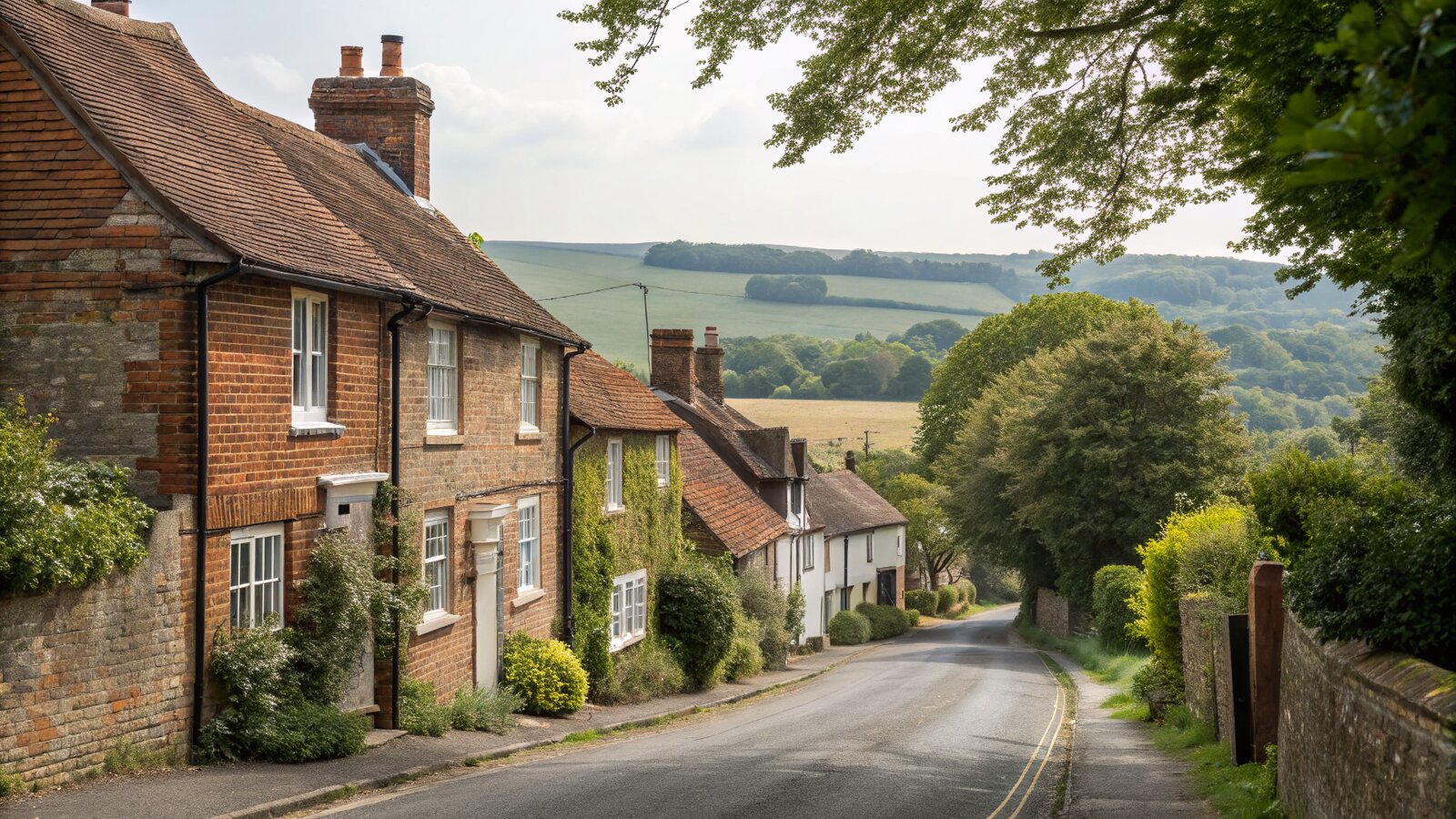
Conservation areas and designated land
Kent is dense with conservation areas. Sevenoaks district alone has more than 40, and Canterbury, Tenterden, Sandwich, Faversham, Rochester and large parts of Tunbridge Wells all contain them. Conservation areas are classed as designated land, the category the planning rules call Article 2(3) land, and on designated land several PD rights are removed or reduced:
- Side extensions are not permitted development at all.
- Two-storey rear extensions are not permitted development.
- The larger home extension scheme (6m and 8m) does not apply, so you drop back to the standard 3m or 4m for a single-storey rear extension.
- Cladding the outside in stone, render, timber, tiles or similar is excluded.
So a rear extension that is fine in scale can still need full planning permission in a conservation area simply because of how you intend to finish it.
Article 4 directions
An Article 4 direction goes further than a conservation area on its own. It is a formal order made by a council that strips out specific permitted development rights, sometimes across a defined area, sometimes street by street. Several Kent districts, including Tunbridge Wells, have made Article 4 directions, and the detail varies from one council to the next. The maddening part for homeowners is how local they can be: one side of a road can keep its rights while the other side has lost them. Never assume your neighbour’s recent extension proves you can do the same. Check the specific direction that applies to your address with your district council before you commit.
Kent Downs and High Weald National Landscapes
Large swathes of west and mid Kent sit inside the Kent Downs National Landscape or the High Weald National Landscape. These are the designations renamed in November 2023 that were previously called Areas of Outstanding Natural Beauty, and they still carry the same legal weight. Inside a National Landscape the restrictions mirror the conservation area position: no side extensions, no two-storey rear extensions under PD, no larger home extension scheme, and external cladding is excluded. A single-storey rear extension within the 3m or 4m limit is usually still fine, but finish it in timber to match a garden studio and you have stepped outside permitted development, even though the footprint was legal. That mismatch, a legal footprint with an illegal finish, is a genuinely common cause of retrospective applications.
Listed buildings are a separate matter again. If your home is listed, even internal alterations can need listed building consent, and a rear extension almost always will, on top of any planning permission.
Planning permission, building regulations and the Party Wall Act are three separate things
A point worth labouring, because it costs people money and time. Even when your rear extension is permitted development and needs no planning application, it still needs building regulations approval for the structure, foundations, insulation, drainage, ventilation and fire safety. These are checked by your council’s building control team or an approved inspector, and they are not optional. You will usually need structural calculations for the steel beam over the new opening.
The Party Wall etc. Act 1996 is a third, separate legal track. If you build on or up to a shared boundary, or excavate foundations within 3 metres of a neighbour’s structure (sometimes 6 metres for deeper digs), you must serve the correct notice on your neighbour: typically two months before work starts for a party wall, one month for excavation. Building control and planning will not police this for you. It is your responsibility, and getting it wrong can stop the job and land you in a dispute. You can read the government’s plain-English overview on the gov.uk party wall guidance.
How to check your property before you brief a builder
Five minutes of checking saves months of grief. Before you commission drawings:

- Find out which of Kent’s district councils you fall under (for example Ashford, Canterbury, Dartford, Dover, Folkestone & Hythe, Gravesham, Maidstone, Sevenoaks, Swale, Thanet, Tonbridge & Malling, or Tunbridge Wells). Medway is a unitary authority with its own planning service.
- Check whether your address is in a conservation area, a National Landscape, or covered by an Article 4 direction. Every district council publishes this, usually through an interactive map.
- Confirm whether your home is listed.
- Work out the depth of any existing rear extension, because it counts towards your original house allowance.
- If there is any doubt, apply to your council for a Lawful Development Certificate. It is a formal confirmation that your extension is lawful, and it is invaluable evidence when you come to sell.
None of this needs to be daunting. The rules reward homeowners who do the homework first. If you want a clear read on what your plot will actually take, a Kent home improvement specialist such as Contemporary Structures can tell you early whether you are looking at permitted development, prior approval, or a full application, before you fall in love with a design you cannot build.
Frequently asked questions
How big can I build a rear extension in Kent without planning permission?
On a typical unrestricted plot, a single-storey rear extension can go up to 3 metres beyond the original rear wall for a terraced or semi-detached house, or 4 metres for a detached house, with a maximum height of 4 metres. With prior approval under the larger home extension scheme you can reach 6 metres or 8 metres. But in a conservation area, a National Landscape, or under an Article 4 direction, the larger scheme does not apply and you drop back to the 3m or 4m limit.
Do I need planning permission for a rear extension in a Kent conservation area?
Often, yes. Conservation areas remove some permitted development rights. Side extensions and two-storey rear extensions are not permitted development there, the larger home extension scheme does not apply, and external cladding is excluded. A modest single-storey rear extension that matches the existing materials may still be permitted development, but always confirm with your district council first, because an Article 4 direction may have removed more rights on your specific street.
How long does the larger home extension prior approval process take?
The council allows your adjoining neighbours at least 21 days to comment, and has 42 days from a valid application to reach a decision. If you receive no decision within 42 days, you can proceed, provided you genuinely met every condition. Do not start building before the consultation period closes, or you lose the protection of the scheme.
Can my neighbours stop my rear extension?
Under prior approval they can object, and if they do the council must assess the impact on the amenity of adjoining homes, mainly loss of light and a sense of enclosure. The council cannot refuse on the grounds of design or appearance. For a full planning application the assessment is wider, taking in design, overlooking and street character, so neighbour objections carry more weight there.
Do I still need building regulations if my extension is permitted development?
Yes. Planning permission and building regulations are separate. Almost every rear extension needs building regulations approval covering structure, foundations, insulation, drainage and fire safety, even when no planning application is required. You will usually also need structural calculations for the beam over the new opening.
What is an Article 4 direction and how do I know if mine has one?
An Article 4 direction is a formal order a council makes to remove specific permitted development rights in a defined area, often to protect the character of a conservation area. They can apply street by street, so your neighbour’s recent extension is not proof you can do the same. Check your address against your district council’s planning maps, or ask their planning team directly, before you start.
Related guides
- Building Regulations Approval: Kent Fees, 10-Year Rule
- Permitted Development Rights: The 8m Rear Extension Rule
- Do You Need a Party Wall Agreement for a Rear Extension? Cost and Rules Explained
- Garage Conversion Guide: Cost, Building Regs and Best Uses
- Bifold vs Sliding Doors: What Building Regs Actually Set