
If your conservatory roasts in July and turns into a fridge by October, you have probably been quoted a full tiled roof replacement running into several thousand pounds. Most cost guides stop there. They never tell you that a coat of heat reduction film might solve most of your summer problem for a fraction of the price, or that internal insulated boarding sits in the middle and rarely gets a fair hearing.
This guide does the comparison properly. We line up roof film against a solid tiled roof and against internal insulated boarding, give you a realistic break-even, and tell you which one actually suits your conservatory based on its age, its glazing and how often you really sit in it. We fit and survey these roofs across Kent, so this is the advice we give homeowners on the doorstep, not a sales script.
Why your conservatory is too hot and too cold in the first place
Nearly all of the temperature trouble comes through the roof, not the side glazing. A standard polycarbonate or single-glass conservatory roof does almost nothing to slow heat. In summer the sun pours straight through and the room becomes a greenhouse. In winter the same roof lets warmth escape as fast as your radiator can produce it, which is why the room feels cold within minutes of the heating going off.
That single fact decides everything. If the roof is the problem, the fix has to act on the roof. The three sensible options, cheapest first, are:
- Heat reduction roof film: a reflective layer applied to your existing glass or polycarbonate panels.
- Internal insulated boarding: rigid insulation fitted between the rafters under your existing roof, finished with a plastered or uPVC ceiling.
- Solid or tiled roof replacement: the old roof comes off and a fully insulated, weatherproof roof goes on.
They do not do the same job, and that is the part the price-led guides skip. Film mostly tackles summer heat and glare. Boarding and a tiled roof tackle summer and winter, because they add real insulation.
Heat reduction film: what it actually does
Roof film is a thin, optically clear or lightly tinted layer bonded to the inside of your roof panels. Established suppliers such as The Window Film Company rate their conservatory roof films at up to around 80% solar heat reduction and up to 99% UV rejection, with a noticeable cut in glare. Their own case study figures land lower than the headline number, closer to 60% heat reduction in practice, but a good install genuinely takes the searing edge off a south-facing conservatory in summer.
Honest limits matter more than the marketing:
- It is a summer tool. Film reflects incoming solar heat. It does very little for winter heat loss, because it does not add meaningful insulation. A filmed roof still feels cold once the sun drops.
- It works on glass and polycarbonate, but the film must be matched to the surface. Polycarbonate moves more with temperature, so you need a product specified for poly, fitted by someone who knows the difference, or it can bubble.
- It does not last forever. Quality films are generally rated for several years before they start to fade or lift, then need redoing. Treat it as a repeatable upgrade, not a one-off.
- It does nothing for rain noise. If a drumming polycarbonate roof in heavy rain drives you mad, film will not quiet it.
Cost varies with roof size, panel type and whether the work is internal or external, but film is comfortably the cheapest of the three options, usually a few hundred to around fifteen hundred pounds for a typical small to mid-size conservatory roof, and it varies a lot by job. No building control, no structural work, usually done in a day.
Internal insulated boarding: the middle option nobody quotes
This is the one most cost guides ignore, and it is often the smart buy. Instead of replacing the roof, an installer fits rigid insulation board between the existing rafters, adds a foil or multifoil layer, then finishes underneath with plasterboard and skirting trim or a uPVC ceiling. You keep your existing weatherproof roof; you just stop it leaking heat.
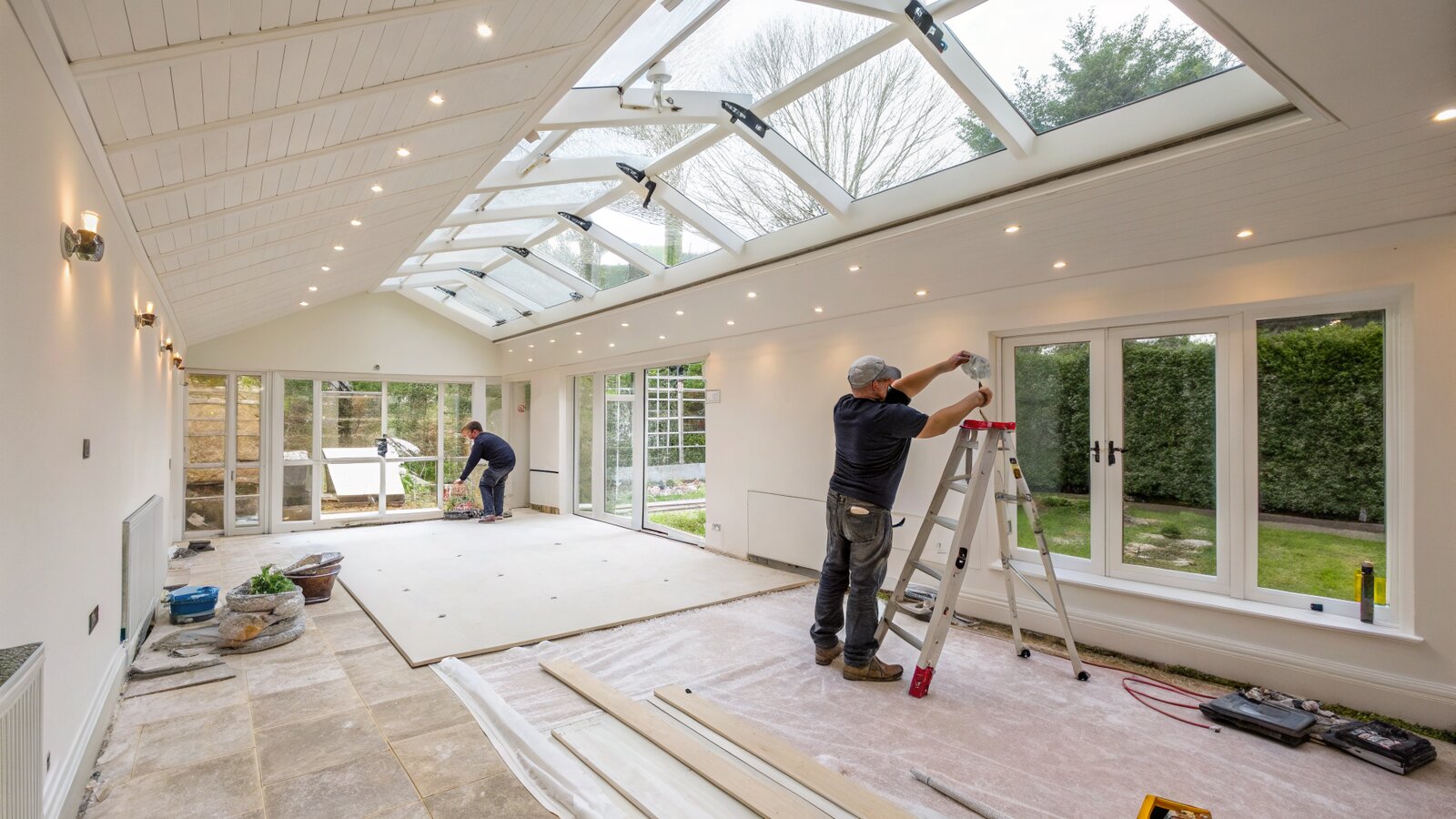
What you get for the money, typically in the low thousands rather than five figures and varying by size and finish:
- Year-round improvement. Unlike film, boarding insulates, so the room holds warmth in winter and stays cooler in summer.
- A proper ceiling. A plastered finish looks like a room rather than a greenhouse, takes downlights, and kills most rain noise.
- Far less weight and disruption than a tiled roof. The existing roof structure usually copes, and there is no scaffolding or stripping out.
The trade-offs: you lose the light and the open sky view, since the glazed ceiling is gone. The finish quality depends heavily on the installer, and a cheap foil-and-board job can sag or show joints if it is not framed and fixed properly. If you want the room to feel bright, boarding can disappoint. If you want it usable in January, it transforms it.
Solid and tiled roof replacement: the all-year fix
A full replacement strips the old roof and fits a lightweight insulated tiled system from a manufacturer such as Guardian, SupaLite or Leka. Done well, this is the best result: a fully insulated, weatherproof, plastered-inside roof that turns a seasonal sunroom into a genuine extra room you use all year. It also adds the most value and the best soundproofing.
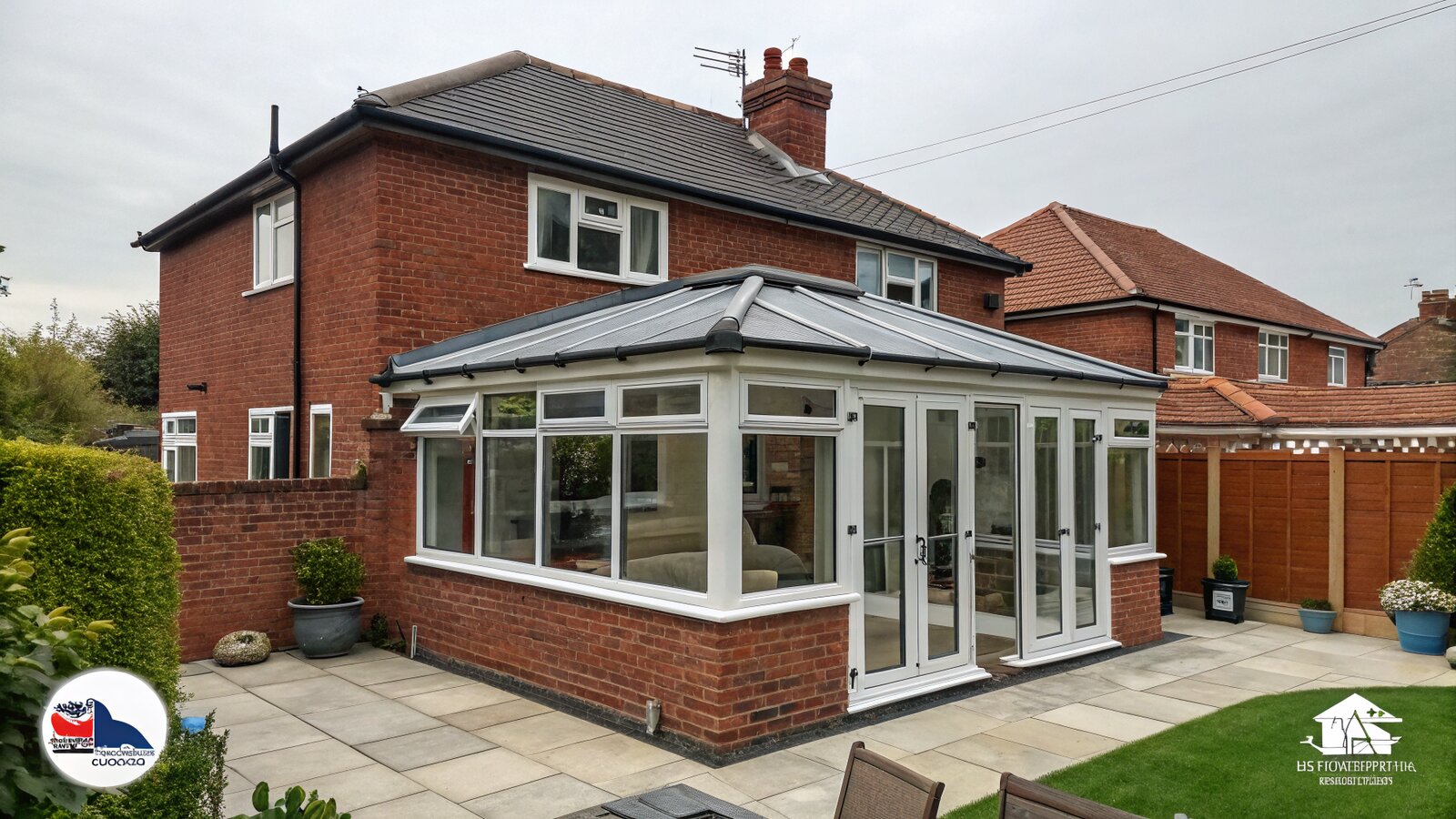
It is also the most involved and the most regulated. Three things to weigh before you commit:
- Building control applies. A glazed conservatory is normally exempt from building regulations as long as it stays under 30m², is single storey, is separated from the house by external-quality doors or windows, has its own heating controls, and keeps most of its roof and walls glazed or translucent. The Planning Portal sets out these exemption conditions on its conservatory building regulations page. Put a solid roof on and the structure no longer counts as an exempt conservatory, so it is reclassified and the new roof must meet current Building Regulations, including the Part L thermal standard for converted roofs set out in the government’s Approved Document L. A reputable installer handles the building control notice and sign-off for you. If yours does not mention it, walk away.
- Weight and the frame. Tiled systems are engineered to be light, but the survey still has to confirm your existing frames and base can carry the load. Older Victorian and Edwardian conservatories sometimes need reinforcement.
- Cost and time. This is the priciest option by a wide margin, commonly several thousand to well into five figures depending on size, roof shape and whether your walls and base need work, and it varies job to job. Allow several days on site, not one.
The real break-even: film vs boarding vs tiled roof
Here is the maths the cost guides never put side by side. Film is cheap up front but it does not insulate, so it only ever fixes the summer half of the problem, and you will likely redo it more than once over twenty years. A tiled roof costs many times more but it lasts the life of the conservatory, cuts your heating bills, adds room value and gives you winter use that film never will. Spread over its lifetime, the gap per year is much smaller than the sticker prices suggest.
So film looks cheaper per year only if you genuinely do not care about winter. The moment you want the room usable in cold months, film stops competing, because it does not insulate. The honest comparison for year-round comfort is insulated boarding versus a tiled roof, and there film is simply not in the race.
Use it like this:
- Pick film if your only complaint is summer heat and glare, you mainly use the room from spring to autumn, and your existing roof is sound. Cheapest fix, fastest, fully reversible.
- Pick internal insulated boarding if you want year-round comfort and a quieter, proper ceiling on a modest budget, and you can live without the glazed sky view. Best value for most tired conservatories.
- Pick a tiled roof if you want the room to become a true all-year extension, the roof is old or leaking anyway, and you have the budget. Highest cost, highest reward, most disruption.
Which to choose by conservatory age, glazing and how often you use it
Age. If the roof is more than 15 to 20 years old, especially aged polycarbonate that has gone cloudy or started leaking at the seams, do not waste money filming a roof that is failing. Boarding or replacement makes more sense, because you fix the leak and the temperature in one go.
Glazing type. Old polycarbonate is the weakest performer and the loudest in rain, so it is the strongest candidate for boarding or replacement. Good modern glass with a solar-control coating already takes some heat out; on that, film can be enough to finish the job for a fraction of replacement cost.
How often you use it. Be honest about this. A room you sit in a few summer afternoons does not justify a five-figure roof; film does the job. A room you want as a dining space, office or playroom every day, in February as well as July, needs insulation, which means boarding at minimum and a tiled roof for the best result.
For more on conservatories, kitchens, roofing and extensions across the county, browse the rest of Contemporary Structures, where we cover the practical decisions Kent homeowners actually face.
Frequently asked questions
Does conservatory roof film really work, or is it a gimmick?
It genuinely reduces summer heat and glare. Quality films from established suppliers are rated up to around 80% solar heat reduction, and even allowing for real-world results being lower, a good install noticeably cools a south-facing conservatory. The catch is that it does almost nothing for winter cold, because it does not add insulation. Treat it as a summer comfort upgrade, not a year-round fix.
Do I need building regulations approval to replace my conservatory roof?
For film, no. For internal insulated boarding, usually not, as long as the conservatory keeps its own separate heating controls and stays thermally divided from the house. For a solid or tiled roof, yes. Fitting a solid roof means the structure no longer counts as an exempt glazed conservatory, so it is reclassified and the new roof must meet Building Regulations, including the Part L thermal standard. A proper installer arranges the building control sign-off as part of the job.
Will a tiled roof be too heavy for my conservatory?
Modern insulated tiled systems are designed to be lightweight, and most existing frames and bases cope. It still must be confirmed by survey, because older Victorian and Edwardian conservatories with slimmer frames sometimes need reinforcement before a solid roof goes on. Never let anyone fit one without surveying the structure first.
Can I put heat reduction film on a polycarbonate roof?
Yes, but the film must be specified for polycarbonate, not just any glass film. Polycarbonate expands and contracts more with temperature, so a poly-rated film and a careful internal install matter; the wrong product can bubble or lift. Make sure your fitter confirms the film suits your panel type.
Is insulated boarding better than a full tiled roof?
It depends on budget and what you want from the room. Boarding gives you most of the year-round comfort and a proper plastered ceiling for a fraction of the cost, with far less disruption. A tiled roof goes further: more insulation, better soundproofing, the highest value added, and full building-regulation sign-off. Boarding is the value choice; a tiled roof is the best-result choice.
How long does conservatory roof film last before it needs redoing?
Quality films last several years before they begin to fade or lift, after which they need replacing. That recurring cost is worth factoring in: over twenty years you may film the roof more than once, which narrows the gap against a one-off insulated solution.
Related guides
- Air Source Heat Pump Cost in 2026 After the £7,500 Grant: What You Actually Pay
- Do You Need Planning Permission for a Rear Extension in Kent? 2026 Permitted Development Rules
- How Much Does a Conservatory Base Cost in the UK? (2026 Price Guide)
- Do You Need a Party Wall Agreement for a Rear Extension? Cost and Rules Explained
- Underfloor Heating vs Radiators for a Home Extension: Cost, Running Bills and Which to Choose
- How Much Does a House Extension Cost in 2026? Full UK Price Breakdown
- Loft Conversion Cost and Types: Dormer, Hip-to-Gable and Velux Explained
- Kent Home Improvement News: June 2026
- House Extensions: The Complete UK Homeowner’s Guide
- Single Storey Extension Ideas, Costs and Planning Rules
- Double Storey Extensions: Costs, Designs and What You Can Build
- Side Return Extensions Explained: Cost, Light and Layout
- Kent Home Improvement News: Mid-June 2026
- Garage Conversion Guide: Cost, Building Regs and Best Uses
- Extension vs Moving House: Which Is Better Value in Kent?
- Wraparound vs Rear Extension: Cost and Space Compared
- House Extension Builders in Kent: Costs, Lead Times and How to Choose
- Conservatory Guide: Styles, Costs and How to Choose One
- Kent Home Improvement News: Late June 2026
- How Much Does a Conservatory Cost in 2026? UK Prices by Type
- Conservatory vs Orangery vs Extension: Which to Build?
- Conservatory Roof Options: Glass, Polycarbonate and Tiled Compared
- Kent Home Improvement News: Early July 2026
- How to Keep a Conservatory Warm in Winter and Cool in Summer
- Tiled Conservatory Roof Cost and Replacement Process Explained
- Conservatories in Kent: Choosing an Installer, Costs and What to Ask
- Kent Home Improvement News: Mid-July 2026
- Roofing Guide: Repairs, Replacement, Materials and Costs
- New Roof Cost UK 2026: Replacement Prices by Roof Type
- Roof Repair Cost UK 2026: Slipped Tiles and Flashing Prices
- 7 Signs Your Roof Needs Replacing (and What You Can Ignore)
- Flat Roof vs Pitched Roof: Cost, Lifespan and Best Uses
- EPDM vs Felt vs Fibreglass Flat Roofs Compared
- Kent Home Improvement News: Mid-July 2026
- Roof Tile Types Explained: Clay, Concrete and Slate Compared
- Fascias, Soffits and Guttering: When to Replace and What It Costs
- How to Find a Good Roofer: Vetting Checklist for UK Homeowners
- Roofers in Kent: Costs, How to Choose and What to Ask in 2026
- Kitchen Renovation Guide: Planning, Cost and Design in 2026
- How Much Does a New Kitchen Cost in 2026? UK Price Guide
- Kitchen Layout Ideas: Galley, L-Shape, Island and Open Plan
- Worktops Compared: Quartz vs Granite vs Laminate vs Solid Wood
- Fitted vs Bespoke vs Flat-Pack Kitchens: Cost and Quality
- Kitchen Island Ideas, Sizes and Costs: A 2026 UK Guide
- Kent Home Improvement News: Late July 2026
- Open Plan Kitchen Diner: Costs, Layouts and Knock-Through Rules
- How Long Does a Kitchen Fitting Take? Realistic UK Timeline
- Kitchen Fitters in Kent: Costs and How to Choose (2026)
- Bathroom Renovation Guide: Planning, Cost and Layout
- New Bathroom Cost 2026: What You’ll Pay in the UK
- Kent Home Improvement: Roofing Costs Rise (Aug 2026)
- Small Bathroom Ideas: Layouts That Feel Bigger
- Wet Room Cost 2026: £2,000 to £9,000 Fitted, by Size
- En Suite Cost and Minimum Size: £4,000 to £10,000 in 2026
- Kent Home News: £9,000 Heat Pump Grant Now Open
- Electric vs Mixer vs Power Shower: What Your Boiler Allows
- Bathroom Underfloor Heating Cost: 16p an Hour to Run
- Window Replacement Cost 2026: £350 to £600 Per uPVC Window
- uPVC vs Aluminium Windows: the 1.4 U-Value Rule
- How Long Does a Bathroom Take to Fit? 5 to 10 Working Days
- Home Improvement News: Solar Up 14%, Heat Pumps Down 17%
- Double vs Triple Glazing: Part L Still Stops at 1.4
- Bathroom Fitters in Kent: What to Ask Before You Pay
- Sash Window Repair or Replace? What Kent Councils Allow
- Bifold vs Sliding Doors: What Building Regs Actually Set
- Composite Door Cost 2026: £550 to £2,350 Fitted
- Window Energy Ratings: Band B Is the Rule, Not C
- Replacement Windows: the 1.4 U-Value and Vent Rules
- Double Glazing Kent: the 1.4 U-Value Every Quote Must Hit
- Heat Pumps in Kent: the £7,500 Grant and the 1.5m³ Rule
- Heat Pump vs Gas Boiler: Break-Even Is a SCOP of 3.0
- Permitted Development Rights: The 8m Rear Extension Rule